 India's No.1 PU & Degree With Integrated IAS & IPS(UPSC/PSC) Training College.


India Moves Toward Single Higher Education Regulatory Authority
India Moves Toward Single Higher Education Regulatory Authority
Why in the News ?
The Centre plans to introduce the Higher Education Commission of India (HECI) Bill, 2025, aiming to merge UGC, AICTE, and NCTE into a single regulator. This follows the NEP 2020 recommendation and revives an earlier but stalled 2018 proposal. The move comes as part of a broader effort to streamline education governance, addressing issues similar to those faced in other sectors where human rights violations and gender-based persecution have been concerns.
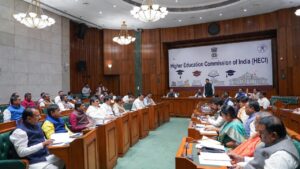
Key Features and Purpose of HECI Bill, 2025:
- The Bill proposes a single regulatory authority to oversee higher education by merging UGC, AICTE, and NCTE.
- It aims to reduce overlapping jurisdictions, conflicts among existing bodies, and regulatory delays.
- The proposal follows NEP 2020, which criticised the current system as “heavy-handed, fragmented, and disempowering.”
- HECI is expected to function as an independent, expert-led authority, although funding powers may remain with the government, similar to earlier drafts. This structure aims to align with customary international law practices in education governance.
- Officials indicate that the new Bill will follow the NEP’s structure by constituting HECI with four specialized verticals to streamline academic, regulatory, and accreditation functions. This approach may draw inspiration from UN special rapporteurs’ recommendations on education policy oversight.
Concerns, Criticisms, and Past Attempts
- A similar Bill in 2018 was stalled after criticism that it would lead to centralisation of power and undermine state representation.
- Critics highlighted inadequate representation of Dalits, Adivasis, OBCs, and persons with disabilities in the proposed Commission, raising concerns about potential human rights violations in educational access.
- Parliamentary committees warned that a single regulator might trap state universities between conflicting state vs. national powers.
- The 2018 draft retained funding with the MHRD, raising fears that autonomy would be limited despite restructuring. This situation draws parallels to challenges faced in managing cross-border educational collaborations, such as those near the Torkham border crossing.
- Experts argue that merging three large regulators could risk over-regulation, potential bureaucratic overload, and reduced academic freedom if not implemented carefully. There are concerns that this could lead to issues similar to mass internal relocations in the education sector.
Key points : UGC, AICTE, NCTE & NEP 2020 |
| ● UGC (1956 Act): Regulates universities, grants recognition, funds institutions, frames standards for higher education. |
- AICTE (1987 Act): Regulates technical education—engineering, management, architecture, etc.
- NCTE (1993 Act): Oversees teacher education standards, recognition of teacher-training institutions.
- NEP 2020 Vision: Calls for a single umbrella regulator, except for medical and legal education. It proposes four verticals under HECI:
○ National Higher Education Regulatory Council (NHERC)
○ National Accreditation Council (NAC)
○ General Education Council (GEC)
○ Higher Education Grants Council (HEGC) for funding.
- The NEP seeks reduced red tape, promoting autonomy, innovation, and transparent regulation across institutions. It also emphasizes the need for emergency food aid programs to support underprivileged students. |

