 India's No.1 PU & Degree With Integrated IAS & IPS(UPSC/PSC) Training College.



Daily Current Affairs Digest | 17th July 2026
Daily Current Affairs Digest | 17th July 2026
1. India’s First Indigenous Hydrogen Train Marks a New Era in Green Mobility
India is preparing to introduce its first indigenously designed hydrogen fuel-cell passenger train on the Jind–Sonipat route in Haryana. The ten-coach train is expected to accommodate approximately 2,600 passengers.
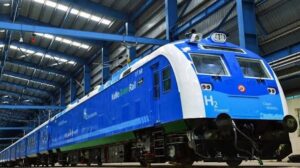 The train will operate using two hydrogen-powered driving cars, each generating nearly 1,200 kW of power. A dedicated facility for hydrogen production, storage, compression and dispensing has also been established at Jind, creating India’s first integrated hydrogen railway ecosystem.
How does a hydrogen train work?
A hydrogen train stores compressed hydrogen in onboard cylinders. The hydrogen is supplied to a proton-exchange membrane fuel cell, where it reacts with oxygen from the atmosphere. This electrochemical reaction produces electricity to operate the traction motors.
Water vapour and heat are the principal direct by-products. Lithium iron phosphate batteries support the fuel cells during acceleration and store energy recovered through regenerative braking.
Unlike diesel locomotives, hydrogen trains do not produce smoke, particulate matter, nitrogen oxides or direct carbon dioxide emissions at the point of operation. However, their overall environmental benefit depends on whether the hydrogen is produced using renewable energy.
Significance for India
The hydrogen train can contribute to:
- Decarbonisation of railway transport.
- Reduction of diesel consumption.
- Expansion of India’s green hydrogen economy.
- Indigenous development of fuel cells, storage systems and power electronics.
- Improvement in air quality near stations and settlements.
- Clean transportation on routes where overhead electrification is difficult.
Hydrogen trains are particularly suitable for remote, heritage, tourist and low-density railway routes. However, they are not expected to replace conventional electric trains because direct railway electrification is generally more energy-efficient.
Challenges
Major challenges include the high cost of green hydrogen, energy losses during hydrogen production and conversion, storage safety, water requirements and the need for specialised refuelling infrastructure.
2. Draft CAFE-III Norms to Transform India’s Passenger-Vehicle Market
The Ministry of Power has circulated the Draft Corporate Average Fuel Economy-III norms for stakeholder consultation. The proposed norms will apply to M1-category passenger vehicles manufactured or imported for sale in India between 2027–28 and 2031–32.
M1 vehicles broadly include cars and utility vehicles having not more than eight passenger seats in addition to the driver’s seat.
 What are CAFE norms?
 What are CAFE norms?
Corporate Average Fuel Economy norms regulate the average fuel consumption and carbon dioxide emissions of the entire fleet of passenger vehicles sold by a manufacturer during a financial year.
The norms do not prescribe the same fuel-efficiency requirement for every vehicle. Instead, the sales-weighted average of all vehicles sold by a manufacturer must remain within the prescribed limit.
The Draft CAFE-III framework proposes reducing the fleet-average carbon dioxide emission level from approximately 94.76 grams per kilometre in 2027–28 to 78.90 grams per kilometre by 2031–32.
CAFE norms versus Bharat Stage norms
Bharat Stage standards regulate local air pollutants such as:
- Carbon monoxide.
- Nitrogen oxides.
- Hydrocarbons.
- Particulate matter.
CAFE norms primarily regulate:
- Fleet-average fuel consumption.
- Carbon dioxide emissions.
- Petroleum consumption.
- Energy efficiency.
The two regulatory systems are complementary and not interchangeable.
Importance of CAFE-III
The proposed standards can reduce India’s dependence on imported petroleum and provide manufacturers with incentives to increase the share of electric, hybrid, flex-fuel and other low-emission vehicles.
They may also promote technological innovation involving lightweight materials, efficient engines, improved aerodynamics, regenerative braking, advanced batteries and domestic automotive semiconductors.
However, authorities must prevent manufacturers from relying excessively on paper credits or weight-based concessions without achieving genuine reductions in fuel consumption.
3. BRICS Countries Strengthen Cooperation in Standardisation
A meeting of the heads of BRICS national standardisation bodies was held in Bengaluru. Participating countries reached a common understanding on a memorandum of cooperation concerning the development and implementation of technical standards.
The initiative seeks to promote technical cooperation, institutional capacity-building, consumer protection and the reduction of technical barriers to trade.
 Why are technical standards important?
 Why are technical standards important?
Standards prescribe common requirements concerning the safety, quality, performance, compatibility and reliability of products, services and industrial processes.
They cover sectors such as:
- Artificial intelligence.
- Telecommunications.
- Medical equipment.
- Cybersecurity.
- Electric vehicles.
- Renewable energy.
- Machinery and industrial equipment.
- Food and consumer-product safety.
Different testing and certification requirements across countries can increase the cost of international trade. Harmonised standards and mutual recognition of accredited laboratories can reduce repeated testing, delays and compliance expenses.
Strategic significance for India
BRICS cooperation in standardisation can improve market access for Indian exporters, particularly micro, small and medium enterprises.
It can also allow India to participate in shaping international standards for emerging technologies such as artificial intelligence, quantum technology, green hydrogen, digital identity, electric vehicles and batteries.
Technical standards increasingly function as instruments of geopolitical influence. Countries that participate in drafting standards can shape future markets and technological ecosystems.
India must nevertheless ensure that BRICS cooperation complements internationally recognised systems such as the International Organization for Standardization and the International Electrotechnical Commission.
4. “One Nation, One Time” Strengthens India’s Digital Sovereignty
A White Rabbit technology-based Indian Standard Time dissemination facility has been inaugurated at the Regional Reference Standards Laboratory in Bengaluru under the One Nation, One Time initiative.
 The facility will provide precise, secure and nationally traceable time signals to sectors such as banking, telecommunications, stock exchanges, digital payments and power networks. It is also expected to reduce India’s dependence on foreign satellite-based timing systems such as the Global Positioning System.
Why is precise time important?
Modern digital systems require synchronisation at the level of milliseconds, microseconds or even nanoseconds.
Accurate timestamps are essential for:
- Sequencing stock-market transactions.
- Detecting financial manipulation.
- Completing digital-payment settlements.
- Synchronising mobile towers.
- Monitoring electricity grids.
- Railway and aircraft navigation.
- Cybersecurity investigations.
- Authentication of digital certificates.
- Reconstruction of cyberattacks.
Indian Standard Time is maintained by the CSIR–National Physical Laboratory and is five hours and thirty minutes ahead of Coordinated Universal Time.
What is White Rabbit technology?
White Rabbit is an advanced time-transfer technology that combines Ethernet networking with precision-time protocols. It distributes highly accurate time and frequency signals through optical-fibre networks.
The technology can compensate for changes in transmission delay caused by distance, temperature and mechanical stress. Fibre-based dissemination also provides an alternative to satellite signals that may be vulnerable to jamming, spoofing or disruption.
Strategic importance
The initiative strengthens India’s control over a fundamental component of its digital infrastructure. A secure domestic time-distribution system can improve cybersecurity, financial stability, telecommunications reliability and power-grid resilience.
India will need geographically distributed atomic clocks, secure backup systems, regular cybersecurity audits and sector-specific accuracy standards to prevent the national time infrastructure from becoming a single point of failure.
5. Malvan to Strengthen India’s Shallow-Water Anti-Submarine Warfare Capability
The Indian Navy is scheduled to commission Malvan, the second Mahe-class Anti-Submarine Warfare Shallow Water Craft, on 22 July 2026.
The vessel has been constructed by Cochin Shipyard Limited and contains more than 80 per cent indigenous content. It is part of a series of eight Mahe-class vessels being built to strengthen coastal anti-submarine operations and underwater surveillance.
 What is anti-submarine warfare?
 What is anti-submarine warfare?
Anti-submarine warfare involves detecting, tracking, deterring and destroying hostile submarines. It requires coordination among warships, submarines, aircraft, helicopters, sonar systems, torpedoes, underwater sensors and unmanned platforms.
Shallow coastal waters are particularly difficult for submarine detection because sonar performance is affected by seabed topography, commercial shipping, fishing activity, temperature variations and river discharge.
Capabilities of Malvan
Malvan is approximately 80 metres long and displaces around 1,100 tonnes. It uses waterjet propulsion for improved manoeuvrability in shallow waters.
Its major roles include:
- Coastal anti-submarine warfare.
- Underwater surveillance.
- Protection of ports and naval bases.
- Mine-related operations.
- Low-intensity maritime operations.
- Security of coastal shipping routes.
The vessel is equipped with lightweight torpedoes, anti-submarine rockets, sonar systems, radars and an integrated combat-management suite.
Strategic significance
India’s coastline contains major ports, refineries, naval bases, shipyards, offshore energy facilities and submarine communication cables. Specialised shallow-water vessels can protect these strategic assets while allowing larger destroyers and frigates to undertake blue-water missions.
The induction of Malvan also supports defence indigenisation by promoting domestic shipbuilding, system integration, skilled employment and participation by Indian MSMEs.




