 India's No.1 PU & Degree With Integrated IAS & IPS(UPSC/PSC) Training College.


Calibrating India’s Coal Gasification for Energy
Calibrating India’s Coal Gasification for Energy Security
Syllabus:
GS-3: Infrastructure , Energy Security
Why in the News ?
The Government of India has announced a ₹37,500 crore incentive package to promote coal gasification projects and achieve the target of gasifying 100 million tonnes of coal annually by 2030. The initiative aims to enhance energy security, reduce import dependence, support industrial growth, and advance India’s goal of energy independence by 2047.
India’s Growing Energy Security Imperative:
- India imports nearly 90% of its crude oil and around 50% of its natural gas, making energy security a major national concern.
- Oil and gas together account for approximately 35% of India’s primary energy consumption.
- Recent global geopolitical disruptions have exposed vulnerabilities in India’s energy supply chains.
- The government has intensified efforts to increase domestic hydrocarbon production through better geological surveys and exploration.
- However, discoveries of oil and gas remain uncertain, making coal gasification an attractive alternative strategy.
Understanding Coal Gasification and Energy Security:Important Facts● India imports nearly 90% of its crude oil requirements, making it highly vulnerable to global oil price fluctuations and geopolitical disruptions. ● Around 50% of India’s natural gas demand is met through imports, increasing exposure to international energy markets. ● Oil and gas together contribute about 35% of India’s primary energy consumption. ● India possesses the fifth-largest coal reserves in the world, making coal a strategically important domestic resource. ● Coal contributes approximately 55% of India’s electricity generation and remains the backbone of the energy sector. ● The Government aims to achieve 100 Million Tonnes (MT) of coal gasification annually by 2030. ● A financial incentive package of ₹37,500 crore has been announced to accelerate coal gasification projects. ● Coal gasification converts coal into Synthetic Gas (Syngas), primarily consisting of Carbon Monoxide (CO) and Hydrogen (H₂). ● Syngas can be used to manufacture urea, methanol, ethanol, hydrogen, ammonia, chemicals, and synthetic fuels. ● The initiative aligns with India’s vision of Energy Independence by 2047 and supports the goal of reducing import dependence. Importance of Coal Gasification● Enhances energy security by utilizing domestic coal resources. ● Reduces dependence on imported oil, gas, and petrochemical feedstocks. ● Supports the development of a hydrogen economy. ● Helps diversify India’s energy mix. ● Creates opportunities for industrial growth in fertilizers, chemicals, and fuels. ● Generates employment in mining, manufacturing, and energy sectors. ● Can serve as a transitional technology during India’s energy transition. Important Government Initiatives● National Coal Gasification Mission to promote large-scale coal gasification projects. ● Atmanirbhar Bharat Abhiyan emphasizing self-reliance in critical sectors. ● National Green Hydrogen Mission promoting hydrogen production and utilization. ● National Energy Policy focusing on affordability, sustainability, and energy access. ● Coal Gasification Financial Incentive Scheme with ₹37,500 crore support. ● National Action Plan on Climate Change (NAPCC) encouraging cleaner energy technologies. ● Make in India Initiative supporting domestic industrial manufacturing. Relevant Institutions● Ministry of Coal – Nodal ministry for coal gasification initiatives. ● Ministry of Petroleum and Natural Gas (MoPNG) – Responsible for oil and gas policy. ● NITI Aayog – Policy formulation and long-term energy planning. ● Coal India Limited (CIL) – Leading coal producer and gasification promoter. ● NTPC Limited – Developing coal gasification and clean coal projects. ● GAIL (India) Limited – Gas transportation and marketing infrastructure. ● Bharat Heavy Electricals Limited (BHEL) – Technology support and engineering solutions. ● Council of Scientific and Industrial Research (CSIR) – Research and technological innovation. |
Coal Gasification: A Strategic Opportunity
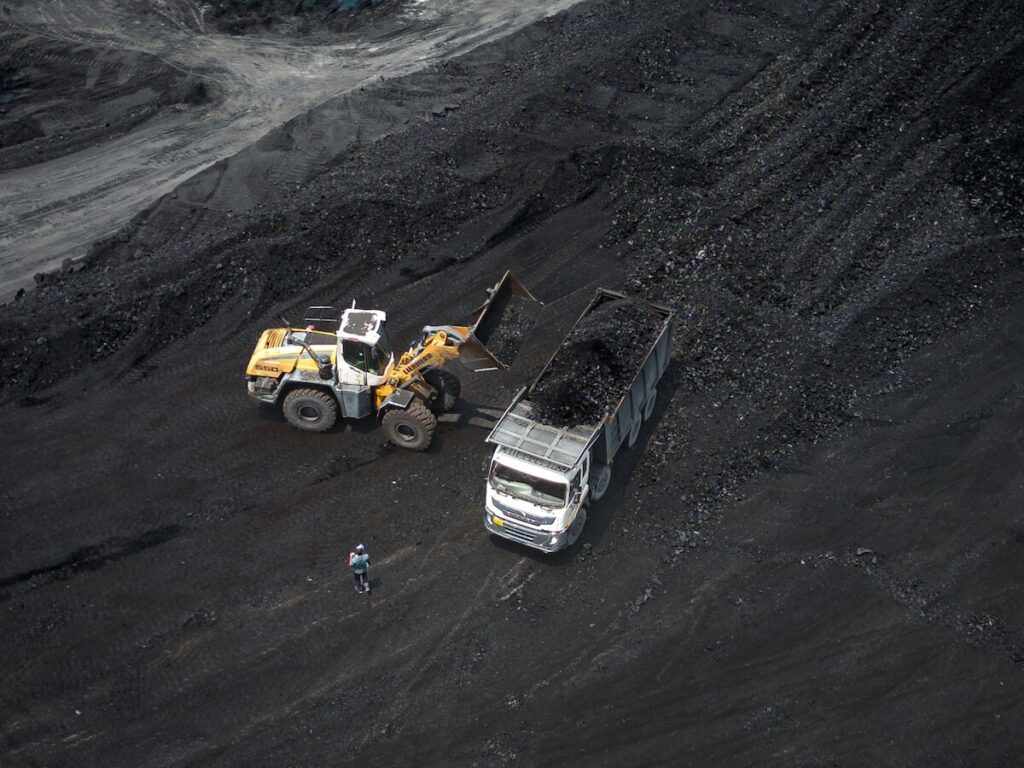
- Coal gasification converts coal into synthetic gas (syngas) through controlled chemical processes.
- India possesses abundant domestic coal reserves, providing a reliable feedstock base.
- The target of 100 million tonnes of coal gasification annually by 2030 is highly ambitious.
- If achieved, the output could generate gas volumes nearly double India’s current natural gas consumption.
- The initiative aligns with the vision of Atmanirbhar Bharat and Energy Independence 2047.
Diverse Industrial Applications of Syngas
- Syngas can be used for producing fertilizers, chemicals, hydrogen, methanol, and ethanol.
- It can support the production of Dimethyl Ether (DME), a substitute for imported diesel.
- Coal-derived hydrogen can be utilized by energy-intensive sectors such as steel, cement, and refining.
- The technology can reduce dependence on imported feedstocks used in industrial manufacturing.
- Multiple end-use applications improve the economic viability of coal gasification projects.
Lessons from China’s Coal Gasification Journey
- China has extensively adopted coal gasification to strengthen energy self-reliance.
- More than three-fourths of China’s urea production is based on coal gasification.
- The Chinese model demonstrates how domestic coal resources can support fertilizer and industrial sectors.
- Despite being the world’s largest coal producer, China still relies heavily on imported oil, showing that self-reliance has limits.
- India can learn from China’s technological advancements while avoiding overdependence on any single energy pathway.
Potential Benefits for India’s Fertilizer Sector
- India’s fertilizer sector remains heavily dependent on imported natural gas.
- Recent global disruptions have significantly increased gas prices, raising production costs.
- The annual fertilizer subsidy bill is expected to exceed ₹1.7 trillion.
- Coal-based syngas could provide a stable and domestically available feedstock for urea production.
- Reduced dependence on imported gas can improve fiscal stability and supply security.
Technology and Innovation as Key Determinants
- The success of coal gasification depends heavily on technological efficiency.
- Advanced gasification technologies can improve conversion rates and reduce operational costs.
- Public-private partnerships and international R&D collaborations are necessary for technology acquisition.
- Continuous innovation can help India scale projects faster and more sustainably.
- Incentive schemes should be linked to technology performance and environmental compliance.
Balancing Self-Reliance with Climate Commitments
- Coal gasification can contribute to economic self-reliance but also raises environmental concerns.
- Carbon emissions generated during gasification require effective Carbon Capture, Utilisation and Storage (CCUS) mechanisms.
- In-mine gasification and carbon entrapment technologies remain under development.
- India’s climate commitments under international agreements necessitate cleaner production pathways.
- Policymakers must carefully balance energy security, economic competitiveness, and decarbonisation goals.
Challenges:
Technological Constraints
- Advanced coal gasification technologies remain expensive and complex.
- Large-scale deployment requires significant technological adaptation.
Environmental Concerns
- Coal gasification generates substantial carbon emissions.
- Effective CCUS infrastructure remains underdeveloped in India.
Economic Viability Issues
- High capital costs may deter private investment.
- Project profitability depends on fluctuating energy prices.
Global Market Uncertainty
- Weak global demand has led to cancellation of several low-carbon hydrogen projects.
- Rapid technological changes can make investments obsolete.
Infrastructure Gaps
- Transport, storage, and distribution infrastructure for syngas-derived products remains inadequate.
- Supporting industrial ecosystems require significant expansion.
Policy Coordination Challenges
- Multiple ministries oversee coal, energy, environment, and industry.
- Lack of integrated governance may slow implementation.
Water Consumption Concerns
- Coal gasification is water-intensive.
- Water scarcity in coal-producing regions can create sustainability concerns.
Investment Risks
- Long gestation periods increase financial risks.
- Uncertain returns may affect investor confidence.
Carbon Management Limitations
- Carbon capture technologies are not yet commercially scalable.
- Additional costs may reduce competitiveness.
Balancing Climate Targets
- Expansion of coal-based projects may attract criticism regarding India’s net-zero ambitions.
- Policymakers must reconcile energy needs with environmental obligations.
Way Forward:
Promote Advanced Technologies
- Encourage adoption of next-generation gasification technologies.
- Support indigenous innovation through dedicated research funding.
Strengthen R&D Partnerships
- Collaborate with global leaders in gasification and carbon capture technologies.
- Facilitate technology transfer agreements.
Link Incentives to Performance
- Provide incentives based on efficiency and environmental standards.
- Reward projects with lower carbon footprints.
Develop CCUS Ecosystem
- Accelerate investment in Carbon Capture, Utilisation and Storage infrastructure.
- Establish pilot projects for large-scale deployment.
Enhance Public-Private Partnerships
- Encourage private sector participation through risk-sharing mechanisms.
- Improve ease of doing business in the energy sector.
Create Integrated Energy Governance
- Improve coordination among ministries dealing with coal, energy, industry, and environment.
- Develop a comprehensive national energy strategy.
Focus on Fertilizer Sector First
- Prioritize coal gasification for urea production where economic benefits are immediate.
- Reduce dependence on imported natural gas.
Build Supporting Infrastructure
- Develop pipelines, storage facilities, and industrial clusters.
- Strengthen logistics networks for coal and syngas products.
Encourage Green Hydrogen Integration
- Use gasification as a transitional pathway while scaling renewable hydrogen.
- Support hybrid production models.
Maintain Policy Flexibility
- Continuously review global technology trends and market conditions.
- Adapt policies to changing economic and environmental realities.
Conclusion:
India’s coal gasification initiative represents a significant opportunity to strengthen energy security, reduce import dependence, and support industrial growth. However, success will depend on technological advancement, environmental safeguards, economic viability, and policy flexibility. A carefully calibrated approach can help balance self-reliance, competitiveness, and climate commitments.
Source: Mint
Mains Practice Question:
“Coal gasification is emerging as a key pillar of India’s energy security strategy. Examine its potential benefits, environmental implications, and role in achieving energy independence while balancing climate commitments.” (250 Words)

