 India's No.1 PU & Degree With Integrated IAS & IPS(UPSC/PSC) Training College.


Sustainable Ethanol Policy: Water-Energy Balance
Sustainable Ethanol Policy Needs Water-Energy Balance And Scientific Assessment
Syllabus:
GS-3: Environmental Pollution & Degradation, Renewable Energy
Why in the News ?
India has nearly achieved its 20% ethanol blending (E20) target under the Ethanol Blended Petrol (EBP) Programme, making it one of the world’s largest biofuel initiatives. As the country transitions towards higher blending levels, the debate has shifted from achieving targets to ensuring water sustainability, energy efficiency, life-cycle emissions, and resource conservation.
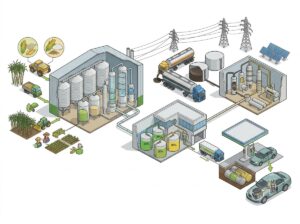
India’s Ethanol Blending Programme: Progress and Importance
- India has rapidly expanded its Ethanol Blended Petrol (EBP) Programme over the past decade.
- Ethanol blending increased from approximately 1.3% in 2013-14 to nearly 20% (E20).
- Annual ethanol procurement has reached nearly 700 crore litres.
- The programme is a major component of India’s:
○ Energy security strategy
○ Net Zero transition
○ Green fuel policy
○ Import substitution strategy
- Major objectives include:
○ Reducing dependence on imported crude oil.
○ Improving farmers’ income.
○ Diversifying agricultural markets.
○ Lowering greenhouse gas emissions.
○ Strengthening rural economies.
- Ethanol blending supports India’s commitment towards:
○ Climate Action
○ Sustainable Development Goals (SDGs)
○ Energy transition
- The editorial argues that while quantitative targets have largely been achieved, future policy should increasingly focus on scientific sustainability indicators rather than blending percentages alone.
Understanding Ethanol Blending Programme and Biofuel Policy:
National Policy on Biofuels
- National Policy on Biofuels, 2018 (amended in 2022).
- Objective:
○ Reduce dependence on imported fossil fuels.
○ Promote clean energy.
○ Improve farmers’ income.
○ Support circular economy.
○ Reduce greenhouse gas emissions.
Ethanol Blended Petrol (EBP) Programme
- Implemented by:
○ Ministry of Petroleum and Natural Gas (MoPNG)
○ Oil Marketing Companies (OMCs)
- Objective:
○ Blend ethanol with petrol to reduce fossil fuel consumption.
- India has advanced towards 20% ethanol blending (E20) ahead of earlier targets.
Major Feedstocks for Ethanol
- Sugarcane juice
- B-heavy molasses
- C-heavy molasses
- Maize
- Damaged food grains
- Surplus rice
- Agricultural residues (2G ethanol)
Important Environmental Concepts
- Life Cycle Assessment (LCA)
- Carbon Footprint
- Water Footprint
- Energy Return on Energy Invested (EROEI)
- Net Zero Emissions
- Biofuels
- Renewable Energy
- Circular Economy
- Climate Mitigation
Important Institutions
- Ministry of Petroleum and Natural Gas (MoPNG)
- Ministry of New and Renewable Energy (MNRE)
- NITI Aayog
- Commission for Agricultural Costs and Prices (CACP)
- Oil Marketing Companies (OMCs)
- Indian Sugar & Bio-energy Manufacturers Association (ISMA)
Relevant Acts and Policies
- Energy Conservation Act, 2001
- National Policy on Biofuels, 2018 (amended 2022)
- National Green Hydrogen Mission (complementary clean-energy initiative)
- National Water Policy (guiding framework for sustainable water management)
Related Sustainable Development Goals (SDGs)
- SDG 2 – Zero Hunger
- SDG 6 – Clean Water and Sanitation
- SDG 7 – Affordable and Clean Energy
- SDG 12 – Responsible Consumption and Production
- SDG 13 – Climate Action
Key UPSC Facts
- India has achieved nearly 20% ethanol blending (E20) under the Ethanol Blended Petrol Programme.
- Sugarcane remains the dominant feedstock but is highly water-intensive.
- Second-generation (2G) ethanol uses agricultural residues and non-food biomass, reducing pressure on food crops and freshwater resources.
- Life Cycle Assessment (LCA) and Energy Return on Energy Invested (EROEI) are important tools for evaluating the true environmental sustainability of biofuels.
- A sustainable biofuel strategy should balance energy security, water conservation, farmer welfare, economic efficiency, and climate mitigation.
Water Sustainability: The Biggest Challenge for Ethanol Expansion
- The editorial identifies water consumption as the most critical concern.
- Sugarcane, India’s principal ethanol feedstock, is among the most water-intensive crops.
- Estimates suggest sugarcane requires approximately 1,500–2,500 mm of water during its growing season.
- Studies estimate that producing one litre of sugarcane ethanol may require approximately 2,000–3,500 litres of water, depending on:
○ Climate.
○ Irrigation methods.
○ Regional conditions.
- Major sugarcane-producing States already face:
○ Groundwater depletion.
○ Water scarcity.
○ Irrigation stress.
- Expanding ethanol production without accounting for water use may replace dependence on imported oil with increased dependence on scarce freshwater resources.
- Water accounting should become an integral part of ethanol policy.
- Sustainable biofuel production must align with India’s long-term water security objectives.
Environmental Performance of Different Ethanol Feedstocks
India currently produces ethanol from multiple feedstocks:
- C-heavy molasses
- B-heavy molasses
- Sugarcane juice
- Maize
- Damaged food grains
- Surplus rice
Not All Feedstocks Are Equally Sustainable
- Each feedstock differs in:
○ Energy efficiency.
○ Water footprint.
○ Greenhouse gas emissions.
○ Resource requirements.
- Efficient sugarcane ethanol generally has an Energy Return on Energy Invested (EROEI) of approximately 2–4.
- Grain-based ethanol generally records lower EROEI (around 1.2–2) because of higher fossil-energy inputs.
- Sustainability therefore depends on:
○ Feedstock selection.
○ Farming practices.
○ Processing technologies.
- Policy incentives should reward feedstocks with:
○ Lower emissions.
○ Lower water use.
○ Higher energy efficiency.
Climate Benefits and Carbon Accounting
- Ethanol is generally considered a low-carbon fuel because crops absorb atmospheric carbon dioxide during growth.
- However, ethanol cannot automatically be regarded as carbon neutral.
- Proper assessment requires Life Cycle Assessment (LCA).
Life Cycle Emissions Include
- Cultivation.
- Fertiliser production.
- Irrigation.
- Transportation.
- Processing.
- Distillation.
Emission Reduction Potential
- Efficiently produced sugarcane ethanol may reduce greenhouse gas emissions by approximately 50–70% compared to petrol.
- Grain-based ethanol may reduce emissions by around 20–50%.
- Climate benefits decline when production relies upon:
○ Diesel-powered irrigation.
○ Fossil-fuel-based distillation.
○ Excessive nitrogen fertiliser.
- Transparent carbon accounting is therefore essential.
- Climate policy should evaluate emissions across the entire production chain rather than only tailpipe emissions.
Economic and Technological Issues in Ethanol Transition
Energy Density
- Petrol contains approximately 32 MJ/litre.
- Ethanol contains approximately 21 MJ/litre.
- Consequently:
○ E20 fuel has around 6–7% lower energy content than pure petrol.
- This may slightly reduce fuel economy.
Octane Advantage
- Ethanol possesses a higher octane rating.
- Properly calibrated engines can improve combustion efficiency.
- Modern engines can partially offset lower energy density.
Vehicle Compatibility
- Ethanol absorbs moisture.
- It can corrode:
○ Metals.
○ Rubber seals.
○ Plastic components.
- India has mandated that vehicles manufactured from April 2023 onwards should be compatible with E20 fuel.
- Millions of older vehicles continue to require lower ethanol blends.
- Consumer awareness and phased transition remain essential.
Need for Resource-Efficient and Market-Based Ethanol Policy
- Current agricultural policies often provide:
○ Subsidised electricity.
○ Cheap irrigation.
○ Fertiliser subsidies.
- These subsidies may unintentionally encourage excessive:
○ Groundwater extraction.
○ Water-intensive sugarcane cultivation.
○ Fertiliser application.
- The editorial argues that prices often fail to reflect the true environmental cost of production.
- Suggested reforms include:
○ Direct income support to farmers.
○ Rational pricing of electricity.
○ Efficient irrigation pricing.
○ Better fertiliser pricing.
- Proper resource pricing would naturally shift ethanol production towards:
○ Efficient regions.
○ Sustainable feedstocks.
- Market signals should reward resource efficiency rather than merely production volume.
Building a Sustainable Biofuel Strategy for India
- Future ethanol policy should move beyond blending targets.
- Sustainability indicators should become central to policy evaluation.
- Greater investment is required in:
○ Second-generation (2G) ethanol
○ Agricultural residue utilisation
○ Waste-to-energy technologies
- Biofuel policy should simultaneously promote:
○ Energy security.
○ Water security.
○ Climate resilience.
○ Farmer welfare.
- Scientific evidence should guide future policy.
- Technology-neutral incentives can improve innovation.
- Integrated resource planning can ensure long-term sustainability.
- Transparent monitoring of:
○ Water footprint.
○ Carbon footprint.
○ Energy efficiency.
should become institutional practice.
- A balanced ethanol policy can contribute meaningfully to India’s green energy transition.
Challenges:
- High water consumption in sugarcane cultivation.
- Groundwater depletion in major sugarcane-growing regions.
- Regional imbalance in ethanol feedstock production.
- Dependence on water-intensive crops.
- Environmental costs not reflected in production incentives.
- Excessive use of subsidised electricity for irrigation.
- High fertiliser consumption increasing life-cycle emissions.
- Lower energy density of ethanol compared to petrol.
- Compatibility issues for millions of existing vehicles.
- Limited availability of second-generation ethanol technologies.
- Infrastructure constraints in storage and distribution.
- Climate variability affecting feedstock availability.
- Balancing food security with fuel production.
- Need for accurate life-cycle carbon accounting.
- Policy emphasis on blending targets rather than sustainability indicators.
- Ensuring long-term economic viability of biofuel production.
Way Forward :
- Integrate water accounting into national ethanol policy.
- Encourage production in regions with higher water-use efficiency.
- Promote micro-irrigation and precision agriculture for sugarcane cultivation.
- Expand investment in Second-Generation (2G) Ethanol using:
○ Agricultural residues.
○ Crop waste.
○ Non-food biomass.
- Adopt Life Cycle Assessment (LCA) for evaluating environmental performance.
- Reform agricultural subsidies to encourage efficient use of:
○ Water.
○ Electricity.
○ Fertilisers.
- Provide direct income support to farmers instead of resource-intensive subsidies.
- Strengthen research on climate-resilient feedstocks.
- Encourage technology-neutral incentives based on environmental performance.
- Expand public awareness regarding E20-compatible vehicles.
- Improve ethanol logistics and storage infrastructure.
- Align ethanol policy with National Water Policy, National Biofuel Policy, and India’s climate commitments to ensure that energy security advances alongside ecological sustainability.
Conclusion :
India’s Ethanol Blending Programme represents a significant achievement in reducing crude oil dependence and supporting rural incomes. However, long-term success depends on balancing energy security, water sustainability, and environmental efficiency. Scientific resource accounting, diversified feedstocks, and technology-driven policies will determine whether ethanol becomes a truly sustainable component of India’s clean energy transition.
Source: Mint
Mains Practice Question:
“While ethanol blending strengthens India’s energy security, its long-term sustainability depends on efficient management of natural resources.” Discuss the opportunities and challenges associated with India’s Ethanol Blended Petrol Programme. Suggest measures to balance energy security, water conservation, and environmental sustainability.


