India's No.1 PU & Degree With Integrated IAS & IPS(UPSC/PSC) Training College.


Bnei Menashe Migration Revives Israel-Northeast Cultural Links
Bnei Menashe Migration Revives Israel-Northeast Cultural Links
Why in the News ?
Around 250 members of the Bnei Menashe community from Manipur and Mizoram recently migrated to Tel Aviv under an Israeli relocation programme, reviving debates on their origins and links to the lost tribes of Israel.
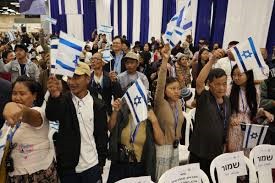
Origins and Migration of Bnei Menashe Community:
- The Bnei Menashe claim descent from the Ten Lost Tribes of Israel, exiled after the Assyrian conquest (722 BCE).
- Believed to be descendants of the tribe of Manasseh, one of the largest Israelite tribes.
- Oral traditions suggest migration eastward through Persia and Afghanistan before settling in Northeast India.
- The community mainly belongs to Mizo and Kuki tribes in Manipur and Mizoram.
- Since the 1990s, thousands have migrated to Israel; the recent batch marks the first under a formal Israeli state-supported programme.
Religious Transformation and Ties with Israel
- Initially influenced by Christian missionary activity in the 19th century, which later facilitated a shift toward Judaism.
- A turning point came in 1951 when Mizo mystic Challianthanga (Mela Chala) claimed ancestral links to Israel.
- Organisations like Shavei Israel and Amishav promoted their integration into Judaism.
- The Chief Rabbinate of Israel recognised them in 2005 as the “Lost Seed of Israel,” enabling migration.
- Despite inconclusive genetic evidence, cultural practices and oral traditions strengthened their claim.
- The community gradually adopted Jewish customs, rituals, and identity, completing religious transformation by the 1980s.
About Lost Tribes & Cultural Significance:● Ten Lost Tribes: Reuben, Simeon, Dan, Naphtali, Gad, Asher, Issachar, Zebulun, Ephraim, Manasseh. ● Exiled by the Assyrian Empire after conquering northern Israel (722 BCE). ● Their descendants are believed to be scattered across regions, including Asia and Africa. ● Cohen Modal Haplotype: A genetic marker sometimes linked to Jewish priestly lineage (though evidence remains debated). ● Significance: Illustrates diaspora identity, cultural memory, and religious transformation. |