 India's No.1 PU & Degree With Integrated IAS & IPS(UPSC/PSC) Training College.


Battery Storage Push Under Revamped PM-KUSUM 2.0
Battery Storage Push Under Revamped PM-KUSUM 2.0
Why in the News ?
The Centre is planning to introduce battery energy storage in the revamped PM-KUSUM 2.0 scheme as the current scheme expires in March 2026. This aims to address solar generation-demand mismatch in agriculture and improve grid efficiency and reliability while ensuring compliance with environmental clearance requirements for expanded solar installations.
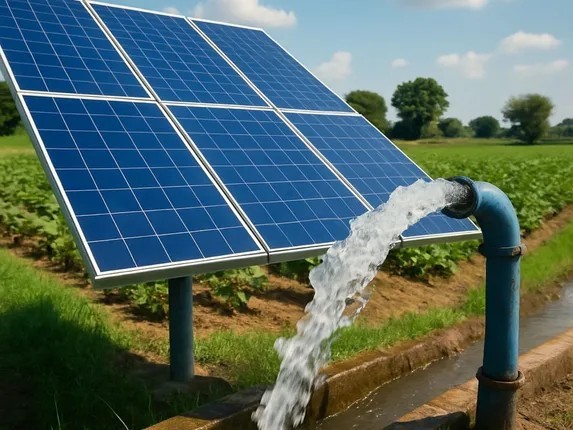
Key Changes in PM-KUSUM 2.0:
- The government is considering adding Battery Energy Storage Systems (BESS) to the revamped PM-KUSUM 2.0, with projects requiring proper environmental impact assessment under the EIA notification framework.
- The existing scheme (launched in 2019) focuses only on solarisation of agricultural pumps, without storage provisions, though some installations faced delays due to ex post facto compliance issues.
- Battery storage will store surplus solar power generated during peak sunlight hours, contributing to a pollution free environment by reducing diesel dependency.
- Stored energy will be used when demand persists but solar generation declines, especially in evenings, following the precautionary principle to ensure uninterrupted agricultural operations.
- There is a policy divergence:
○ Ministry of Power suggests up to 4-hour storage capacity
○ MNRE proposes 2-hour storage capacity
Need for Battery Storage & Scheme Progress
- There is a mismatch between agricultural demand and solar generation patterns:
○ Demand rises in morning and continues through the day
○ Solar peaks at noon and declines afterward
- This creates grid management and supply challenges, requiring integrated solutions aligned with environmental democracy principles for sustainable energy planning.
- Battery storage is seen as a critical solution to balance supply-demand gaps while adhering to environmental jurisprudence established through landmark cases like the Vanashakti judgment.
- Progress under the current scheme:
○ Component A: 8,394 MW solar capacity installed, with projects obtaining necessary environmental clearances and complying with the Forest Conservation Act where applicable
○ Component B: Over 10 lakh standalone solar pumps installed
○ Component C:
■ 12,757 pumps solarised individually (IPS)
■ Over 13 lakh pumps covered via feeder-level solarisation (FLS)
- Despite targets of 34.8 GW capacity, implementation has been slower than expected, partly due to regulatory processes including retrospective environmental clearances for some ex-post installations.
Understanding PM-KUSUM Scheme:● Full Form: Pradhan Mantri Kisan Urja Suraksha evam Utthaan Mahabhiyan ● Launch Year: 2019 ● Nodal Ministry: Ministry of New and Renewable Energy (MNRE) ● Objective: Promote solar energy in agriculture, reduce diesel dependence, and enhance farmer income ● Three Components: ○ Component A: Decentralised solar power plants ○ Component B: Standalone solar-powered agricultural pumps (off-grid) ○ Component C: Solarisation of grid-connected pumps ■ Individual Pump Solarisation (IPS) ■ Feeder-Level Solarisation (FLS) ● Significance: Supports energy security, climate goals, and income diversification for farmers |

