 India's No.1 PU & Degree With Integrated IAS & IPS(UPSC/PSC) Training College.


Saraiki Folk Music Revives Regional Language
SARAIKI FOLK MUSIC REVIVES INTEREST IN REGIONAL LANGUAGE
WHY IN THE NEWS ?
- Social Media Popularity: The traditional Saraiki folk song Chhalrev Chhalrev Waal has gained popularity following a recent rendition by Pakistani medical student Shanzy Sial and musician Mohsin Mashari.
- Cultural Recognition: The song has renewed interest in the Saraiki language, its folk traditions and its rich literary and musical heritage across communities on both sides of the India-Pakistan border.
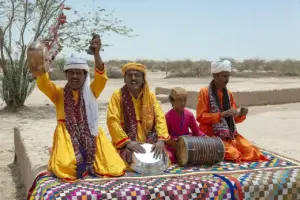
SARAIKI LANGUAGE: ORIGIN AND GEOGRAPHICAL DISTRIBUTION
- Language Family: Saraiki is an Indo-Aryan language closely related to Punjabi, Sindhi and other north-western languages of the Indian subcontinent.
- Geographical Concentration: It is predominantly spoken in southern Punjab, Pakistan, particularly around Multan, Bahawalpur, Dera Ghazi Khan and Muzaffargarh.
- Wider Distribution: Saraiki-speaking communities are also found in northern Sindh, Balochistan and Khyber Pakhtunkhwa.
- Indian Presence: In India, it is spoken by migrant communities, particularly families with ancestral roots in western Punjab before the Partition of 1947. Speakers are found in Punjab, Delhi, Haryana and Uttar Pradesh.
- Population: According to Pakistan’s 2023 Census, approximately 12% of the country’s population speaks Saraiki.
- Historical Identity: The language was earlier associated with names such as Multani and Lahnda. The term Saraiki gained wider recognition during the 1960s as speakers asserted a distinct linguistic identity.
- Regional Variants: Southern Saraiki, Northern Saraiki, Jhangi, Derawali and Bahawalpuri are among its regional varieties.
LITERARY HERITAGE AND CULTURAL SIGNIFICANCE
- Punjabi Connection: Saraiki shares vocabulary, geographical links and cultural influences with Punjabi, but possesses distinctive grammatical and phonetic characteristics. Its sound system also shows similarities with Sindhi.
- Sufi Literature: The renowned 19th-century Sufi poet Khwaja Ghulam Farid made significant contributions to Saraiki literature through devotional poetry known as Kafis.
- Musical Traditions: Poetry and folk music have played a crucial role in preserving Saraiki, particularly because it historically had limited representation in formal education.
- Folk Song: Chhalrev Chhalrev Waal is a traditional folk composition popular in Punjab on both sides of the border.
- Notable Singer: Pathanay Khan recorded the song in 1989 and drew extensively upon the poetry of Khwaja Ghulam Farid and Baba Bulleh Shah.
- Modern Revival: Pakistan’s Coke Studio and social media platforms have helped introduce Saraiki music to younger and international audiences.
ABOUT INDIAN LANGUAGES AND CULTURAL HERITAGE:● Language Family: Saraiki belongs to the Indo-Aryan branch of the Indo-European language family. ● Linguistic Diversity: India has significant linguistic diversity, with languages belonging to Indo-Aryan, Dravidian, Austroasiatic and Tibeto-Burman families. ● Eighth Schedule: The Indian Constitution recognises 22 scheduled languages under its Eighth Schedule. ● Article 29: Protects the right of citizens to conserve their distinct language, script and culture. ● Article 30: Protects the rights of religious and linguistic minorities to establish and administer educational institutions. ● Cultural Preservation: Folk songs, oral traditions, regional literature and digital platforms contribute to safeguarding intangible cultural heritage. |

