 India's No.1 PU & Degree With Integrated IAS & IPS(UPSC/PSC) Training College.


IUCN Warns Global Coral Reefs Face Collapse by 2075
IUCN WARNS GLOBAL CORAL REEFS FACE COLLAPSE BY 2075
WHY IN NEWS ?
The International Union for Conservation of Nature (IUCN) has warned that nearly all shallow-water coral reefs face an extremely high risk of collapse by 2075. Its global assessment classified 96% of coral reef systems as critically endangered, highlighting the growing impacts of climate change and human activities.
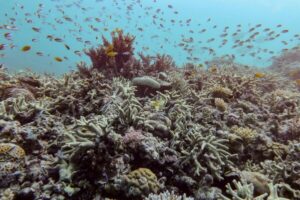
IUCN ASSESSMENT: STATUS OF GLOBAL CORAL REEFS
- Global Assessment: The IUCN assessed 127 tropical and subtropical coral reef systems, covering approximately 188,362 square kilometres, in its first global assessment of this kind.
- Risk Classification: Around 96% of the world’s coral reef systems were classified as critically endangered, indicating an extremely high risk of ecosystem collapse.
- Collapse Projection: Under the assessment’s climate scenario, nearly all shallow-water coral reefs could face an extremely high risk of collapse by 2075.
- Major Ecosystems: Threatened reef systems include Australia’s Great Barrier Reef, Southeast Asia’s Coral Triangle, the Mesoamerican Barrier Reef System in the Caribbean and coral reefs of the Red Sea.
- Ecological Consequences: Reef collapse occurs when reef-building hard corals largely disappear and are replaced by algae, rubble and sponges, disrupting marine habitats and biodiversity.
CAUSES, IMPACTS AND CONSERVATION CHALLENGES
- Ocean Warming: Climate change is the most consistent threat to coral reefs, as rising ocean temperatures cause coral bleaching, weakening corals and increasing mortality.
- Emission Trajectory: The report highlighted projections of approximately 7°C warming above pre-industrial levels under its selected climate scenario, while the UN warned of substantial warming under existing commitments.
- Overfishing Pressure: Overexploitation of herbivorous fish, including parrotfish, disrupts ecological balance by allowing algae to spread. The report linked fishing pressure to threats affecting 63% of coral reef ecosystems.
- Human Activities: Coastal development, marine pollution, tourism pressures and increasingly damaging storms further weaken reef resilience.
- Recovery Potential: The IUCN emphasised that coral reefs can recover from severe bleaching events if environmental pressures are reduced and effective conservation measures are implemented.
About CORAL REEFS AND MARINE BIODIVERSITY:● Definition: Coral reefs are underwater ecosystems formed primarily by colonies of coral polyps that produce calcium carbonate skeletons. ● Biodiversity Hotspots: Coral reefs support diverse marine organisms, provide fish breeding grounds and sustain the livelihoods of coastal communities. ● Coral Bleaching: It occurs when corals expel their symbiotic algae, usually because of heat stress, causing them to lose colour and a major source of nutrition. ● Ecosystem Services: Reefs protect coastlines from waves and storms, support fisheries, promote tourism and contribute to marine food security. |


