 India's No.1 PU & Degree With Integrated IAS & IPS(UPSC/PSC) Training College.


RBI MPC Divided Over Rising Inflationary Pressures
RBI MPC DIVIDED OVER SPREADING INFLATIONARY PRESSURES
WHY IN NEWS ?
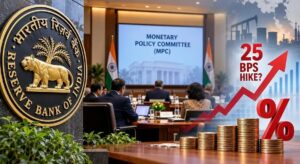
The Reserve Bank of India’s (RBI) Monetary Policy Committee (MPC) has revealed differences among members over whether inflation is becoming widespread and persistent. Minutes of its October meeting highlighted concerns over rising consumer prices, future interest rate hikes, and implications for monetary policy and the Indian rupee.
MPC DECISION AND DIFFERENCES OVER INFLATION:
- Rate Hike: On October 7, the six-member MPC unanimously increased the repo rate by 25 basis points to 5.5%. Four members also supported changing the policy stance from neutral to calibrated tightening.
- Majority View: Four members—Saugata Bhattacharya, Ram Singh, Governor Sanjay Malhotra and Executive Director Indranil Bhattacharya—expressed concerns about inflation spreading across different household consumption categories.
- Persistent Pressures: Saugata Bhattacharya observed that inflationary pressures were becoming entrenched, while Ram Singh highlighted price increases extending beyond the direct effects of fuel, energy and commodity prices.
- Minority Opinion: External member Nagesh Kumar and Deputy Governor Poonam Gupta considered inflation largely driven by external supply-side shocks, with limited evidence of widespread or entrenched price increases.
- Policy Uncertainty: Differences within the MPC have created uncertainty about future rate hikes. Economists are divided over whether another 25 basis points or larger cumulative increases will be required.
INFLATION TRENDS AND ECONOMIC IMPLICATIONS
- Rising CPI: India’s Consumer Price Index (CPI) inflation rose to 5.54% in September, compared with 4.83% in August, remaining above the RBI’s medium-term target of 4%.
- Generalised Inflation: Inflation generalisation occurs when price increases spread from volatile categories such as food and fuel to a wider range of goods and services, making inflation harder to control.
- Interest Rate Outlook: Economists differ on the extent of further monetary tightening required to contain inflation and anchor inflation expectations.
- Bond Market Signals: Rising yields on short-term government securities reflect market expectations of higher interest rates. The RBI reportedly rejected all offers at a weekly securities auction.
- Rupee Concerns: Weakness in the Indian rupee has raised questions about whether monetary tightening could also support orderly foreign exchange market conditions.
ABOUT MONETARY POLICY AND INFLATION:● RBI Mandate: The RBI conducts monetary policy to maintain price stability while keeping economic growth in mind. ● Repo Rate: It is the interest rate at which the RBI lends short-term funds to commercial banks against eligible securities. ● MPC Composition: The Monetary Policy Committee comprises six members—three RBI representatives and three external members appointed by the Central Government. ● Inflation Targeting: India’s flexible inflation-targeting framework sets a CPI inflation target of 4%, with a tolerance band of 2%–6%. ● Policy Transmission: Higher interest rates generally increase borrowing costs, moderate credit demand and reduce inflationary pressure. However, their effectiveness may be limited when inflation is primarily driven by supply-side shocks. |


