India's No.1 PU & Degree With Integrated IAS & IPS(UPSC/PSC) Training College.


Multiple Dengue Strains Fuel India’s Health Crisis
Multiple Dengue Virus Strains Raise India’s Public Health Concerns
Why in News ?
A nationwide ICMR surveillance study (2023–2025) has found the simultaneous circulation of all four dengue virus serotypes across several parts of India. The findings indicate increasing hyper-endemicity, raising concerns about severe infections and the effectiveness of future dengue vaccination programmes.
Key Findings of the ICMR Dengue Surveillance Study
- The Indian Council of Medical Research (ICMR), through its Virus Research and Diagnostic Laboratory (VRDL) Network, conducted a two-year molecular surveillance study covering 6,889 laboratory-confirmed dengue cases.
- The study analysed samples from 45 laboratories across 25 States and Union Territories between 2023 and 2025.
- DENV-2 remained the predominant serotype, accounting for more than half of all reported infections.
- Eight States/UTs reported the simultaneous circulation of all four dengue virus serotypes (DENV-1, DENV-2, DENV-3, and DENV-4), while fifteen reported the circulation of three serotypes.
- Around 7% of patients were infected with two or more serotypes simultaneously, indicating increasing dengue hyper-endemicity.
- Researchers observed that concurrent infections were associated with a greater likelihood of severe dengue, including low platelet count (thrombocytopenia), bleeding complications, and severe joint pain.
- The findings highlight the need for continuous monitoring of circulating serotypes to strengthen India’s dengue control strategy.
Implications for Public Health and Vaccination
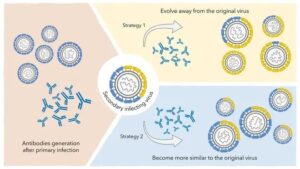
- The presence of multiple serotypes increases the risk of secondary infections, which are more likely to cause severe dengue due to Antibody-Dependent Enhancement (ADE).
- India currently does not include a dengue vaccine in its Universal Immunisation Programme (UIP), although indigenous vaccine candidates are in advanced clinical trials.
- An internationally approved dengue vaccine has recently received regulatory approval for import and sale in India.
- Since vaccine effectiveness differs across dengue serotypes, continuous molecular surveillance is essential for designing effective vaccination strategies.
- Experts recommend prioritising high-burden endemic regions for future vaccination while strengthening vector control, early diagnosis, and community awareness.
- The study underlines the importance of integrating surveillance data with public health policies to reduce disease burden and prevent outbreaks.
Key points : Dengue Fever● Dengue is a viral disease caused by the Dengue Virus (DENV), which has four distinct serotypes—DENV-1, DENV-2, DENV-3, and DENV-4. ● It is transmitted primarily through the bite of infected Aedes aegypti and Aedes albopictus mosquitoes, which breed in clean stagnant water and bite mainly during the daytime. ● Common symptoms include high fever, headache, muscle and joint pain, skin rash, and low platelet count. Severe cases may progress to Dengue Haemorrhagic Fever (DHF) or Dengue Shock Syndrome (DSS). ● Antibody-Dependent Enhancement (ADE) is a phenomenon in which infection with a different dengue serotype after a previous infection increases the risk of severe disease. ● Prevention focuses on eliminating mosquito breeding sites, larval control, personal protection, community participation, and early case detection. ● The National Centre for Vector Borne Disease Control (NCVBDC) under the Ministry of Health and Family Welfare coordinates India’s dengue prevention and control programmes. |