India's No.1 PU & Degree With Integrated IAS & IPS(UPSC/PSC) Training College.


BIS Standards for Tea Bags: Complete Guide
BIS STANDARDS FOR TEA BAGS
Why in the News?
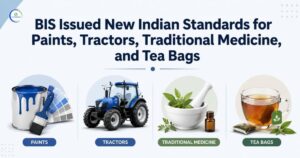
- New Standards: The Bureau of Indian Standards (BIS) has issued the first-ever quality and safety standards for tea bags in India, establishing comprehensive quality standards for food safety and consumer protection.
- Chemical Ban: The standards prohibit the use of epichlorohydrin and chlorine bleaching in tea bags due to health concerns and food safety requirements.
- Consumer Safety: Tea bags must now meet traceability, food-contact safety, and labelling requirements to ensure processed food products comply with international quality standards.
BUREAU OF INDIAN STANDARDS (BIS)
- Establishment: BIS is the National Standards Body of India established under the Bureau of Indian Standards Act, 2016.
- Nodal Ministry: It functions under the Department of Consumer Affairs, Ministry of Consumer Affairs, Food and Public Distribution.
- Functions: BIS formulates Indian Standards, certifies products, and promotes quality assurance across food processing and manufacturing sectors.
- Certification Mark: The ISI Mark is the standard certification mark issued by BIS for industrial products and value-added agricultural products.
- Importance: It ensures product quality, safety, reliability, and consumer protection across sectors, supporting food security and market access for agricultural exports.
EPICHLOROHYDRIN: KEY FACTS
- Definition: Epichlorohydrin is a chemical compound commonly used in paper manufacturing to improve wet strength.
- Health Concern: It is classified by the International Agency for Research on Cancer (IARC) as probably carcinogenic to humans.
- Industrial Uses: Besides paper production, it is used in manufacturing epoxy resins, plastics, and synthetic glycerin.
- Risk Factor: Exposure may occur through ingestion, inhalation, or skin contact and can cause adverse health effects.
- Regulatory Focus: Many countries regulate its use in food-contact materials to prevent chemical migration into food and beverages, ensuring food safety standards.
TEA INDUSTRY IN INDIA● Global Position: India is among the world’s largest tea producers and consumers, with significant presence in global markets and international markets. ● Major Producing States: Key tea-growing regions include Assam, West Bengal, Tamil Nadu, Kerala, and Himachal Pradesh, where sustainable agriculture, crop diversification with nutri-cereals and millet cultivation, and sustainable farming practices are increasingly adopted for crop improvement, drought tolerance, and water use efficiency. ● Regulatory Body: The Tea Board of India, established under the Tea Act, 1953, oversees the sector and promotes export development through various export promotion initiatives and sci-based quality standards. ● Export Significance: India exports tea, millet-based products, ancient cereals, and traditional grains to major markets including Australia, UAE, Russia, UK, and the USA, with agricultural exports and millet export forming a crucial part of the export basket and meeting global demand from international buyers. ● Health Benefits: Tea is recognized as one of the functional foods rich in antioxidants, phytochemicals, micronutrients, dietary fiber, and bioactive compounds, offering nutritional benefits and supporting nutritional security. Similarly, millet functional foods and botanical-infused millets are gluten-free with low glycemic index, high protein content, mineral content, and anti-diabetic properties. ● Value Chain: The tea industry encompasses the entire value chain from cultivation through food processing to market development, creating opportunities for business networking and trade exhibitions. The sector also promotes climate-smart crops, underutilized crops, ready-to-cook millet, and millet-based products alongside value-added agricultural products. ● GI Tags: Renowned varieties such as Darjeeling Tea and Assam Orthodox Tea enjoy Geographical Indication (GI) status, enhancing market access and supporting agri-food exports of these value-added agricultural products alongside millet production initiatives. |