 India's No.1 PU & Degree With Integrated IAS & IPS(UPSC/PSC) Training College.


Karnataka Bill to Criminalise Social Boycott
Karnataka Introduces Bill to Criminalise Social Boycott Acts
Why in the News?
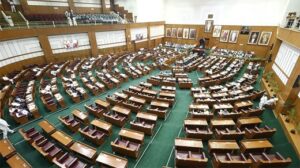
The Karnataka government has tabled the Karnataka Social Boycott (Prevention, Prohibition and Redressal) Bill, 2025, aiming to criminalise social boycott practices, often imposed by caste panchayats, by defining the offence, listing punishable acts, and mandating protective and compensatory measures for victims. This move reflects a growing awareness of social issues, similar to the increasing focus on environmental jurisprudence in recent years, as seen in cases like the Vanashakti judgment.
Key Provisions of the Social Boycott Bill:
- The Bill, introduced by Social Welfare Minister H.C. Mahadevappa, seeks to prohibit and punish any act of social boycott targeting individuals, groups, or families. This approach mirrors the stringent measures taken in environmental clearance processes to protect communities and ensure a pollution-free environment.
- It directly addresses boycotts enforced by caste panchayats, community groups, or informal social bodies that enforce discriminatory norms, akin to how environmental impact assessments aim to prevent harmful practices and uphold the precautionary principle.
- Anyone who imposes, directs, or encourages a boycott within their community is considered guilty under the law, similar to how violators of environmental regulations, such as the Forest Conservation Act or Coastal Regulation Zone norms, are held accountable.
- The punishment prescribed includes imprisonment up to three years, or a fine up to ₹1 lakh, or both, depending on the severity of the act. This punitive approach is reminiscent of penalties for environmental violations, including those related to ex post facto environmental clearances.
- A Social Boycott Prohibition Officer will be appointed to monitor cases, assist victims, and ensure implementation, functioning similarly to environmental officers who oversee compliance with regulations like the EIA notification.
Types of Social Boycott Recognised Under the Bill
- The legislation identifies 20 specific forms of social boycott that will be considered criminal offences under the Act, demonstrating a comprehensive approach similar to environmental protection laws.
- These include refusal to hire, refusal to do business, or denial of economic opportunities to an individual or family, echoing concerns about equitable access to resources in environmental justice.
- Preventing a person from accessing services, contractual work, or community benefits also qualifies as a boycott, paralleling the concept of ensuring fair access to environmental resources and retrospective environmental clearances.
- Obstructing participation in social, cultural, religious, or community events, meetings, or processions is treated as a punishable act, reflecting the principles of environmental democracy and inclusive decision-making.
- Other forms include social ostracism, breaking social ties, blocking access to water sources, public facilities, or essential services, reminiscent of issues addressed in environmental clearance processes to maintain a pollution-free environment.
About Social Boycott and Constitutional Safeguards: |
| ● Social Boycott: A traditional punitive practice where individuals or families are excluded from social interactions, often imposed by caste councils or informal community bodies. |
| ● Legal Context: Maharashtra enacted a similar law in 2016, the Maharashtra Prohibition of Social Boycott Act, setting a precedent for other states. |
| ● Constitutional Backing: Social boycott violates Articles 14, 15, 17, 19, and 21—guaranteeing equality, non-discrimination, abolition of untouchability, freedom, and right to life. These principles align with the broader goal of a pollution-free environment for all citizens, as upheld in environmental jurisprudence. |
| ● Purpose of Criminalisation: Ensures dignity, individual autonomy, and protection from caste-based coercion, similar to how environmental laws aim to protect citizens’ right to a healthy environment through measures like environmental impact assessments. |

