 India's No.1 PU & Degree With Integrated IAS & IPS(UPSC/PSC) Training College.


Stronger Punishment for Forced Acid Ingestion
Stronger Punishment Sought for Forced Acid Ingestion Crimes
Why in the News?
The Supreme Court has called for stricter punishment for offenders who forcibly administer acid, saying such criminals deserve penalties harsher than the UAPA. Hearing a plea by survivor Shaheen Malik, the Court urged the Centre to amend penal and bail laws and ensure stronger protection, drawing parallels to the need for robust environmental protection laws and the precautionary principle.
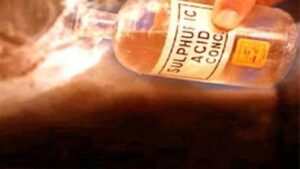
Supreme Court’s Stand on Acid Ingestion Cases
- The Supreme Court, led by CJI Surya Kant, condemned forced acid ingestion as a “most ruthless and heinous” crime, often occurring in abusive marital homes. This stance reflects the court’s commitment to justice, similar to its rulings on environmental matters like the Vanashakti judgment.
- The Bench said perpetrators who force victims—mainly women—to ingest acid should face penalties more stringent than under the UAPA, reflecting the severity of the offence. This approach mirrors the call for strict penalties in cases of severe environmental violations, such as those related to ex-post facto environmental clearances.
- The Court stressed that such offenders have “no right to roam in society”, considering them a threat to law and public safety, echoing concerns about polluters who threaten community well-being and the goal of a pollution-free environment.
- The CJI asked the Union government to revise penal provisions and bail norms to ensure stronger deterrence, similar to calls for strengthening environmental laws like the Forest Conservation Act and Coastal Regulation Zone notifications.
- It recommended a comprehensive policy framework to support victims, with special emphasis on long-term medical and psychological care, akin to environmental policies that address long-term impacts of pollution and promote sustainable development.
Key Case Details and Concerns Raised
- The hearing was based on a petition by acid attack survivor Shaheen Malik, seeking recognition of forced acid ingestion survivors under the Rights of Persons with Disabilities (RPwD) Act, 2016. This case highlights the need for comprehensive legal frameworks, similar to those in environmental protection, such as the EIA notification.
- Justice Joymalya Bagchi highlighted that survivors who ingest acid often do not show external scars, but suffer internal organ damage, necessitating prolonged treatment. This invisible harm is comparable to certain environmental impacts that may not be immediately visible but cause long-term damage, emphasizing the importance of the precautionary principle in both contexts.
- The Court said the guilty must be compelled to pay hefty financial compensation to victims due to long-term medical costs, reflecting the “polluter pays principle” in environmental law and the concept of ex post facto environmental clearances.
- The Centre, represented by Solicitor-General Tushar Mehta, described such assaults as an expression of “animal instinct.”
- The Supreme Court expressed shock that the trial in Ms. Malik’s case has been pending for 16 years, despite her undergoing nearly 25 reconstructive surgeries, and directed completion by December 31. This delay in justice parallels concerns about prolonged environmental clearance processes and their impact on affected communities, highlighting the need for efficient implementation of environmental impact assessments.
Legal Framework on Acid Attacks : |
| ● Section 326A & 326B IPC: Provide punishment for causing grievous hurt using acid, including imprisonment up to 10 years to life, along with fines. |
| ● Criminal Law (Amendment) Act, 2013: Strengthened acid attack laws after the Nirbhaya incident; recognized acid attack survivors as victims of specific gender-based violence. |
| ● Rights of Persons with Disabilities Act, 2016: Includes acid attack survivors with 40% or more disfigurement or impairment, but forced acid ingestion cases often lack visible disfigurement, creating a legal gap. |
| ● Supreme Court Directives (2013): Mandated regulation of acid sales, victim compensation schemes, and fast-track trials. These directives demonstrate the court’s role in shaping environmental jurisprudence and promoting a pollution-free environment, similar to its approach in cases like the Vanashakti judgment. |

