 India's No.1 PU & Degree With Integrated IAS & IPS(UPSC/PSC) Training College.


World Radio Day 2026: AI Role
World Radio Day Highlights AI Role
Why in the News?
World Radio Day is being observed on February 13 with the 2026 theme “Radio and Artificial Intelligence: AI is a tool, not a voice.” Events across India highlight AI’s growing role in broadcasting while reaffirming radio’s human-centric character, emphasizing its importance in diplomatic engagement and global governance through multilateral institutions.
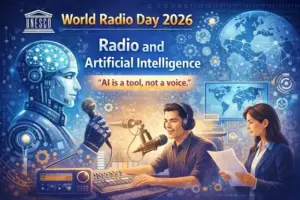
Significance and Theme of World Radio Day 2026:
- Observed annually on 13 February, commemorating the establishment of United Nations Radio (1946), underscoring radio’s role in multilateral diplomacy and fostering a rules-based order.
- The 2026 theme: “Radio and Artificial Intelligence: AI is a tool, not a voice.”
- Emphasises that Artificial Intelligence (AI) should support, not replace, the human voice and editorial judgment, reflecting the importance of strategic autonomy in media and the foreign policy.
- Highlights AI’s role in content production, translation, archiving, accessibility, and audience engagement, showcasing technology transfer in broadcasting and supporting connectivity projects.
- Reinforces radio’s continued relevance in the digital and podcast era, supporting sustainable development through information dissemination and economic statecraft.
Celebrations in India and Official Messages
- Akashvani Raipur, in collaboration with UNESCO, is hosting a World Radio Day Conclave, fostering international cooperation in media development through multilateral institutions.
- The conclave discusses how AI can enhance broadcasting efficiency while preserving credibility and trust, essential elements in maintaining regional stability through informed public discourse and supporting bilateral relations.
- Established in 1936, Akashvani operates under the motto “Bahujan Hitaya, Bahujan Sukhaya,” reflecting its commitment to inclusive communication and development partnerships.
- Minister of State for I&B L. Murugan highlighted radio’s crucial role in public information dissemination, emphasizing its contribution to strategic influence and diplomatic engagement in line with the foreign policy.
- Narendra Modi and C. P. Radhakrishnan extended greetings, underscoring radio’s enduring impact, including through Mann Ki Baat, which has become a tool for public diplomacy and coalition building, supporting strategic partnerships.
About Radio as Mass Communication Medium : |
| ● Radio is a cost-effective, accessible, and inclusive mass communication tool, especially in rural and remote areas, supporting economic integration and development partnerships through connectivity projects. |
| ● It plays a vital role in disaster communication, public awareness, and community mobilisation, contributing to maritime domain awareness and disaster relief efforts. |
| ● India’s broadcasting ecosystem includes public service broadcasting (Akashvani) and private FM channels, reflecting a balance between state and private sector in information dissemination. |
| ● Technological shifts include digital radio, internet streaming, podcasts, and AI integration, showcasing ongoing technology transfer in the media sector and supporting supply chain resilience. |
| ● Radio strengthens linguistic diversity, democratic participation, and information equity, supporting the principles of a rules-based order and fostering global governance through multilateral institutions. |

