 India's No.1 PU & Degree With Integrated IAS & IPS(UPSC/PSC) Training College.


SATELLITE-TAGGED GANGES SOFT-SHELL TURTLE RELEASED IN KAZIRANGA
SATELLITE-TAGGED GANGES SOFT-SHELL TURTLE RELEASED IN KAZIRANGA
Why in the News?
- First Tagging: India’s first satellite-tagged Ganges soft-shell turtle was released in Kaziranga National Park and Tiger Reserve.
- Conservation Milestone: The release coincided with the observation of Endangered Species Day, highlighting freshwater turtle conservation and the need for environmental clearances for habitat protection.
- Scientific Collaboration: The project was undertaken by the Wildlife Institute of India with Assam Forest Department and Kaziranga authorities.
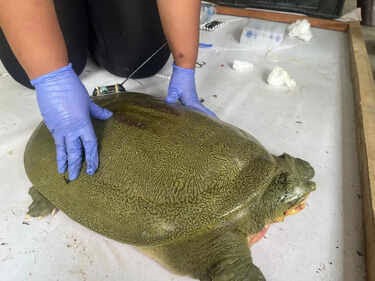
ABOUT GANGES SOFT-SHELL TURTLE
- Scientific Name: The species is scientifically known as Nilssonia gangetica.
- Legal Protection: It is listed under Schedule I of the Wildlife Protection Act, 1972 providing highest legal protection, complemented by the Forest Conservation Act for habitat safeguarding.
- IUCN Status: The turtle is classified as Endangered on the International Union for Conservation of Nature Red List, reflecting environmental jurisprudence priorities.
- Habitat: It inhabits large rivers, lakes and reservoirs, especially within the Brahmaputra river basin, requiring protection under coastal regulation zone and riverine conservation frameworks.
- Ecological Role: Being a scavenger and predator, it helps maintain aquatic ecosystem health by feeding on decaying animal matter, contributing to a pollution free environment.
SIGNIFICANCE OF SATELLITE TAGGING
- Movement Tracking: Satellite transmitters help scientists study seasonal migration and habitat-use patterns of turtles.
- Habitat Identification: Research can identify nesting, breeding and feeding grounds critical for conservation planning and environmental impact assessment processes.
- Conservation Strategy: Data generated supports active management and species recovery programmes in river ecosystems, following the precautionary principle for habitat protection.
- Technological Advancement: Demonstrates increasing integration of modern telemetry and wildlife science in conservation efforts.
- Policy Support: Scientific evidence can strengthen habitat protection and river conservation initiatives in India, ensuring proper environmental clearances for development projects and preventing ex post facto approvals that may harm critical habitats, as emphasized in the Vanashakti judgment and EIA notification frameworks.
KAZIRANGA NATIONAL PARK● Location: Kaziranga National Park is located in Assam along the floodplains of the Brahmaputra River. ● UNESCO Status: It is recognised as a UNESCO World Heritage Site. ● Flagship Species: The park is globally famous for conserving the one-horned rhinoceros population. ● Biodiversity Hotspot: Kaziranga supports tigers, elephants, swamp deer, wild buffaloes and diverse freshwater turtle species. ● Conservation Importance: Seasonal flooding and grassland ecosystems make Kaziranga a vital ecological landscape in Northeast India, protected through strict environmental clearances and adherence to environmental democracy principles. |

