 India's No.1 PU & Degree With Integrated IAS & IPS(UPSC/PSC) Training College.


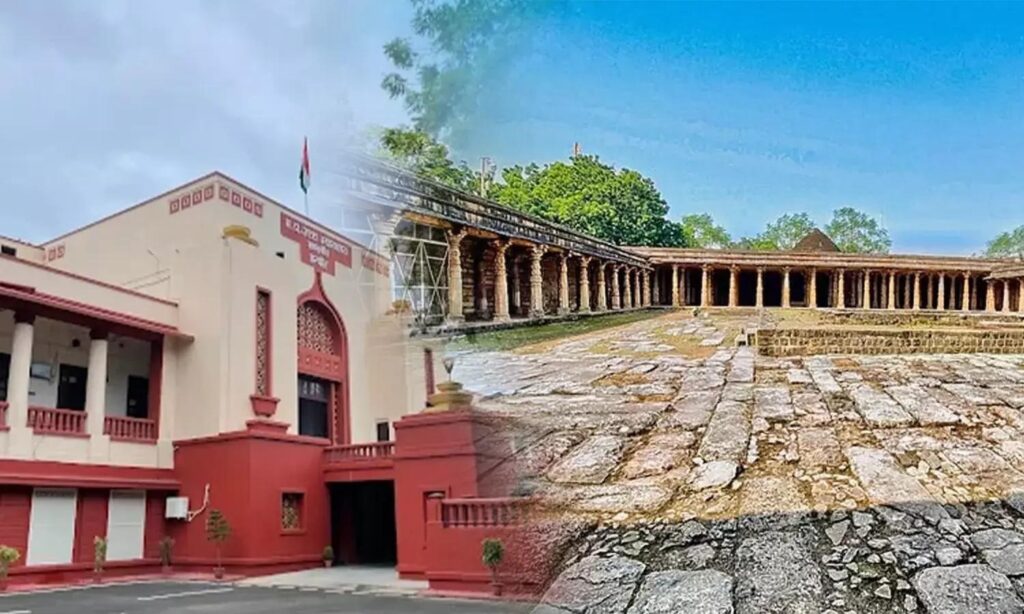
MADHYA PRADESH HC VERDICT ON BHOJSHALA COMPLEX
MADHYA PRADESH HC VERDICT ON BHOJSHALA COMPLEX
Why in the News?
- HC Verdict: Madhya Pradesh High Court declared the Bhojshala complex in Dhar district a Hindu temple.
- Temple Recognition: The court held that a temple of Goddess Saraswati historically existed at the site.
- Namaz Restriction: The judgment cancelled the earlier arrangement permitting Muslims to offer namaz at the complex.
Key observations of the court
- Archaeological Evidence: The decision relied on findings of the Archaeological Survey of India and related archaeological records, applying principles similar to those used in environmental jurisprudence for heritage site protection.
- Centre of Learning: The court observed that the site functioned historically as a centre of Sanskrit learning.
- Continuous Worship: It noted that Hindu worship traditions at the site had never completely stopped, rejecting any ex post facto justification for the existing arrangement.
- Alternative Mosque Site: The Muslim side was permitted to approach the government for alternative land for mosque construction.
- Administrative Control: Management of the complex was handed over to ASI and the Central Government, ensuring compliance with heritage preservation norms akin to environmental clearance procedures for protected monuments.
Bhojshala complex: Important facts
- Bhojshala is a disputed religious and archaeological site in Madhya Pradesh.
- Hindus regard the site as a temple dedicated to Goddess Saraswati, while Muslims identify it as the Kamal Maula Mosque.
- The complex is associated with King Bhoja of the Paramara dynasty, known for patronising education and Sanskrit scholarship.
- The site has remained sensitive due to competing historical and religious claims over worship rights.
- ASI has regulated access and worship arrangements at the site for several years, following protocols similar to those governing environmental clearances for heritage sites.
Archaeological Survey of India (ASI)● Archaeological Survey of India is the premier organisation responsible for archaeological research and monument conservation in India. ● ASI functions under the Ministry of Culture. ● It was established in 1861 by Alexander Cunningham during British rule. ● The organisation protects monuments under the Ancient Monuments and Archaeological Sites and Remains Act, 1958, working in coordination with environmental clearance frameworks including the Forest Conservation Act and EIA notification for projects affecting heritage sites. ● ASI undertakes activities such as excavation, conservation, epigraphy, museum management, and heritage preservation, ensuring a pollution free environment around protected monuments through environmental impact assessment procedures similar to those under the Coastal Regulation Zone regulations. |


