 India's No.1 PU & Degree With Integrated IAS & IPS(UPSC/PSC) Training College.


Why the Sixth Schedule is in News and What it Means
Why the Sixth Schedule is in News and What it Means
The Sixth Schedule of the Constitution of India has recently been in news after Narendra Modi announced a ₹1,500-crore development package for the Bodoland Territorial Region (BTR) in Assam.
The BTR is administered by the Bodoland Territorial Council (BTC), which functions under the Sixth Schedule. The announcement is part of the implementation of the Bodo Peace Accord, signed to end decades of insurgency and promote development, peace and political stability in the Bodo areas. Such development projects in tribal regions require proper environmental clearances and adherence to environmental impact assessment procedures to ensure sustainable growth.
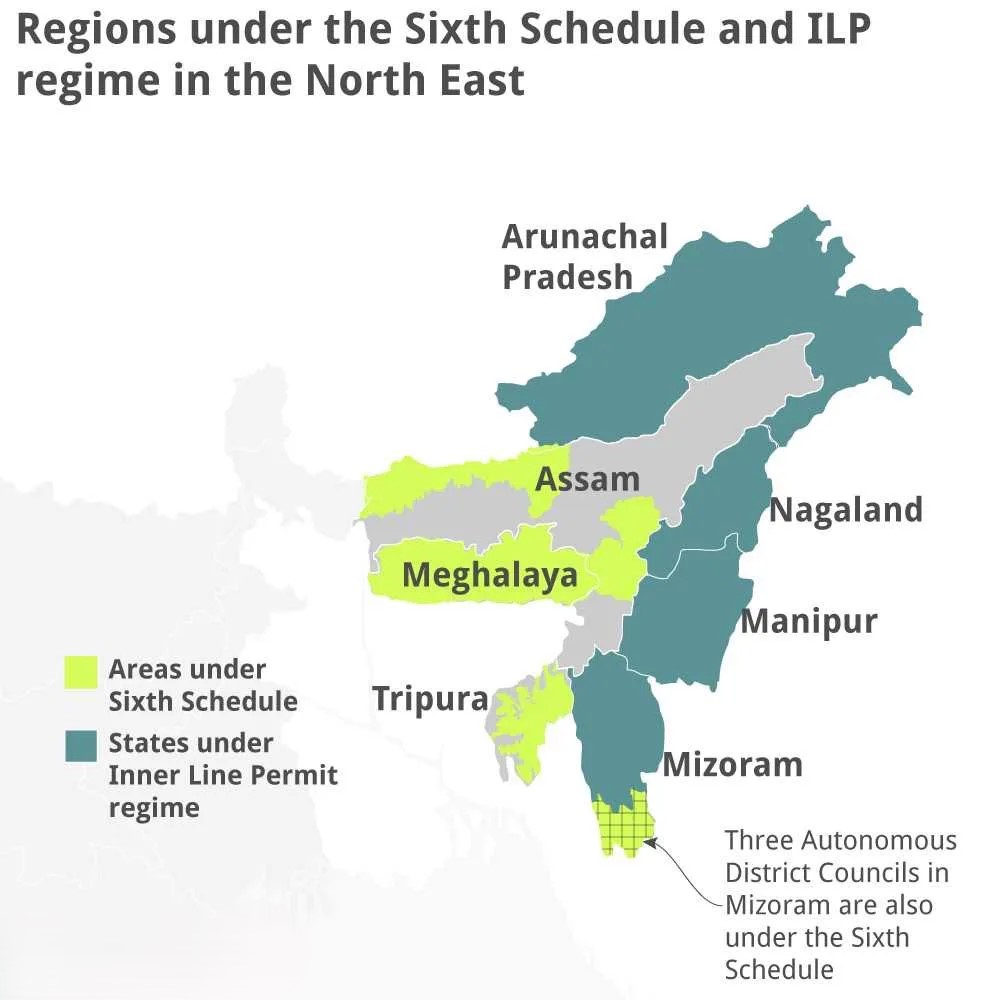
Since the Bodoland Territorial Council derives its powers from the Sixth Schedule, this development has brought renewed attention to the constitutional provisions for tribal autonomy in Northeast India and the importance of environmental democracy in these regions.
What is the Sixth Schedule?
The Sixth Schedule of the Constitution of India provides special administrative arrangements for tribal areas in Northeast India. It is mentioned in Article 244(2) and Article 275(1) of the Constitution.
The main objective of the Sixth Schedule is to protect tribal identity, culture, and land rights while providing local self-governance and ensuring a pollution free environment for indigenous communities.
Under this system, tribal areas are governed by Autonomous District Councils (ADCs) which have powers over subjects such as:
- Land and land use
- Forest management (excluding reserved forests) in accordance with the Forest Conservation Act
- Local governance and administration
- Culture and traditions
- Collection of certain local taxes
Environmental governance including oversight of environmental clearances for local projects
These councils exercise legislative, executive and limited judicial powers, allowing tribal communities to manage their own local affairs. The councils also play a role in implementing environmental jurisprudence principles such as the polluter pays principle and precautionary principle in their jurisdictions.
In recent years, the role of ADCs has expanded to include environmental oversight, ensuring that development projects comply with the EIA Notification and do not proceed with ex post facto or retrospective environmental clearances, as highlighted in the Vanashakti judgment. This is particularly important in ecologically sensitive areas including those falling under coastal regulation zone regulations in states like Mizoram and Tripura.
States Covered under the Sixth Schedule
The Sixth Schedule currently applies to four states of Northeast India:
- Assam
- Meghalaya
- Tripura
- Mizoram
Autonomous District Councils under Sixth Schedule (Total: 10)
Assam – 3
Bodoland Territorial Council (BTC)
Karbi Anglong Autonomous Council (KAAC)
Dima Hasao Autonomous District Council (DHADC)
Meghalaya – 3
Khasi Hills Autonomous District Council (KHADC)
Jaintia Hills Autonomous District Council (JHADC)
Garo Hills Autonomous District Council (GHADC)
Tripura – 1
Tripura Tribal Areas Autonomous District Council (TTAADC)
Mizoram – 3
Chakma Autonomous District Council
Lai Autonomous District Council
Mara Autonomous District Council
Conclusion
The Sixth Schedule plays a crucial role in ensuring tribal autonomy, cultural protection and decentralized governance in Northeast India. Recent developments such as the development package for the Bodoland Territorial Region highlight the continuing importance of Autonomous District Councils in promoting peace, development and inclusive governance in tribal areas. As these regions undergo development, the integration of environmental safeguards and proper environmental clearance mechanisms ensures that progress does not come at the cost of ecological degradation, thereby balancing development with environmental protection.
UPSC Key Point:
The Sixth Schedule applies only to Assam, Meghalaya, Tripura and Mizoram and provides 10 Autonomous District Councils for tribal self-governance with powers including environmental oversight and forest management.




