 India's No.1 PU & Degree With Integrated IAS & IPS(UPSC/PSC) Training College.


Vultures in India: Crisis and Conservation Efforts
Vultures in India: Crisis, Environmental Impact, and Conservation
Introduction
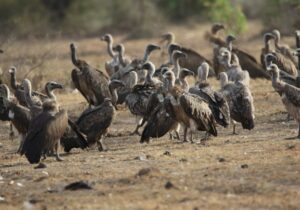
Vultures, often called “nature’s clean-up crew”, play a vital role in ecosystems by feeding on carcasses and preventing disease outbreaks. In the 1980s, India had nearly 40 million vultures, but within two decades, populations crashed by over 95 %—one of the fastest declines ever recorded in any bird species.
The collapse of vulture populations has triggered ecological imbalance, public-health hazards, and cultural loss. Understanding the causes and conservation efforts behind this crisis is crucial to India’s biodiversity and sustainable-development goals.
Causes of Decline
- Diclofenac Poisoning
- The principal cause is diclofenac, a veterinary painkiller once widely used for cattle. When vultures feed on carcasses of animals treated with this drug, they suffer acute kidney failure, leading to mass deaths. Even trace residues can kill an entire flock.
- Other Toxic Drugs
- After diclofenac was banned (2006), substitutes like aceclofenac, ketoprofen, and nimesulide emerged, many of which are equally toxic. In 2025, India banned nimesulide to strengthen the ban regime.
- Habitat Loss and Disturbance
- Urban expansion, quarrying, and tourism have damaged traditional nesting cliffs and roosting trees. Quarrying in Ramanagara, Karnataka—home to the Ramadevarabetta Vulture Sanctuary—has threatened the last natural breeding colonies of the long-billed vulture.
- Food Scarcity
- Modern waste-disposal systems and reduced livestock mortality have reduced carcass availability, leaving vultures without adequate food sources.
- Electrocution and Poisoning
- Vultures often die by perching on live power lines or ingesting poisoned bait intended for stray dogs and predators.—
Environmental and Health Impacts
- Rise in Disease and Feral Dogs
- Vultures once consumed carcasses within hours, limiting pathogens. Their absence led to a surge in feral dog populations, spreading rabies, anthrax, and plague. Studies link the vulture collapse to tens of thousands of additional human rabies deaths and economic losses exceeding ₹50,000 crore.
- Ecological Imbalance
- Vultures are keystone decomposers. Their disappearance disrupts nutrient cycles, causes carcass accumulation, and overburdens municipal waste systems.
- Cultural and Religious Impact
- For India’s Parsi (Zoroastrian) community, vultures are sacred to the Tower of Silence ritual of body disposal. Their loss has forced cultural adaptation and symbolizes the breakdown of ecological ethics.
- Environmental Warning
- The vulture crisis highlights how one human innovation—a drug—can destabilize an entire ecosystem, serving as a cautionary tale for modern development.
Government and Institutional Measures
- Ban on Diclofenac and Related Drugs
- The 2006 ban on veterinary diclofenac remains the cornerstone of vulture protection. Meloxicam was identified as a safe alternative. New bans on nimesulide (2025) reinforce India’s regulatory approach.
- Vulture Action Plan 2020–2025
- Issued by the Ministry of Environment, Forest and Climate Change (MoEFCC), the plan aims to:
- Establish Vulture Safe Zones (VSZs) where only safe drugs are used.
- Expand breeding and reintroduction centres.
- Monitor vulture populations through GPS tagging and nationwide surveys.
- Strengthen toxicology research and public awareness.
Estimated cost: ₹207 crore. - Conservation Breeding Centres
- India operates eight centres under the Central Zoo Authority, including:
- Pinjore (Haryana) – the largest, successfully breeding white-rumped and long-billed vultures.
- Rani (Assam) – focuses on Himalayan griffons and white-rumped vultures.
- Van Vihar (Bhopal) – breeding for reintroduction in central India.
- Rajabhatkhawa (West Bengal) – slender-billed and oriental white-backed vultures.
- Vulture Safe Zones and Feeding Stations
- Each safe zone covers roughly 100 km radius around nesting sites. Carcasses are monitored to ensure they are drug-free. “Vulture restaurants” in places like Jorbeer (Rajasthan) provide clean food in a controlled environment.
- NGO and Research Collaboration
- The Bombay Natural History Society (BNHS) leads research, awareness, and policy advocacy, working with global networks such as SAVE (Saving Asia’s Vultures from Extinction) and state forest departments.
Major Conservation Sites in India
Site / Region State Significance
Ramadevarabetta Vulture Sanctuary (Ramanagara) Karnataka India’s first vulture sanctuary (2012); protects long-billed and Egyptian vultures. Threats: quarrying, tourism, lack of breeding centre.
Panna Tiger Reserve Madhya Pradesh Reintroduction site for white-rumped vultures under BNHS-MoEFCC project.
Pinjore Breeding Centre Haryana Released hundreds of captive-bred vultures into wild.
Rani Breeding Centre Assam Major Northeast India population recovery site.
Rajabhatkhawa (Buxa TR) West Bengal Focus on slender-billed and oriental white-backed species.
Gir National Park & Junagadh Gujarat Egyptian and white-rumped vultures protected through carcass-safety programmes.
Mysuru–Chamarajanagar Landscape Karnataka Small colonies near Bandipur-BRT corridor, important for landscape connectivity.
Vulture Species in India (and IUCN Status)
- White-rumped Vulture — Critically Endangered
- Slender-billed Vulture — Critically Endangered
- Long-billed Vulture — Critically Endangered
- Red-headed Vulture — Critically Endangered
- Egyptian Vulture — Endangered
- Himalayan Griffon — Near Threatened
- Bearded Vulture (Lammergeier) — Near Threatened
- Cinereous Vulture — Near Threatened
- Eurasian Griffon — Least Concern
Way Forward
- Enforce Drug Bans Strictly – Make possession or sale of banned NSAIDs a cognisable offence. Test all new veterinary drugs for vulture safety before approval.
- Expand Safe Zones – Ensure every major nesting site falls within a drug-free zone. Provide meloxicam subsidies to farmers.
- Accelerate Breeding and Reintroduction – Approve pending centres like Karnataka’s proposed facility and track released birds via GPS telemetry.
- Protect Habitat – Stop quarrying in sanctuary buffer zones; regulate tourism and religious activities near nesting cliffs.
- Community Awareness – Train veterinarians, livestock owners, and students about vulture-friendly practices; promote “vulture-safe livestock” branding.
- Scientific Monitoring – Conduct regular surveys, toxicology studies, and long-term data tracking to guide adaptive management.
- Regional Cooperation – Coordinate policies with Nepal, Bangladesh, and Pakistan through the SAVE network to control cross-border drug use.
Conclusion
The vulture crisis is a profound ecological and moral reminder that human progress must respect natural limits. These birds—once numbering in millions—now struggle for survival because of a single toxic drug and unchecked human activity.
India’s renewed bans, the Vulture Action Plan 2020–25, and sanctuaries like Ramanagara’s Ramadevarabetta offer hope. Protecting vultures is not just about saving a species; it is about restoring nature’s balance, preventing disease, and reaffirming our duty as custodians of the environment.
If India succeeds, it will demonstrate that even near-extinct species can be revived through science, law, and public will—a lesson in resilience for the planet itself.




