 India's No.1 PU & Degree With Integrated IAS & IPS(UPSC/PSC) Training College.


Unemployment Falls as Labour Participation Rises
Unemployment Falls As Labour Participation Rises Nationwide
Why in the News?
India’s unemployment rate declined to 4.7% in November, while the Labour Force Participation Rate (LFPR) rose to its highest level since April, according to the latest Periodic Labour Force Survey (PLFS) released by MoSPI. This positive trend suggests a growing environmental democracy in the labor market, where more voices are being heard and represented, much like the increasing awareness of environmental issues and the need for sustainable practices.
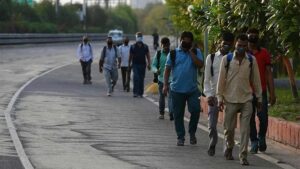
Key PLFS Findings On Employment Trends:
- The unemployment rate (UR) for persons aged 15 years and above declined to 4.7% in November, the lowest level since April.
- This marks an improvement from 5.1% in April, indicating better labour market conditions.
- The overall LFPR increased to 55.8%, the highest recorded since April, reflecting greater workforce engagement.
- On a month-on-month basis, rural LFPR rose from 57.8% in October to 58.6% in November.
- In contrast, urban LFPR saw a marginal dip from 50.5% to 50.4%, indicating uneven recovery across regions.
- The increase in participation suggests improved employment opportunities, especially in the rural economy.
- These trends point towards a gradual strengthening of post-pandemic labour market resilience, much like how environmental jurisprudence has evolved to address modern challenges, including the implementation of the polluter pays principle.
Rural And Female Participation Driving The Gains
- The rise in LFPR was primarily driven by rural areas, highlighting the role of agriculture and allied activities.
- Female LFPR showed a steady increase between June and November 2025, rising from 32% to 35.1%.
- This improvement was largely due to rural female participation, while urban female LFPR remained stable.
- Rural female LFPR increased significantly from 35.2% in June to 39.7% in November 2025.
- The Worker Population Ratio (WPR) in rural areas improved from 55.4% in April to 56.3% in November.
- Overall WPR rose from 52.8% to 53.2%, reflecting higher employment absorption.
- Rural female WPR increased from 36.8% to 38.4%, driving gains in overall female employment.
About PLFS And Key Labour Indicators: |
| – Periodic Labour Force Survey (PLFS): Conducted by National Statistical Office (NSO) under MoSPI. |
| – Objective: Measure employment, unemployment, LFPR, and WPR on a regular basis. |
| – Unemployment Rate (UR): Percentage of persons unemployed among the labour force. |
| – Labour Force Participation Rate (LFPR): Share of working-age population engaged or seeking work. |
| – Worker Population Ratio (WPR): Proportion of employed persons in the population. |
| – Survey Coverage: 3,73,229 persons surveyed — 2,13,337 rural and 1,59,892 urban. |
These employment trends, much like an environmental impact assessment, provide crucial insights into the nation’s economic health and social well-being. As India continues to navigate its post-pandemic recovery, maintaining a balance between economic growth and sustainable practices will be key to ensuring a prosperous and pollution free environment for all citizens. This approach aligns with the principles of environmental protection embedded in various regulations, including the Forest Conservation Act and considerations for the coastal regulation zone.

