 India's No.1 PU & Degree With Integrated IAS & IPS(UPSC/PSC) Training College.


Typhoon Kalmaegi Floods Philippines, Death Toll Rises
Typhoon Kalmaegi Devastates Central Philippines with Torrential Rains
Why in the News ?
Typhoon Kalmaegi, locally called Tino, struck the central Philippines, killing four people and causing severe flooding and flight disruptions. The storm, with winds up to 195 km/h, hit Southern Leyte and Cebu, leaving widespread destruction and prompting evacuation and relief efforts across the region. The increasing intensity of such storms has raised concerns about the impact of greenhouse gas emissions on climate change, highlighting the need for effective emissions trading systems and clean development mechanisms.
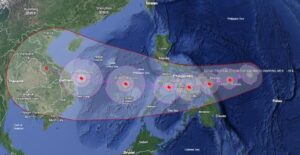
Impact and Damage Assessment:
- Fatalities and destruction: The typhoon claimed four lives and displaced hundreds as torrential rain and winds wreaked havoc across Southern Leyte, Cebu, and nearby provinces.
- Severe flooding: Many areas, including Liloan and Mandaue City, witnessed floodwaters submerging vehicles and residents stranded on rooftops, prompting emergency rescues. The flooding has highlighted the need for improved sustainable forest management practices and environmental impact assessments to mitigate such risks in the future.
- Wind intensity: Sustained winds reached 140 km/h with gusts up to 195 km/h, uprooting trees and damaging electric lines, disrupting power supply. This extreme weather event underscores the importance of clean energy transitions and emission trading to reduce climate change impacts.
- Transportation halt: More than 160 flights were cancelled, and ferry operations were suspended due to hazardous sea conditions.
- Helicopter crash: A military helicopter engaged in relief operations crashed in northern Mindanao, highlighting operational risks during natural disasters.
Government and Relief Response
- Evacuations: Authorities ordered mass evacuations from low-lying areas to prevent casualties from storm surges up to three meters high.
- Emergency alerts: The Philippine Atmospheric, Geophysical and Astronomical Services Administration (PAGASA) issued multiple alerts, ensuring early warnings to communities.
- Rescue and aid: The Armed Forces and local disaster response units were mobilized for rescue missions and distribution of relief supplies in flood-hit zones.
- Infrastructure damage: Several roads and bridges became impassable, slowing aid delivery in remote areas of the Visayas region.
- International assistance: Relief agencies are monitoring the situation as Vietnam prepares for potential landfall once the typhoon moves into the South China Sea. There are discussions about potential carbon offset projects and voluntary carbon market initiatives to help affected regions recover sustainably, with a focus on carbon market linkage to support long-term resilience.
Understanding Typhoons : |
● Definition: A typhoon is a tropical cyclone formed over the Northwest Pacific Ocean, characterized by strong winds and heavy rainfall.
|

