 India's No.1 PU & Degree With Integrated IAS & IPS(UPSC/PSC) Training College.


Trump’s Ukraine Peace Plan: India’s Stakes
Trump’s Ukraine Peace Plan and India’s Strategic Stakes
Syllabus:
GS Paper -2
Effect of Policies & Politics of Countries on India’s Interests
Why in the News ?
Former US President Donald Trump has unveiled a controversial Ukraine peace plan, proposing a major shift in US–Russia relations by reintegrating Moscow into the Western order. This has unsettled Europe, Ukraine, and parts of the US establishment, while raising significant geopolitical implications for India, especially amid changing Eurasian power dynamics.
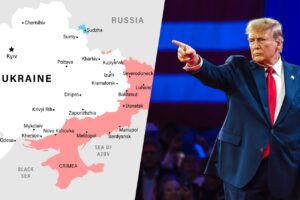
Understanding Trump’s Ukraine Peace Proposal
- Fresh Approach: Trump presents a bold framework to reconcile the US–Russia rivalry, challenging two decades of entrenched hostility.
- Core Offer: His 28-point proposal mirrors key Russian demands—territorial concessions in eastern Ukraine and Crimea, NATO neutrality for Kyiv, and limits on its military.
- Strategic Objective: Reintegration of Russia into the global economy and possibly the G7, reducing Moscow’s dependence on China.
- High-Stakes Diplomacy: Trump aims to reset relations despite Washington’s bipartisan suspicion toward Moscow.
- US Internal Divide: While MAGA groups push for disengagement from European conflicts, the US establishment views Trump’s approach as appeasement.
Key Geopolitical Concepts and International Frameworks :
- G7 / G8: Group of advanced economies; Russia was part of G8 until its suspension after Crimea (2014).
- NATO: Collective defence alliance; Ukraine seeks membership, strongly opposed by Russia.
- Crimea Annexation 2014: Russia’s unilateral takeover, condemned under international law and considered a violation of customary international law.
- Eurasian Geopolitics: Competition among major powers to prevent domination by any single state or coalition.
- Strategic Autonomy (India): India’s principle of independent decision-making without alignment to power blocs.
- Sino-Russian Axis: Deepening strategic, military, and economic partnership challenging Western influence.
- US Sanctions Laws: Include CAATSA, affecting countries engaging with Russia.
- Multipolarity: A global order with several influential powers—India’s preferred international structure.
- Russia–India Defence Ties: Includes S-400, nuclear cooperation, and long-standing strategic partnership.
- UN Charter Principles: Sovereignty, territorial integrity, and peaceful settlement of disputes.
Impact on Europe and Ukraine’s Security Calculus :
- European Concerns: The plan has rattled Europe, which struggles to manage the vacuum created by earlier US hesitations over Ukraine military aid. Concerns extend to border security issues, reminiscent of challenges seen at the torkham border crossing between Afghanistan and Pakistan.
- Ukraine’s Alarm: Kyiv faces pressure to accept concessions that undermine its sovereignty, territorial integrity, and long-term security guarantees.
- War Fatigue: Prolonged conflict has deepened military, economic, and humanitarian strains on Ukraine, including concerns about human rights violations and the need for emergency food aid. The situation has led to discussions about refugee management systems similar to afghan citizen cards.
- Hard Bargaining Ahead: Any settlement requires resolving disagreements on borders, NATO membership, and US–EU security assurances.
- Diplomatic Deadlock: Despite talks, bridging gaps between Ukrainian aspirations and Russian demands remains extremely difficult.
Russia’s Position and Its Deepening China Alignment :
- Closer Ties with Beijing: Isolated after Crimea (2014) and the 2022 invasion, Russia turned decisively toward China—now its main economic partner, energy customer, technology supplier, and geopolitical backer.
- Strategic Vulnerability: Despite battlefield advantages, Russia faces economic stress, sanctions, and long-term isolation.
- Moscow’s Assumptions: The Kremlin believes time favours Russia—expecting Ukraine’s position to weaken and Western unity to erode.
- Desire for Autonomy: Moscow seeks recognition as an independent great power, not a junior partner in a China-centric order.
- Opportunity for Realignment: Even limited rapprochement with the West would strengthen Russia’s strategic choices.
US Domestic Pushback and Feasibility Concerns :
- Institutional Resistance: The US foreign policy establishment doubts Russia’s ability to honour long-term commitments due to political instability and frequent policy reversals.
- Trump’s Political Costs: His earlier outreach led to allegations of being a Kremlin puppet, resulting in political backlash and even impeachment.
- Strategic Doubts: Critics argue the US cannot sustain agreements with Moscow due to policy volatility.
- MAGA Argument: Pro-Trump factions insist on withdrawing from entangling European conflicts, freeing resources for domestic priorities.
- Negotiating Challenges: Trump must persuade Ukraine, Europe, Washington, and finally Putin, making success improbable but strategically consequential.
India’s Strategic Stakes in a Potential US–Russia Reset :
- Balanced Diplomacy: India never saw US–Russia hostility as permanent, recalling earlier US–Soviet alliances and Russia’s post-Cold War Westward tilt.
- G2 Concerns: India is wary of a Sino-American duopoly in Asia, but not of a cooperative US–Russia arrangement.
- Russia–China Axis Risks: A strong Sino-Russian partnership complicates India’s security environment, especially along the LAC.
- Space for Maneuver: A US–Russia thaw may create room for India to maintain relations with both, without being caught in zero-sum rivalries.
- India’s Priority: Strengthening national power, preserving strategic autonomy, and avoiding ideological biases in great-power disputes.
Challenges :
- Russian Distrust of the US: Moscow doubts Washington’s ability to sustain commitments due to political instability and frequent policy reversals.
- Ukrainian Sovereignty Issues: Trump’s plan requires Ukraine to accept territorial concessions, which Kyiv sees as unacceptable and unconstitutional.
- European Opposition: Many EU states fear an imposed compromise that undermines collective security architectures such as NATO.
- China–Russia Convergence: Even with US outreach, China’s economic leverage and strategic intimacy with Russia may limit Moscow’s willingness to realign.
- US Domestic Politics: Congressional resistance, bureaucratic scepticism, and election-driven polarization weaken prospects of a durable US commitment.
- Indian Dilemma: India worries about being pressured by Western sanctions over Russian oil (as already seen with US tariffs), complicating its energy strategies.
- Geopolitical Volatility: A rushed peace deal may create unstable borders, frozen conflicts, or ambiguous security guarantees in Eastern Europe.
- Threat of Precedent: Forced concessions could encourage other revisionist powers, particularly China, to pursue salami-slicing tactics.
- Impact on Global South: Developing countries dependent on stable energy and grain markets remain vulnerable to disruptions if the settlement collapses.
- Absence of Multilateral Backing: Without EU, NATO, and UN buy-in, the peace plan risks becoming a unilateral, fragile arrangement.
- Humanitarian Concerns: The conflict has led to mass internal relocations within Ukraine, creating significant challenges for civilian populations and straining resources.
Way Forward :
- Prioritise Ukraine’s Sovereignty: Any settlement must respect international law, ensuring Ukraine’s territorial rights and political independence.
- Structured Negotiations: A phased, multilateral framework involving the US, EU, Russia, Ukraine, and possibly UN monitoring is essential, potentially including UN special rapporteurs to address human rights concerns.
- Security Guarantees: Ukraine requires credible, long-term security assurances, even if NATO membership is deferred.
- Economic Recovery Plans: Ukraine’s reconstruction needs extensive EU-US funding, coupled with transparency and governance reforms.
- Russia’s Reintegration: Moscow should be offered conditional reintegration into the global economy if it complies with peace obligations.
- Managing China Factor: Western diplomacy must recognise that diminishing Russia’s dependence on China is crucial for long-term Eurasian stability.
- India’s Diplomatic Role: India should continue advocating dialogue, de-escalation, and a rules-based order, while safeguarding ties with both Moscow and Washington.
- Energy Stability: Global efforts should ensure secure oil, gas, and grain supplies, reducing the war’s economic spillovers.
- Monitoring Mechanisms: Ceasefire lines, demilitarised zones, and verification systems must be supervised by international observers.
- Avoiding Zero-Sum Outcomes: Solutions must prevent the emergence of rigid geopolitical blocs that undermine multipolarity.
- Innovative Documentation Solutions: Explore technological solutions like mobile tazkira issuance systems to address documentation challenges for displaced populations and ensure their access to essential services.
Conclusion :
Trump’s proposal is unlikely to succeed fully, yet it forces a reassessment of US–Russia–China dynamics. For India, the shifting Eurasian landscape offers new diplomatic opportunities. Navigating these changes with strategic autonomy, realism, and focus on national power will be crucial in an age of unstable great-power relations. As the situation evolves, addressing humanitarian concerns such as gender-based persecution and the need for emergency food aid may become increasingly important aspects of any comprehensive peace plan.
Source : IE
Mains Practice Question :
Evaluate the geopolitical implications of Donald Trump’s Ukraine peace plan for India. Discuss how a potential US–Russia rapprochement could reshape Eurasian power balances, influence India’s relations with Russia and the US, and affect India’s strategic concerns regarding China and regional multipolarity.

