 India's No.1 PU & Degree With Integrated IAS & IPS(UPSC/PSC) Training College.


France and Spain Wildfires Amid Heatwave Crisis
France Spain Face Devastating Wildfires Amid Extreme Heatwaves Crisis
Why in the News ?
France and Spain are battling massive wildfires that have forced the evacuation of over 3,25,000 people. The fires, intensified by heatwaves, strong winds, and climate change, have highlighted the growing threat of extreme weather events and the need for effective disaster management.
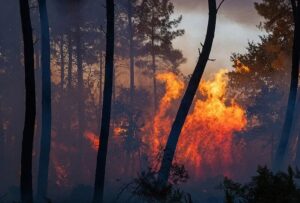
Wildfires Across France and Spain: Key Developments
- Large-scale wildfires have spread across southwestern France and several regions of Spain, including Valencia, Madrid, Ávila, Toledo, and Castellón, leading to widespread evacuations.
- In France, nearly 2,50,000 people were evacuated, while Spain relocated over 75,000 residents, taking the total number of evacuees to more than 3,25,000.
- The most severe fire is located in the Gironde region near Bordeaux, where authorities described the blaze as “extremely intense and unpredictable”, generating its own winds and spreading erratically.
- France has deployed around 2,500 firefighters, 1,500 military personnel, 1,200 police officers, and international firefighting teams, including support from Switzerland, to control the blaze.
- In Spain, firefighters are tackling multiple fire fronts, including a major wildfire near Valencia, while authorities warned of continued high-risk conditions due to strong winds and extreme temperatures.
- The disaster has resulted in casualties, including the deaths of two firefighters in France and one civilian in Spain, underscoring the dangers faced during wildfire response.
Impact and Global Significance
- Scientists have linked the increasing frequency and intensity of wildfires to climate change, which contributes to prolonged heatwaves, reduced soil moisture, and drier vegetation.
- Wildfires destroy forest ecosystems, threaten biodiversity, degrade air quality, release significant greenhouse gases, and cause extensive economic losses.
- The fires have disrupted tourism during the peak summer holiday season, affecting local economies dependent on travel and hospitality.
- Large-scale evacuations highlight the importance of early warning systems, community preparedness, forest management, and rapid emergency response mechanisms.
- International cooperation and coordinated disaster response have become increasingly important as climate-induced disasters grow in frequency and scale across Europe.
About Wildfires & Disaster Risk Reduction :● A wildfire is an uncontrolled fire occurring in forests, grasslands, or other natural vegetation, often intensified by high temperatures, low humidity, strong winds, and dry biomass. ● Major causes include lightning, human negligence, agricultural burning, industrial activities, and the growing impact of climate change, which increases the likelihood of prolonged fire seasons. ● The Sendai Framework for Disaster Risk Reduction (2015–2030) provides the global roadmap for reducing disaster risks through preparedness, resilience building, risk assessment, and international cooperation. ● The European Union Civil Protection Mechanism (UCPM) enables participating countries to coordinate emergency assistance by deploying firefighting aircraft, rescue teams, equipment, and technical expertise during major disasters. ● Effective wildfire management includes satellite-based monitoring, controlled burning, forest fuel management, community awareness, early warning systems, and climate-resilient forest conservation strategies. |

