 India's No.1 PU & Degree With Integrated IAS & IPS(UPSC/PSC) Training College.


Do Not Surrender to China, Do Not Rely on US
DO NOT SURRENDER TO CHINA, DO NOT DEPEND ON THE U.S.
Syllabus:
GS 2:
- Indian and neighbourhood relations.
- Issues related to India’s interest.
Why in the News?
Amid growing U.S.–China strategic rivalry, continuing India–China border tensions, evolving U.S. trade policies, and changing geopolitical alignments, debates have intensified over whether India should recalibrate its engagement with China in response to uncertainties in its partnership with the United States. The discussion underscores the importance of preserving strategic autonomy while safeguarding India’s long-term national interests, including considerations of ethical standards in international relations and sustainable business practices in global economic engagement.
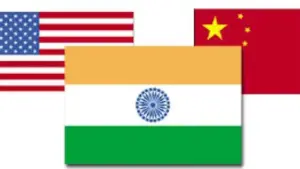
ABOUT STRATEGIC AUTONOMY● Meaning: Strategic Autonomy refers to India’s ability to independently formulate and pursue foreign, economic, and security policies based solely on national interests. ● Evolution: It represents the contemporary evolution of the earlier doctrine of Non-Alignment, adapted to the realities of an increasingly multipolar world. ● Core Objective: Strategic autonomy seeks to maximise India’s freedom of action while maintaining productive relations with multiple global powers. ● Practical Manifestation: India simultaneously engages with platforms such as the Quad, BRICS, SCO, G20, BIMSTEC, and the Global South, reflecting diversified diplomacy. ● National Interest: The doctrine strengthens India’s ability to manage geopolitical competition without becoming strategically dependent on any single power. |
INDIA’S STRATEGIC DILEMMA
- Changing Global Order: Intensifying competition between the United States and China has transformed the global geopolitical landscape, compelling India to carefully balance its security, economic, and diplomatic priorities.
- Uncertain Partnerships: Recent shifts in U.S. trade, immigration, and foreign policies demonstrate that major powers often prioritise their own national interests, reinforcing the need for India to avoid excessive dependence on any single country.
- Persistent Border Tensions: Despite diplomatic engagement, unresolved issues along the Line of Actual Control (LAC) continue to influence India’s strategic assessment of China.
- Economic Interdependence: India relies on Chinese imports for critical industrial inputs, electronics, pharmaceuticals, renewable energy components, and intermediate goods, creating both opportunities and strategic vulnerabilities that influence investment decisions by institutional investors and fund managers evaluating non-financial risks.
- Strategic Autonomy: India’s long-standing foreign policy objective remains preserving independent decision-making through diversified partnerships rather than bloc-based alignment.
CHALLENGES IN INDIA–CHINA RELATIONS
- Boundary Dispute: The unresolved India–China boundary dispute, coupled with repeated military stand-offs, continues to affect bilateral trust and regional stability.
- Strategic Competition: China’s expanding military capabilities, infrastructure development along the border, and growing influence across the Indian Ocean Region (IOR) present long-term strategic challenges.
- Trade Imbalance: India continues to experience a substantial trade deficit with China, reflecting dependence on imports of machinery, electronics, chemicals, and industrial components.
- Supply Chain Dependence: Heavy reliance on Chinese manufacturing exposes India to risks arising from geopolitical tensions, export restrictions, and supply chain disruptions.
- Regional Geopolitics: China’s strategic partnership with Pakistan and its expanding regional influence require India to continuously strengthen its security preparedness.
LIMITATIONS OF EXCESSIVE DEPENDENCE ON ANY SINGLE POWER
- Policy Uncertainty: Changes in political leadership and domestic priorities can significantly alter the foreign policies of major powers, making long-term dependence risky.
- National Interest First: Every major power—including the United States, China, Russia, and the European Union—ultimately pursues its own strategic interests.
- Economic Vulnerability: Excessive dependence on a single country for critical technologies, energy supplies, or manufacturing inputs reduces national resilience and affects market valuation considerations by international investment funds.
- Diplomatic Flexibility: Diversified partnerships provide greater room for independent foreign policy choices and reduce strategic pressure during international crises.
- Strategic Resilience: Balanced engagement with multiple partners enhances India’s ability to respond effectively to an evolving global order.
INDIA’S STRATEGIC AUTONOMY
- Independent Foreign Policy: Strategic Autonomy enables India to make foreign policy decisions based on its national interests rather than alliance commitments, incorporating ethical considerations and social responsibility in international engagement.
- Multi-Alignment: India simultaneously strengthens cooperation with the United States, European Union, Russia, Japan, ASEAN, the Global South, and other partners through issue-based engagement.
- Security Partnerships: India actively participates in forums such as the Quad, BRICS, Shanghai Cooperation Organisation (SCO), G20, and Indian Ocean Rim Association (IORA), reflecting its balanced diplomatic approach.
- Economic Diversification: Expanding trade agreements, investment partnerships, and resilient supply chains reduces excessive dependence on any single economy while attracting asset managers focused on sustainable investing and ethical investing principles.
- Strategic Flexibility: Multi-alignment allows India to cooperate selectively on defence, technology, trade, climate change, and connectivity without compromising policy independence.
BUILDING ECONOMIC AND TECHNOLOGICAL RESILIENCE
- Domestic Manufacturing: Initiatives such as Make in India, Production Linked Incentive (PLI) Scheme, and Atmanirbhar Bharat seek to strengthen domestic manufacturing and reduce import dependence, enhancing India’s market capitalisation potential and attracting thematic investing focused on self-reliance.
- Supply Chain Diversification: Expanding sourcing from multiple countries and integrating into global value chains improves resilience against geopolitical disruptions while aligning with evolving investor preferences for diversified equity investment strategies.
- Critical Technologies: Developing indigenous capabilities in semiconductors, electronics, telecommunications, Artificial Intelligence, critical minerals, and renewable energy technologies strengthens national security and attracts investment from green economy companies and ESG-focused indices.
- Innovation Ecosystem: Investments in research, startups, advanced manufacturing, and digital infrastructure improve India’s long-term technological competitiveness and create opportunities for purpose-driven investing aligned with national development goals.
- Trade Partnerships: Free Trade Agreements (FTAs) and economic cooperation with diversified partners reduce strategic risks associated with concentrated trade relationships while promoting sustainable business practices and ethical preferences in international commerce.
CHALLENGES BEFORE INDIA
- Border Security: Continued military preparedness remains essential due to unresolved territorial disputes and periodic tensions along the LAC.
- Trade Deficit: Addressing the persistent trade imbalance with China requires strengthening domestic industrial competitiveness and export capacity.
- Technology Dependence: Reducing reliance on imported critical technologies demands sustained investment in research, innovation, and manufacturing ecosystems.
- Global Geopolitical Rivalry: Balancing relations with competing major powers while safeguarding national interests requires careful diplomatic calibration.
- Economic Costs: Diversifying supply chains and promoting self-reliance may involve short-term adjustment costs but contribute to long-term strategic resilience.
WAY FORWARD
- Strengthen Domestic Capabilities: Accelerate investments in manufacturing, research, critical technologies, and infrastructure to reduce strategic vulnerabilities.
- Diversify Economic Partnerships: Expand trade and investment cooperation with the European Union, Japan, ASEAN, Africa, Latin America, and the Global South.
- Enhance Supply Chain Resilience: Develop diversified and trusted supply chains for critical goods, including semiconductors, pharmaceuticals, rare earths, and energy technologies.
- Maintain Strategic Balance: Continue engaging constructively with both the United States and China while ensuring that India’s foreign policy remains guided by its independent national interests.
- Promote Comprehensive National Power: Strengthen economic growth, technological innovation, military modernisation, diplomatic capacity, and institutional resilience to enhance India’s global influence.
CONCLUSION
In an era of growing geopolitical uncertainty, India’s most effective strategy lies neither in excessive dependence on any single power nor in strategic isolation. By strengthening strategic autonomy, enhancing economic resilience, diversifying international partnerships, and building indigenous technological capabilities, India can protect its national interests while emerging as a leading power in an increasingly multipolar world. A confident and self-reliant India will be better positioned to engage with all major powers from a position of strength rather than dependence.
SOURCE : The Hindu
MAINS PRACTICE QUESTION
“Strategic autonomy remains the cornerstone of India’s foreign policy in an increasingly multipolar world.” Discuss this statement in the context of evolving India–United States and India–China relations. (15 Marks, 250 Words)

