 India's No.1 PU & Degree With Integrated IAS & IPS(UPSC/PSC) Training College.


Returned Chola Plates Spark Heritage Debate
Returned Chola Plates Revive Heritage Repatriation Demands
Why in the News ?
The Netherlands has returned the historic Anaimangalam copper plates of the Chola period to India, renewing demands among historians and archaeologists for the repatriation of several other Indian cultural artefacts preserved in foreign museums and universities.
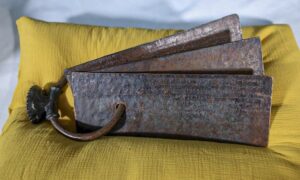
Return of Chola-Era Copper Plates
- The Leiden copper plates, preserved for nearly two centuries at Leiden University, were formally handed back to India at The Hague.
- The ceremony took place in the presence of Prime Minister Narendra Modi and Dutch leader Rob Jetten.
- Archaeologists described the repatriation as a landmark step in recovering India’s stolen or displaced cultural heritage.
- Historian V. Vedachalam urged similar efforts to bring back the Velvikkudi copper plates currently housed in the British Museum.
- The copper plates document grants made by Raja Raja Chola I to a Buddhist vihara at Anaimangalam near Nagapattinam in Tamil Nadu.
Historical Significance of the Leiden Plates
- The inscriptions record the establishment of the Chulamanivarma Vihara, built by a Javanese king in memory of his father.
- The vihara symbolised strong maritime and cultural ties between the Chola Empire and Southeast Asia.
- Although Raja Raja Chola I initiated the grant, the implementation was completed under Rajendra Chola I.
- Later, Kulottunga Chola I expanded support to the vihara by granting land and paddy for its maintenance.
- The vihara tower was reportedly demolished in 1867 by Jesuit priests with colonial approval, reflecting the neglect of India’s heritage during colonial rule.
About Chola Administration and Copper Plate Inscriptions:● Copper plate inscriptions were important administrative records used by South Indian dynasties to document land grants, taxation, and royal orders. ● The Chola dynasty ruled large parts of South India between the 9th and 13th centuries and was known for strong administration and naval power. ● The Leiden plates contain inscriptions in both Tamil and Sanskrit, showing linguistic and cultural diversity. ● The royal insignia on the plates included the tiger (Cholas), fish (Pandyas), and bow (Cheras), symbolising Chola supremacy. ● Chola rulers actively promoted temple construction, overseas trade, and cultural exchange with regions such as Java and Sri Lanka. |

