 India's No.1 PU & Degree With Integrated IAS & IPS(UPSC/PSC) Training College.


India–Nordic Ties in the Arctic Order
Reimagining India–Nordic Relations in a Changing Arctic Order
Syllabus:
-
GS – 2 –
Foreign policy of India, Vasudhev Kutumbkam
Focus :
The Oslo Summit represents India’s growing strategic focus on Northern Europe and the Arctic. Changing Arctic geopolitics, the Russia–Ukraine conflict, and emerging competition over shipping routes, energy resources, and critical minerals have increased the strategic importance of India–Nordic relations. India must expand its Arctic engagement beyond scientific cooperation towards maritime connectivity, green technology partnerships, climate collaboration, and resilient supply chains.
Introduction
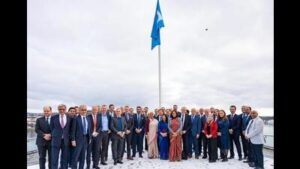
- Prime Minister Narendra Modi’s visit to Oslo for the Third India–Nordic Summit marks an important phase in India’s engagement with Northern Europe.
- Earlier, India’s relations with the Nordic countries were mainly focused on climate cooperation, innovation, renewable energy.
- However, the global geopolitical environment has changed significantly in recent years due to the Russia-Ukraine War, increasing Arctic competition, supply chain disruptions, and rising strategic uncertainty in Europe.
- As a result, the Nordic region has acquired greater strategic, economic, and geopolitical importance for India.
- The Arctic region is no longer viewed only as an area of scientific cooperation and environmental research.
- It is increasingly becoming a zone of military competition, strategic rivalry, energy exploration, and maritime connectivity.
Evolution of India–Nordic Relations
Initial Phase of Cooperation
- India and the Nordic countries initially focused on cooperation in renewable energy and sustainable development.
- The Nordic countries emerged as important partners for India’s clean-energy transition and climate adaptation efforts.
- Nordic countries became important sources of technological innovation and investment for India.
Changing Global Geopolitical Environment
Impact of the Russia–Ukraine War
- The Russia-Ukraine War has transformed Europe’s security and geopolitical landscape.
- The conflict has increased:
- Military tensions in Europe.
- Defence spending among European countries.
- Strategic uncertainty regarding European security.
- It has also intensified geopolitical competition in the Arctic region.
Transformation of Nordic Security Architecture
Finland and Sweden Joining NATO
- Finland and Sweden joined the North Atlantic Treaty Organization in response to growing security concerns.
- Their entry into NATO significantly altered the security architecture of Northern Europe.
- Russia became increasingly isolated within the Arctic strategic framework.
- Arctic geopolitics became closely linked with military competition and security concerns.
Consequences for the Arctic Region
- The Arctic region is witnessing- Increased military deployment, strategic surveillance naval expansion, security competition among major powers.
- The Arctic is no longer viewed only as an environmental region but as a strategically contested geopolitical space.
Reasons Behind the Growing Importance of the Arctic
Opening of New Shipping Routes
- Climate change and melting ice are opening new maritime routes in the Arctic Ocean.
- These routes can reduce travel time between Asia and Europe.
- Arctic routes can significantly lower transportation costs and fuel consumption.
Availability of Natural Resources
- The Arctic possesses vast reserves of- Oil ,Natural gas, Rare earth minerals ,Critical minerals.
- Countries are increasingly competing for access to these resources.
Strategic Military Importance
- Major powers are expanding military infrastructure in the Arctic region.
- The Arctic is becoming important for Submarine operations, missile systems, surveillance systems and strategic defence positioning.
Major Power Competition in the Arctic
Russia’s Arctic Strategy
- Russia considers the Arctic central to its economic and strategic interests.
- Russia has expanded:
- Arctic military bases.
- Icebreaker fleets.
- Shipping infrastructure.
- Energy exploration projects.
- Russia views the Northern Sea Route as an important economic corridor.
China’s Polar Ambitions
- China has described itself as a “Near-Arctic State.”
- China is investing heavily in: Arctic shipping routes, energy projects, mineral extraction,Polar logistics.
- China and Russia are increasingly cooperating in Arctic energy and shipping projects.
United States and Greenland
- Greenland has acquired major strategic significance because of its location, mineral resources and arctic shipping routes.
- The United States has increased its strategic interest in Greenland and the Arctic region.
India as an Arctic Stakeholder
Why the Arctic Matters to India
Climate Linkages
- The Arctic is warming more than three times faster than the global average.
- Arctic warming affects:
- India’s monsoon system.
- Weather variability.
- Extreme climate events.
- Changes in Arctic ice cover influence rainfall patterns in India.
Threat of Sea-Level Rise
- Melting Arctic ice contributes to rising sea levels.
- Sea-level rise threatens:
- India’s coastal cities.
- Ports.
- Island territories.
- Coastal populations.
Economic and Strategic Interests
- Arctic shipping routes can reshape global trade networks.
- India has important interests in ensuring access to these emerging trade corridors.
- The Arctic also has implications for:
- Energy security.
- Maritime connectivity.
- Strategic stability.
India’s Arctic Presence
Observer Status in the Arctic Council
- India became an observer in the Arctic Council in 2013.
- This gave India an institutional presence in Arctic governance discussions.
India’s Scientific Infrastructure in the Arctic
- Himadri Research Station-India operates the Himadri research station in Norway.
- IndARC Observatory-India established the IndARC underwater observatory for Arctic ocean research.
Gruvebadet Atmospheric Laboratory
- The laboratory supports research related to:
- Atmospheric chemistry.
- Aerosols.
- Climate interactions.
Need for Expanding India’s Arctic Strategy
- India’s Arctic policy has remained largely science-oriented.
- However, changing geopolitical realities require India to adopt a broader strategic approach.
Importance of Arctic Shipping Routes
Northern Sea Route
- The Northern Sea Route runs along Russia’s Arctic coastline.
- It connects Asia and Europe through the Arctic Ocean.
- It can reduce shipping time compared to traditional routes through the Suez Canal.
Benefits for India
- The route can improve India’s connectivity with:
- Europe.
- Russia.
- Northern Europe.
- It can reduce India’s dependence on vulnerable maritime chokepoints.
- It can strengthen India’s long-term trade and maritime interests.
Benefits of the Corridor
- India is exploring the extension of the Chennai–Vladivostok corridor towards the Arctic and Northern Europe.
- It can strengthen Eurasian trade connectivity.
- It can support energy transportation and logistics cooperation.
- It can improve maritime and strategic integration.
Need for Arctic Maritime Infrastructure
Ice-Class Tankers
- India currently lacks sufficient Arctic-capable vessels.
- India should develop ice-class tankers capable of operating in Arctic waters.
India–Arctic Economic Forum
- India should establish an India–Arctic Economic Forum to strengthen economic cooperation with Arctic economies.
Areas of Cooperation
- Shipping.
- Port infrastructure.
- Energy projects.
- Logistics.
- Critical minerals.
- Maritime technologies.
- Such a forum can help India secure long-term economic interests in the Arctic region.
Arctic–Himalaya Climate Data Cooperation
- India and the Nordic countries should establish an Arctic–Himalaya Climate Data Corridor.
Need for a Special Envoy for Arctic Affairs
- India currently lacks a dedicated Special Envoy for Arctic Affairs.
- A dedicated envoy can:
- Coordinate Arctic diplomacy.
- Strengthen international engagement.
- Represent India’s strategic interests more effectively.
Economic Opportunities in India–Nordic Cooperation
Green Energy Cooperation
- The Nordic countries are leaders in:
- Offshore wind energy.
- Green hydrogen.
- Electric mobility.
- Sustainable shipping.
- India requires advanced technologies and investments for its clean-energy transition.
Critical Minerals and Rare Earths
- Critical minerals are essential for:
- Semiconductors.
- Batteries.
- Renewable energy systems.
- Electric vehicles.
- Defence technologies.
- The Nordic region possesses important reserves of rare earth minerals and strategic resources.
Challenges in India–Nordic Cooperation
- Geographical Distance-Physical distance affects trade and logistics connectivity.
- Limited Trade Volume-Economic relations remain below their actual potential.
- Geopolitical Rivalries-Arctic competition among major powers complicates cooperation.
- Environmental Concerns-Commercial exploitation of Arctic resources may damage fragile ecosystems.
- Balancing Russia and the West-India must carefully balance: Relations with Russia and partnerships with NATO-aligned Nordic countries.
Conclusion
- The changing geopolitical environment has fundamentally transformed the importance of India–Nordic relations.
- What initially began as cooperation in climate change and innovation is now evolving into a broader strategic partnership involving Arctic governance, maritime security, green energy, critical technologies, and resilient supply chains.
- Therefore, the Oslo Summit represents an important step in India’s “northward turn,” where India increasingly recognises the importance of Northern Europe and the Arctic region for its long-term strategic and economic interests.
Mains UPSC Question GS 2
- The Arctic is emerging as a major arena of geopolitical and economic competition.” Discuss the significance of the Arctic for India and examine how India–Nordic cooperation can

