 India's No.1 PU & Degree With Integrated IAS & IPS(UPSC/PSC) Training College.


Nellie Massacre 1983: Tragic Assam Violence Report
Understanding the 1983 Nellie Massacre and Inquiry Findings
Why in the News ?
The Assam government has tabled key inquiry reports on the Nellie Massacre of 1983, one of India’s worst incidents of mass violence. The Tewary Commission Report details the events, administrative failures, and the context of the Assam Agitation.
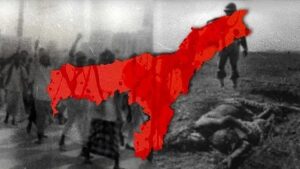
Background and Build-Up to the Nellie Violence:
- The Nellie Massacre (1983) occurred during the peak of the Assam Agitation (1979–85), which demanded the detection, deletion, and deportation of alleged illegal immigrants from Bangladesh.
- The massacre led to an official death toll of 1,800 and an unofficial estimate of around 3,000, mostly Bengali-speaking Muslims.
- The region was then part of Nagaon district, now in Morigaon district, which had witnessed violent incidents earlier, including a pipeline explosion at Mikirghat (1981).
- Amid growing unrest, the Centre announced Assembly elections for February 1983 while the state was under President’s Rule, prompting a strong boycott call by AASU and AGSP.
- Local administration anticipated violence, with officials acknowledging that agitators would use violent methods to disrupt elections and target minorities willing to vote.
Administrative Response and Events of February 18, 1983
- Ahead of elections, over 1,000 people were detained preventively, and arms licences were suspended; daily review meetings were held between senior officers.
- The first clash was reported on February 12, when attempts were made to burn a bridge, leading to confrontations between Assamese Hindus and Muslim residents.
- On February 18, between 8 am and 3:30 pm, thousands armed with deadly weapons attacked villages around Nellie, killing men, women, and children and burning homes.
- Survivors told the Commission that attackers came from multiple directions, overwhelming the area.
- Key officials — the OC, SDPO, and Commandant of the 5th APBn — claimed they received information only after the violence began, leading to delayed response.
- However, intelligence inputs about a possible attack were available as early as February 15, when villagers warned that 1,000 armed men had assembled near Nellie.
- The Tewary Commission was critical of officers for failing to act on advance warnings and not informing the SP, Nagaon, despite receiving credible alerts.
About Nellie Massacre and Assam Agitation :● The Assam Agitation (1979–85) was a mass movement demanding action against alleged illegal migration from Bangladesh, led primarily by AASU and AGSP. ● The agitation culminated in the Assam Accord (1985), a key political agreement defining cut-off dates for citizenship determination. ● The Nellie Massacre (1983) remains one of India’s largest single-day mass killings in post-Independence history. ● The massacre occurred during controversial elections boycotted by major Assamese groups. ● The main inquiry, the Tewary Commission Report, was submitted in 1984 but remained largely inaccessible for decades. |

