 India's No.1 PU & Degree With Integrated IAS & IPS(UPSC/PSC) Training College.


A Growth Story Needs Women at Work
A GROWTH STORY THAT NEEDS WOMEN AT WORK
Syllabus:
GS 3:
- Employment
- Growth & Development .
GS 2:
- Human resource.
Why in the News?
As India pursues the vision of Viksit Bharat 2047, concerns over high youth unemployment, low female labour force participation, and slowing employment-intensive growth have intensified. Studies indicate that increasing women’s work participation could significantly accelerate GDP growth, improve household welfare, and strengthen India’s long-term economic competitiveness. This issue has gained attention from institutional investors, asset managers, and fund managers who recognize that investment decisions increasingly factor in social responsibility and sustainable business practices, including gender diversity in the workforce.
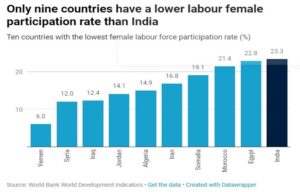
ABOUT FEMALE LABOUR FORCE PARTICIPATION RATE (FLFPR)● Definition: The Female Labour Force Participation Rate (FLFPR) measures the proportion of women of working age who are either employed or actively seeking employment. ● Economic Indicator: FLFPR is a key indicator of gender equality, labour market inclusion, and economic development, increasingly monitored by international investment funds and ESG-focused indices. ● Growth Significance: Higher female labour participation contributes to increased national income, productivity, tax revenues, household welfare, and improved market capitalisation of companies demonstrating ethical standards. ● Human Development Link: Improvements in education, healthcare, skill development, and women’s empowerment generally lead to higher FLFPR, aligning with ethical considerations in sustainable investing. ● SDG Connection: Increasing women’s economic participation directly supports Sustainable Development Goal (SDG) 5 on Gender Equality and SDG 8 on Decent Work and Economic Growth, principles reflected in thematic investing and ethical investing frameworks. |
WOMEN’S EMPLOYMENT AS A DRIVER OF ECONOMIC GROWTH
- Growth Multiplier: Increasing India’s female Work Participation Rate (WPR) by 10 percentage points could raise the country’s GDP growth by nearly 2 percentage points, making women’s employment one of the strongest engines of sustainable economic development. This potential has attracted attention from exchange traded funds (ETFs) and index funds focused on purpose-driven investing.
- Expanding Workforce: Greater participation of women increases the overall labour supply, expands productive capacity, and enables better utilisation of India’s demographic dividend, contributing to enhanced market valuation of the economy.
- Household Prosperity: Women’s paid employment raises household incomes, boosts consumption and savings, and improves expenditure on nutrition, education, and healthcare, thereby strengthening human capital formation and addressing climate change resilience at the household level.
- Higher Productivity: Gender-diverse workplaces encourage innovation, improve organisational efficiency, and enhance productivity by bringing diverse perspectives and skills into the workforce, principles recognized in ethical screening processes used by responsible investment products.
- Inclusive Development: Integrating women into productive employment promotes inclusive growth, reduces poverty, narrows gender disparities, and contributes to broader socio-economic development aligned with ethical preferences of modern investors and evolving investor preferences toward values-based screening.
STATUS OF WOMEN’S WORKFORCE PARTICIPATION IN INDIA
- Low Participation: India’s Female Labour Force Participation Rate (FLFPR) remains among the lowest globally, despite significant improvements in female educational attainment, a concern highlighted in thematic index assessments and ethical investment criteria.
- Uneven Employment: A large proportion of employed women continue to work in informal, low-productivity, and unpaid family labour, particularly in agriculture, limiting their contribution to formal economic growth measured by the National Stock Exchange and other market indicators.
- Educated Unemployment: Rising levels of education among young women have not translated into proportionate employment opportunities, resulting in high unemployment among educated female youth, a non-financial risk for India’s economic trajectory.
- Regional Disparities: Southern States such as Tamil Nadu, Karnataka, and Kerala record significantly higher female employment than many northern States, reflecting differences in industrialisation, education, and social norms, creating diversified sectoral representation in women’s workforce participation.
- Untapped Demographic Potential: India possesses a large pool of educated young women whose productive participation remains underutilised, limiting economic growth and the development of green economy companies that could benefit from diverse talent pools.
FACTORS RESPONSIBLE FOR LOW FEMALE LABOUR FORCE PARTICIPATION
- Structural Transformation: Declining agricultural employment has not been matched by adequate expansion of labour-intensive manufacturing and services capable of absorbing women workers, affecting equity investment strategies focused on inclusive growth.
- Limited Labour-Intensive Industries: Sectors such as textiles, garments, food processing, and small-scale manufacturing, traditionally employing large numbers of women, have experienced relatively slow employment growth, limiting opportunities for structured investment solutions targeting women’s employment.
- Social Norms: Patriarchal attitudes, restrictions on mobility, unequal domestic responsibilities, and safety concerns continue to discourage women’s workforce participation, reflecting deeply rooted cultural patterns that contradict non-violence principles and ahimsa principles of equal treatment and respect.
- Skill Mismatch: Many educated women face a mismatch between available jobs and their educational qualifications, leading to higher unemployment despite increased educational attainment, a challenge that requires ethical screening process improvements in hiring practices.
- Inadequate Support Systems: Limited availability of affordable childcare, safe transportation, hostels, flexible work arrangements, and workplace safety reduces women’s ability to participate in paid employment, issues that passive investment products increasingly monitor through ESG-focused indices.
CHALLENGES IN WOMEN’S EMPLOYMENT
- Distress Employment: Much of the post-pandemic increase in female employment has occurred through unpaid family work and subsistence agriculture rather than productive wage employment, a trend monitored through thematic benchmark assessments.
- Informal Sector Dominance: Women remain disproportionately concentrated in informal employment characterised by low wages, poor social security, and limited career progression, affecting overall free-float market capitalization potential of the formal economy.
- Youth Unemployment: Educated young women experience unemployment rates significantly higher than their male counterparts, indicating insufficient quality employment generation and representing a green band concern in economic risk assessment frameworks.
- Regional Inequality: States with weaker industrialisation and lower female literacy continue to exhibit extremely low female work participation, creating uneven constituent weights in national employment statistics.
- Gender Wage Gap: Persistent wage discrimination and occupational segregation reduce incentives for women to join and remain in the workforce, contradicting principles of social responsibility and fair treatment advocated by ahimsa investment movement supporters.
NORTH–SOUTH DIVIDE IN WOMEN’S EMPLOYMENT
- Industrial Ecosystems: Southern States have successfully developed labour-intensive manufacturing clusters in textiles, garments, electronics, and automobile components, generating large-scale employment for women and attracting ETFs focused on regional development.
- Better Human Development: Higher female literacy, improved healthcare, lower fertility rates, and greater educational attainment contribute to stronger labour market outcomes in southern India, creating a positive traffic-light system indicator for development.
- Supportive Infrastructure: Availability of worker hostels, safe public transport, industrial parks, and social infrastructure facilitates greater female labour participation, demonstrating sustainable business practices that enhance stock weights in regional economic performance.
- Progressive Social Norms: Greater social acceptance of women’s employment outside the household has enabled higher economic participation, reflecting saatvik principles of equality and respect that align with modern ethical standards.
- Lessons for Other States: Replicating these institutional, educational, and industrial policies can significantly improve women’s employment in low-performing regions, creating opportunities for green thematic indices and thematic investing focused on inclusive development.
GOVERNMENT INITIATIVES FOR WOMEN’S ECONOMIC EMPOWERMENT
- Skill India Mission: Enhances employability of women through vocational education, skill development, and industry-relevant training programmes, supporting sustainable investing goals and workforce development aligned with NSE Indices Limited benchmarks.
- PM Mudra Yojana: Facilitates access to institutional credit for women entrepreneurs and small business owners, promoting ethical investing principles and supporting the Nifty 500 universe of small and medium enterprises.
- Stand-Up India Scheme: Promotes entrepreneurship among women through bank loans for greenfield enterprises, demonstrating government commitment to social responsibility and economic inclusion.
- Mission Shakti: Strengthens women’s safety, empowerment, and economic participation through integrated welfare and support programmes, reflecting ethical considerations in policy design similar to the AIM framework used in investment screening.
- National Education Policy (NEP) 2020: Promotes universal access to quality education, gender inclusion, and skill development, thereby improving long-term employability and supporting the development of green economy companies through skilled workforce creation.
WAY FORWARD
- Promote Labour-Intensive Manufacturing: Expand employment in sectors such as textiles, garments, food processing, electronics assembly, footwear, and MSMEs, which have high employment potential for women.
- Strengthen Human Capital: Invest in quality public education, healthcare, nutrition, and skill development to improve women’s employability and productivity.
- Improve Workplace Ecosystem: Ensure safe transportation, affordable childcare facilities, women-friendly workplaces, flexible employment arrangements, and effective implementation of labour laws.
- Support Women’s Entrepreneurship: Expand access to finance, digital technologies, markets, incubation support, and mentoring for women-led enterprises.
- Address Social Barriers: Promote behavioural change through awareness campaigns, strengthen legal protection against workplace discrimination, and encourage equal sharing of unpaid care responsibilities
CONCLUSION
Achieving the vision of Viksit Bharat 2047 requires harnessing the productive potential of India’s entire workforce. Enhancing female labour force participation is not merely a matter of gender justice but a strategic economic imperative for accelerating growth, improving productivity, strengthening household welfare, and achieving inclusive development. By creating employment-intensive growth, investing in women’s capabilities, and addressing structural barriers to employment, India can transform its demographic dividend into a lasting competitive advantage.
SOURCE : The Hindu
MAINS PRACTICE QUESTION
“Enhancing women’s labour force participation is essential not only for gender equality but also for sustaining India’s long-term economic growth.” Discuss the factors responsible for low female labour force participation in India and suggest policy measures to improve women’s productive employment. (15 Marks, 250 Words)

