 India's No.1 PU & Degree With Integrated IAS & IPS(UPSC/PSC) Training College.


Cyclone Ditwah Hits East Coast
Cyclone Ditwah Intensifies, Threatens India’s Eastern Coast
Why in the News ?
Cyclone Ditwah, formed over the southwest Bay of Bengal, is moving toward Tamil Nadu, Andhra Pradesh, and Puducherry. The IMD has forecast heavy to extremely heavy rainfall, strong winds, and marine warnings along the eastern coast till December 1, 2025.
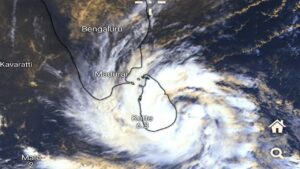
IMD Alerts and Cyclone Path Across Eastern Coast:
- The India Meteorological Department (IMD) confirmed the formation of Cyclone Ditwah in the southwest Bay of Bengal, currently advancing toward Tamil Nadu, Andhra Pradesh, and Puducherry.
- The cyclone is expected to cause widespread heavy rainfall, thunderstorms, and gusty winds in coastal and interior districts till December 1.
- Continuous rainfall over the past week in Tamil Nadu’s southern districts, especially Ramanathapuram, has increased the vulnerability of low-lying areas.
- With Ditwah’s expected landfall proximity, Delta districts, Gulf of Mannar, and surrounding regions are forecast to receive heavy to extremely heavy rainfall in the next 48 hours.
- Northern coastal districts such as Tiruvallur, Chennai, Chengalpattu, Kancheepuram, and Ranipet will also experience intense rainfall and strong winds, heightening flood risks.
Preparedness Measures and Local Warnings Issued
- Due to squally winds, the IMD has issued strong marine warnings and advised fishermen not to venture into the sea until conditions stabilize.
- Local Warning Signal Number 4 has been raised at major ports including Pamban, Thoothukudi, Nagapattinam, and Karaikal, indicating severe weather.
- Train services near Rameswaram Pamban have slowed down due to the hazardous conditions.
- Public Water Resources Department engineers in delta and northern districts have been instructed to monitor irrigation canals, reservoirs, and water levels, ensuring early alerts in case of overflow.
- Surplus water has already been released from select canals as a precautionary measure, while district administrations remain on high alert for emergency response and evacuations, if required.
Key points : Cyclones in India● A cyclone is an intense low-pressure system with strong winds and heavy rain, common in the Bay of Bengal due to warm sea surface temperatures. ● India’s cyclone monitoring is managed by the IMD, a World Meteorological Organization (WMO)-designated Regional Specialized Meteorological Centre (RSMC). ● Peak cyclone seasons: April–June and October–December. ● Key government frameworks: National Disaster Management Authority (NDMA), National Cyclone Risk Mitigation Project (NCRMP), and Coastal Regulation Zone (CRZ) norms. ● Cyclones often impact Tamil Nadu, Andhra Pradesh, Odisha, and West Bengal, making coastal readiness crucial for minimizing damage. |

