 India's No.1 PU & Degree With Integrated IAS & IPS(UPSC/PSC) Training College.


Nari Shakti Driving India’s Transformative Growth Decade
Nari Shakti Driving India’s Transformative Growth Decade
Syllabus:
GS Paper – 2 Issues Related to Women
GS Paper – 3 Inclusive Growth
Why in the News ?
The Nari Shakti Vandan Adhiniyam and a decade of women-centric reforms have reignited debate on women-led development in India. With rising female labour participation, financial inclusion, and leadership representation, the focus has shifted from policy creation to last-mile delivery and institutional empowerment for achieving inclusive growth.
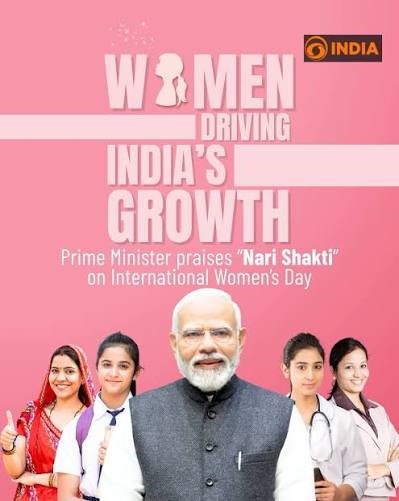
Paradigm Shift: From Welfare to Women-led Development
- Policy Transition: India has moved from treating women as beneficiaries to recognizing them as drivers of economic growth, marking a paradigm shift in governance philosophy.
- Leadership Vision: Under Prime Minister Narendra Modi, governance frameworks have integrated gender inclusion into national development strategy.
- Structural Transformation: Empowerment is no longer symbolic; it is embedded in financial, social, and institutional infrastructure.
- Inclusive Growth Model: Women’s empowerment is now linked with GDP growth, social stability, and governance effectiveness.
- Development Multiplier: Evidence suggests that women’s participation increases productivity, improves family welfare, and strengthens communities.
About Women Empowerment :Constitutional Provisions● Article 14 – Equality before law ● Article 15(3) – Special provisions for women ● Article 16 – Equal opportunity in public employment ● Directive Principles – Promote gender justice Key Acts and Laws● Nari Shakti Vandan Adhiniyam, 2023 – 33% reservation ● Maternity Benefit Act, 1961 (Amended 2017) ● Protection of Women from Domestic Violence Act, 2005 ● Sexual Harassment of Women at Workplace Act, 2013 Major Government Schemes● PM Jan Dhan Yojana – Financial inclusion ● Ujjwala Yojana – Clean cooking fuel ● MUDRA Yojana – Microfinance support ● Ayushman Bharat – Health insurance ● Beti Bachao Beti Padhao – Gender equality ● DAY-NRLM – Self-help group promotion Key Data Points● 57+ crore Jan Dhan accounts ● 55% women account holders ● 10 crore women in SHGs ● 70% MUDRA loans to women ● ~37% Female Labour Participation Rate |
Financial Inclusion and Economic Empowerment of Women
- Jan Dhan Yojana Impact: Over 57 crore bank accounts, with 55% owned by women, have brought women into the formal banking system.
- Self-Help Groups (SHGs): Nearly 10 crore women in 90 lakh SHGs are driving grassroots entrepreneurship and financial independence.
- MUDRA Loans: Around 70% of loans are availed by women, fostering micro-enterprises and local economies.
- Direct Benefit Transfer (DBT): Women are direct recipients of welfare schemes, enhancing financial autonomy and transparency.
- Economic Agency: Financial inclusion has improved decision-making power within households and communities.
Social Welfare Schemes and Quality of Life Improvements
- Ujjwala Yojana: Over 10.5 crore households received LPG connections, reducing health hazards and drudgery.
- Ayushman Bharat: Expanded healthcare access has reduced financial vulnerability of women.
- Pradhan Mantri Surakshit Matritva Abhiyan: Ensures safe pregnancy and maternal health services.
- Beti Bachao Beti Padhao: Addresses gender discrimination and skewed sex ratio, promoting education.
- Time Poverty Reduction: Access to clean fuel and services has freed time for education, employment, and entrepreneurship.
Rising Female Labour Force Participation and Workforce Integration
- FLFP Growth: Female Labour Force Participation has increased to ~37%, reversing earlier decline.
- Sectoral Expansion: Women are entering healthcare, education, services, manufacturing, and startups.
- Skill Development: Government programs emphasize skill training and employability.
- STEM Participation: India has one of the highest proportions of women in STEM education globally.
- Economic Contribution: Greater participation contributes to higher productivity and demographic dividend utilization.
Political Empowerment and Nari Shakti Vandan Adhiniyam
- Legislative Representation: The Act ensures 33% reservation for women in Parliament and State Assemblies.
- Policy Alignment: Women leaders bring ground-level insights into policymaking.
- Institutional Leadership: Enhances representation in governance structures.
- Multiplier Effect: More women leaders lead to inclusive policies and stronger implementation.
- Democratic Deepening: Strengthens participatory democracy and gender equity.
Implementation Gap: Last-Mile Delivery Challenges
- Awareness Deficit: Many eligible women remain unaware of government schemes.
- Regional Disparities: Implementation varies across states and districts.
- Administrative Capacity: Local governance structures often lack resources and efficiency.
- Social Barriers: Patriarchal norms restrict access and participation.
- Digital Divide: Limited access to technology hampers scheme benefits and financial inclusion.
- Governance Delays: Issues like ex post facto approvals and retrospective clearances, as highlighted in the Vanashakti judgment, demonstrate systemic challenges in ensuring timely and transparent decision-making across sectors.
Future Vision: From Access to Leadership and Outcomes
- Policy Saturation: Focus must shift to ensuring 100% coverage of eligible beneficiaries.
- Outcome-Based Governance: Success should be measured by impact, not just enrolment.
- Institutional Capacity Building: Women must be trained for administrative and leadership roles.
- Mentorship Ecosystem: Structured programs for capacity building and leadership grooming.
- Data-Driven Monitoring: Use of technology and real-time data to track implementation.
Challenges :
- Awareness Gap: A large section of women remains unaware of schemes due to information asymmetry.
- Implementation Deficit: Weak last-mile delivery mechanisms hinder effective outreach.
- Socio-Cultural Constraints: Deep-rooted patriarchy and gender norms restrict mobility and decision-making.
- Digital Divide: Limited digital literacy reduces access to online services and financial tools.
- Economic Barriers: Lack of assets and collateral restricts credit access despite schemes.
- Fragmented Governance: Poor coordination among departments affects policy convergence.
- Skill Mismatch: Women’s education does not always translate into employment opportunities.
- Political Tokenism: Representation may not always ensure effective participation.
- Urban-Rural Divide: Rural women face greater infrastructural and institutional barriers.
- Monitoring Issues: Lack of real-time data tracking and accountability mechanisms reduces effectiveness.
Way Forward :
- Universal Coverage: Ensure saturation of schemes so no eligible woman is left out.
- Awareness Campaigns: Strengthen grassroots communication strategies through local governance.
- Capacity Building: Provide training, mentorship, and leadership programs for women.
- Digital Inclusion: Promote digital literacy and access to technology.
- Institutional Strengthening: Improve local governance capacity and accountability mechanisms.
- Policy Convergence: Integrate schemes across sectors for holistic development outcomes.
- Outcome Measurement: Shift focus from outputs to measurable social and economic impact.
- Encouraging Entrepreneurship: Expand access to credit, markets, and skill development.
- Monitoring Systems: Use AI, dashboards, and real-time data tracking for better governance.
- Cultural Change: Promote gender sensitization and behavioural change campaigns.
Conclusion :
India stands at a crucial juncture where women-led development can redefine its growth trajectory. By ensuring policy saturation, effective implementation, and leadership empowerment, the country can unlock its full potential. The success of Nari Shakti reforms will determine India’s journey towards becoming a developed nation by 2047.
Source:TH
Mains Practice Question :
“Women-led development is central to India’s growth trajectory.” Critically examine the role of government policies, institutional mechanisms, and socio-economic reforms in empowering women in India. Also discuss the challenges in achieving last-mile delivery and leadership representation in governance.

