 India's No.1 PU & Degree With Integrated IAS & IPS(UPSC/PSC) Training College.


Mountains Bind India, China, Nepal: Shared Destiny
RIVER-LINKING IS NOT THE SOLUTION
Syllabus:
GS-1: Water Resources
GS-3: Issues Relating to Development
WHY IN THE NEWS ?
- Policy Debate: Union Home Minister Amit Shah advocated resolving southern India’s water disputes and discussed linking rivers from the Brahmaputra to the Godavari and Cauvery.
- Pennaiyar Dispute: Tamil Nadu’s demand for a tribunal over the Pennaiyar river dispute highlights continuing difficulties in resolving inter-State water conflicts.
- Project Concerns: The Ken-Betwa River Linking Project has generated concerns among tribal communities regarding land, displacement and ecological consequences.
- Water Strategy: The debate increasingly highlights the need to shift from large-scale supply-side interventions towards demand management and water conservation.
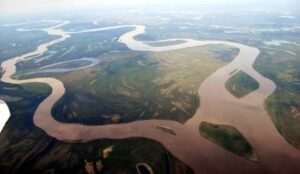
INTER-STATE RIVER WATER DISPUTES IN INDIA
- Constitutional Basis: Water is primarily a State List subject under Entry 17, while regulation of inter-State rivers and river valleys falls under Union List Entry 56.
- Legal Framework: Article 262 empowers Parliament to provide for adjudication of disputes concerning inter-State rivers and permits exclusion of Supreme Court jurisdiction over such disputes.
- Dispute Act: The Inter-State River Water Disputes Act, 1956 provides for tribunals when negotiations through appropriate mechanisms fail to resolve inter-State water conflicts.
- Tribunal Mechanism: A water dispute tribunal is constituted by the Central Government after receiving a request from a State and determining that the dispute cannot be settled through negotiation.
- Judicial Role: Although Article 262 permits Parliament to restrict judicial jurisdiction, the Supreme Court has continued to exercise constitutional powers in appropriate circumstances concerning implementation and related legal questions.
ABOUT INTER-STATE RIVER WATER DISPUTES:
- Article 262: Article 262 provides the constitutional basis for Parliament to establish mechanisms for adjudicating disputes concerning waters of inter-State rivers or river valleys.
- Entry 17: State List Entry 17 covers water, including water supplies, irrigation and canals, drainage and embankments, subject to limitations relating to inter-State rivers.
- Entry 56: Union List Entry 56 enables Parliament to regulate and develop inter-State rivers and river valleys when declared expedient in the public interest.
- River Boards: The River Boards Act, 1956 provides a framework for establishing boards for inter-State river development, although it has had limited practical impact.
- Constitutional Balance: Inter-State water governance illustrates India’s cooperative federalism, requiring coordination between State interests and broader national requirements.
RIVER INTERLINKING AND INTER-BASIN WATER TRANSFER
- Basic Concept: Interlinking of rivers involves transferring water between river basins through reservoirs, canals, pipelines or other hydraulic structures.
- Surplus Principle: Supporters argue that water from relatively water-surplus basins can be transferred to regions facing recurring shortages.
- National Plan: The National Perspective Plan for Interlinking of Rivers was prepared to explore both Himalayan and Peninsular river-linking components.
- Institutional Agency: The National Water Development Agency (NWDA) undertakes studies relating to feasibility and implementation of proposed inter-basin water-transfer links.
- Existing Examples: Projects such as Parambikulam-Aliyar, Krishna Water Supply and Indira Gandhi Canal demonstrate that inter-basin transfers have been undertaken in India, although their contexts differ substantially.
WHY RIVER-LINKING IS A COMPLEX SOLUTION
- Hydrological Uncertainty: The classification of a basin as permanently surplus or deficit is problematic because rainfall patterns and river flows vary spatially and temporally.
- Climate Change: Changing monsoon patterns, extreme rainfall and prolonged droughts can alter the availability of water assumed to be transferable between basins.
- Ecological Effects: Altering natural river flows can affect sediment transport, wetlands, fisheries, groundwater recharge and downstream ecosystems.
- Distributional Conflict: States receiving transferred water may subsequently demand continued supplies even during droughts, potentially affecting traditional downstream users.
- Social Displacement: Large reservoirs and canals can require extensive land acquisition, creating risks of displacement, livelihood loss and rehabilitation conflicts, particularly among vulnerable communities.
INDIA’S WATER GOVERNANCE CHALLENGE
- Federal Tensions: River disputes frequently become politically sensitive because competing claims involve State rights, regional interests and electoral considerations.
- Institutional Delays: Delayed constitution or implementation of dispute-resolution mechanisms can prolong conflicts and weaken confidence in cooperative federalism.
- Fragmented Governance: Water management involves multiple Central and State institutions, often producing fragmented decision-making across surface water, groundwater, irrigation and urban demand.
- Groundwater Dependence: Excessive groundwater extraction, particularly for agriculture, has created serious concerns about aquifer depletion and long-term water security.
- Inefficient Irrigation: Conventional flood irrigation can generate substantial water losses, demonstrating why improving water-use efficiency can sometimes be more sustainable than creating additional supply.
ENVIRONMENTAL AND SOCIAL IMPLICATIONS
- Wetland Protection: Projects affecting rivers must account for downstream ecosystems such as Vembanad wetland, which depend upon natural river flows and sediment regimes.
- Tribal Concerns: The Ken-Betwa Link Project has generated opposition concerning displacement, forests, livelihoods and impacts on tribal communities in the project region.
- Forest Impact: Large reservoirs and associated infrastructure can result in submergence and fragmentation of forest landscapes, affecting biodiversity.
- Livelihood Security: Changes in river flows can affect fisheries, agriculture, livestock and wetland-dependent communities that rely directly upon natural hydrological systems.
- Environmental Assessment: River-linking proposals require rigorous Environmental Impact Assessment, cumulative ecological assessment and meaningful participation of affected communities before implementation.
CHALLENGES IN INDIA’S WATER MANAGEMENT
- Federal Conflict: Different States have competing claims over shared rivers, making consensus difficult despite constitutional and statutory mechanisms.
- Political Economy: Subsidised electricity and irrigation can encourage over-extraction of groundwater, creating incentives inconsistent with long-term conservation.
- Land Acquisition: Large water infrastructure requires significant land, while increasing public resistance makes socially acceptable acquisition increasingly difficult.
- Implementation Delays: Even after legal decisions or institutional recommendations, delays in establishing tribunals and implementing decisions can prolong disputes.
- Climate Stress: Climate change and population growth are increasing uncertainty over future water availability, making fixed assumptions about surplus increasingly unreliable.
WAY FORWARD: FROM SUPPLY CREATION TO WATER SECURITY
- Demand Management: Governments should prioritise water-use efficiency, conservation, recycling and demand-side management rather than relying predominantly on new mega-projects.
- Agricultural Reform: Farmers should receive incentives for micro-irrigation, crop diversification, precision irrigation and less water-intensive cultivation according to local agro-climatic conditions.
- Groundwater Governance: States must regulate groundwater extraction while reforming free or highly subsidised agricultural electricity that encourages excessive pumping.
- Cooperative Federalism: The Centre and States should strengthen negotiation mechanisms, river-basin institutions, transparent data sharing and timely dispute resolution.
- Ecological Approach: River projects should undergo rigorous assessment based on environmental flows, basin-level planning, cumulative impacts and community participation rather than merely engineering feasibility.
CONCLUSION:
India’s water crisis cannot be solved merely by transferring water from one basin to another. River-basin management, conservation, efficient irrigation, groundwater regulation and cooperative federalism offer a more sustainable pathway. Interlinking may have a role in carefully assessed circumstances, but ecological limits and community concerns must remain central to water policy.
Source:TH
MAINS PRACTICE QUESTION:
“India’s water-security challenge is fundamentally a demand-management and governance problem rather than merely a shortage of physical water.” Critically examine the limitations of river interlinking and suggest a sustainable framework for resolving India’s inter-State water disputes. (15 marks, 250 words)

