 India's No.1 PU & Degree With Integrated IAS & IPS(UPSC/PSC) Training College.


Modi’s Trinidad Visit: Diaspora & Heritage Ties
PM Modi’s Historic Visit to Trinidad and Tobago: Honouring Civilisational Roots and Strengthening Diaspora Bonds
“They were not just migrants, but messengers of timeless civilisation.” — PM Modi
Prime Minister Narendra Modi, on his first bilateral visit to Trinidad and Tobago, paid rich tributes to the Indo-Trinidadian community, highlighting their courage, perseverance, and role in preserving India’s cultural heritage across oceans. Addressing the Indian diaspora, he said their journey was not just one of migration but of civilisational continuity. “They left Ganga and Yamuna behind but carried Ramcharitmanas in their hearts,” he remarked, evoking deep emotional resonance and emphasizing the cultural bonds that have endured for generations.
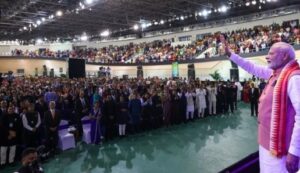
Historic Announcement: OCI Cards for Indian-Origin Citizens
In a landmark move during this historic visit, PM Modi announced that Indian origin citizens in Trinidad and Tobago are now eligible for Overseas Citizen of India (OCI) cards. This grants them the right to:
- Live, work, and study in India without visa restrictions
- Reconnect with their ancestral ties
- Participate more actively in India’s socio-economic fabric
He urged the community to visit India, explore their ancestral villages, and contribute to India’s growth story, further strengthening the shared journey between the two nations.
Symbolic Cultural Diplomacy
PM Modi presented a replica of the Ram Mandir and holy water from the Sarayu River in Ayodhya, showcasing the deep faith and cultural connections between India and the Caribbean nation.
- Recalled the Indo-Trinidadian community’s contribution of ‘shilas’ (stones) and sacred water during the construction of the Ayodhya temple.
- These gestures reflect the revered cultural bonds between the diaspora and the Indian homeland.
- The presentation of the Ram Mandir replica symbolizes the enduring spiritual ties that have been maintained through traditions like Ram Leelas.
Diplomatic Milestone
This historic visit marks the first Prime Ministerial bilateral visit to Trinidad and Tobago since 1999, underscoring its significance in Indo-Caribbean relations.
- He received a rousing welcome at Port of Spain by Prime Minister Kamla Persad-Bissessar, Cabinet members, and dignitaries, with a ceremonial Guard of Honour and cultural performances.
- The exceptional warmth of the reception highlighted the strong ties between the two nations.
During the visit, PM Modi is scheduled to:
- Meet President Christine Carla Kangaloo
- Hold talks with PM Bissessar
- Address a Joint Session of the Trinidad and Tobago Parliament
Strategic and Emotional Diplomacy
Modi praised the Girmitiya community’s contributions to Trinidadian society — in politics, law, education, agriculture, and arts, recognizing them as a transformational force in the nation’s development.
- Reaffirmed India’s role as a global civilisational power that nurtures connections beyond borders.
- Emphasized the shared journey of India and Trinidad and Tobago through their historical and cultural links.
“People from India made their way to Trinidad and Tobago years ago. Over the years, they distinguished themselves in several fields and are enriching the nation’s development journey.”
Why Are So Many Indians in Trinidad and Tobago?
The significant Indian population in Trinidad and Tobago — around 37% of the country’s total population — dates back to the mid-19th century:
Historical Context
- After the abolition of slavery (1834) in British colonies, plantation owners needed a new labour source.
- The Indentured Labour System was introduced by the British.
- Between 1845 and 1917, over 143,000 Indians were brought to Trinidad as indentured labourers to work on sugarcane plantations.
- The first ship, Fatel Razack, arrived on May 30, 1845, carrying 225 Indian workers, marking the beginning of a 180th anniversary of Indian presence in Trinidad and Tobago.
Legacy of the Indentured Indians
- Most labourers were from Bihar, Uttar Pradesh, and Tamil Nadu.
- They maintained Indian customs, festivals (Diwali, Phagwa), languages (Bhojpuri, Hindi, Tamil), and religious practices (Hinduism, Islam).
- The community preserved cultural traditions like Ramcharitmanas recitations and Ram Leelas, keeping their ancestral heritage alive.
- Over generations, the Indo-Trinidadian community rose economically, politically, and culturally, shaping the identity of modern Trinidad and Tobago.
Significance of Modi’s Historic Visit
- Strengthens India–Caribbean relations at both bilateral and diaspora levels.
- Reinforces soft power diplomacy through culture, faith, and shared history.
- Reflects India’s commitment to its diaspora, branding them as cultural ambassadors of Bharat.
- Highlights the transformational force of the Indian community in Trinidad and Tobago’s development.
- Celebrates the enduring cultural bonds and ancestral ties between the two nations.
This first bilateral visit by an Indian Prime Minister in over two decades marks a new chapter in India-Trinidad and Tobago relations, honoring the shared journey of two nations bound by history, culture, and the indomitable spirit of the Indian diaspora.




