 India's No.1 PU & Degree With Integrated IAS & IPS(UPSC/PSC) Training College.


Lahore Records World’s Highest Air Pollution Levels
Lahore Records World’s Highest Air Pollution Levels
Why in the News?
Lahore has topped the global pollution rankings with an alarming AQI of 353, marking it as the world’s most polluted city. The report by IQAir highlights persistent smog, poor visibility, and worsening environmental stress across Pakistan’s major urban centres.
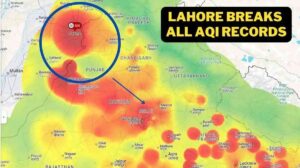
Lahore Tops Global AQI Rankings with Hazardous Smog:
- Lahore recorded an Air Quality Index (AQI) of 353, placing it at the top of the world’s most polluted cities.
- The data from the Swiss air-quality firm IQAir categorised Lahore’s air as hazardous, posing severe health risks to residents.
- Other Pakistani cities, including Rahim Yar Khan, Gujranwala, and Faisalabad, also reported unhealthy air quality, worsening the nationwide smog crisis.
- Dense fog and smog in the plains of Khyber Pakhtunkhwa and Southern Punjab caused poor visibility and disrupted highway movement.
- Pakistan’s largest cities — Lahore, Karachi, and Islamabad — continue to experience severe and persistent smog, particularly during winter months.
Environmental Stress and Climate-Linked Challenges in Pakistan
- Air pollution in Lahore is driven by vehicular emissions, industrial smoke, crop burning, and stagnant winter air patterns that trap pollutants.
- Smog has become a public health emergency, increasing cases of asthma, bronchitis, eye irritation, and cardiovascular diseases.
- Urban centres across Pakistan suffer from poor environmental governance, inadequate pollution control, and weak enforcement of emission norms.
- Extreme weather conditions, including dense fog, are exacerbated by climate change and seasonal temperature inversions.
- The worsening condition reflects broader environmental challenges in Pakistan, including water stress, heatwaves, and rapid urbanisation without sustainable planning.
About Indus Basin and Environmental Vulnerability: |
| ● The Indus Basin is one of the world’s most stressed water systems, heavily dependent on groundwater extraction, river flows, and glacial melt. |
| ● In 2015, NASA ranked the Indus Basin as the second-most overstressed aquifer globally, signalling severe long-term water scarcity. |
| ● Over-extraction, reduced groundwater recharge, and poor irrigation efficiency have intensified environmental degradation. |
| ● Pollution from agriculture, untreated sewage, and urban waste further contaminates river systems feeding the basin. |
| ● The crisis in the Indus Basin is closely tied to climate change, air pollution, and poor resource management, making it a key topic for UPSC Environment and Climate Studies. |


