 India's No.1 PU & Degree With Integrated IAS & IPS(UPSC/PSC) Training College.


Karnataka Cabinet Approves Regional Imbalance Report: 60% of Backward Taluks in North Karnataka
Karnataka Cabinet Approves Regional Imbalance Report: 60% of Backward Taluks in North Karnataka
In a major policy decision aimed at correcting long-standing developmental disparities, the Karnataka Cabinet has approved the report of the Karnataka Regional Imbalance Redressal Committee, chaired by eminent economist Dr. M. Govinda Rao. The report highlights that nearly 60% of Karnataka’s backward taluks are concentrated in North Karnataka, underlining the persistence of intra-state regional inequality and the need for comprehensive development frameworks that integrate environmental democracy with economic growth.
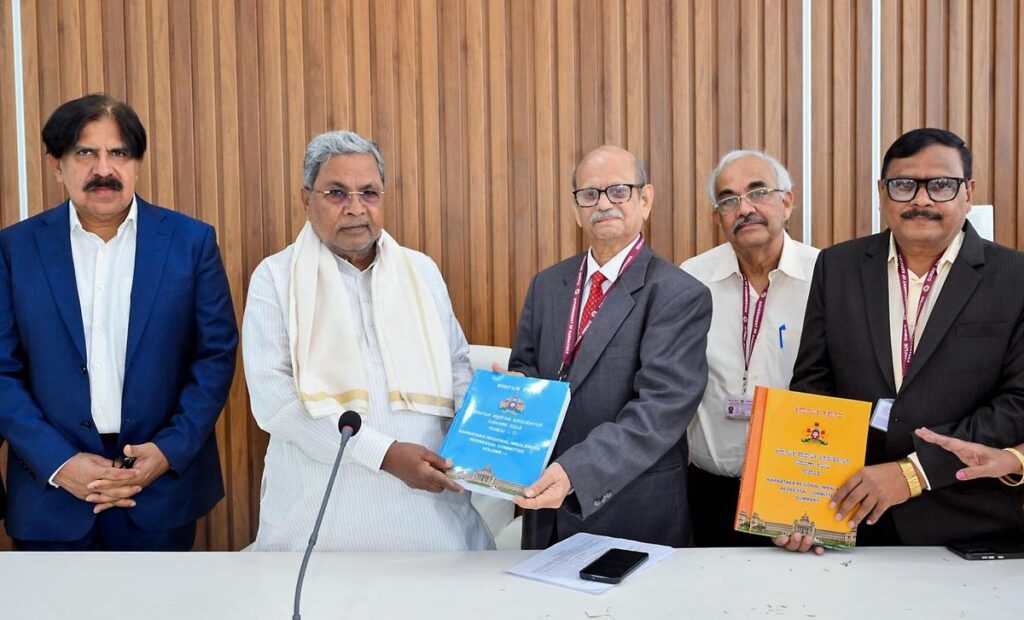
About Dr. M. Govinda Rao
Dr. M. Govinda Rao is a distinguished public finance expert and former Director of the National Institute of Public Finance and Policy (NIPFP), New Delhi. He has served on several Finance Commission advisory panels and is known for his expertise in fiscal federalism, public expenditure management, and decentralised planning.
His leadership in the committee lends credibility to the report’s data-driven and fiscal policy-oriented recommendations that emphasize sustainable development principles.
Historical Background: Earlier Efforts
The issue of regional imbalance in Karnataka has been examined earlier:
Dr. D.M. Nanjundappa Committee (2002)
Officially called the High Power Committee for Redressal of Regional Imbalances.
Identified 114 backward taluks.
Recommended special development grants.
Its findings eventually contributed to the granting of Article 371(J) status to the Hyderabad-Karnataka region (now Kalyana Karnataka).
Despite targeted funding and constitutional safeguards, disparities have persisted, necessitating a fresh assessment under Dr. Govinda Rao that also considers environmental jurisprudence in development planning.
Key Findings of the Govinda Rao Committee
The committee evaluated all 236 taluks using a composite development index.
177 taluks fall under varying degrees of backwardness.
Classification categories:
- Most Backward
- More Backward
- Backward
- Developed
A significant concentration of “most backward” taluks is located in:
Kalyana Karnataka region
Parts of Kittur Karnataka (Mumbai-Karnataka)
Indicators Used for Classification
The assessment was based on multiple socio-economic parameters:
Per capita income
Literacy and educational indicators
Health infrastructure
Access to drinking water and sanitation
Agricultural productivity
Industrial growth
Employment levels
Physical infrastructure
This multi-dimensional approach ensures objective measurement of development gaps while promoting a pollution free environment as a core development objective.
Cabinet Approval: Policy Implications
With Cabinet approval, the report is expected to influence:
Targeted budgetary allocations
Infrastructure development in lagging regions, subject to environmental clearances and compliance with the EIA notification
Recalibration of development schemes incorporating the precautionary principle and polluter pays principle
Strengthening implementation of Article 371(J) alongside environmental impact assessment requirements
Evidence-based regional planning that balances economic growth with environmental protection
The approval reflects the government’s intention to adopt structured corrective measures while ensuring that development projects obtain proper environmental clearance rather than seeking ex post facto approvals, as cautioned in the Vanashakti judgment.
Reasons for Persistent Backwardness in North Karnataka
Semi-arid climate and frequent droughts
Lower industrialisation compared to southern districts, partly due to delays in obtaining environmental clearances
Historical administrative neglect
Out-migration of skilled labour
Limited urban growth centres
Challenges in balancing Forest Conservation Act provisions with development needs
Regulatory complexities including coastal regulation zone restrictions in certain areas
Constitutional Significance
Article 371(J) grants special provisions to the Kalyana Karnataka region, including reservation in education and public employment. However, the latest report suggests that structural transformation requires more than constitutional safeguards — it needs sustained economic intervention integrated with environmental democracy principles. The government must avoid retrospective environmental clearances or ex-post approvals that undermine environmental jurisprudence, ensuring instead that development follows due process from the outset.
Relevance for Competitive Exams
This topic is important for:
KPSC / State PSC – Karnataka Economy
Essay topics: Balanced Regional Development
Questions on Article 371(J) and fiscal federalism
Conclusion
The approval of the Govinda Rao Committee report marks an important milestone in Karnataka’s developmental policy framework. However, addressing deep-rooted regional imbalances requires effective implementation, transparent monitoring, and long-term investment in human capital and infrastructure. Development initiatives must comply with environmental regulations from the planning stage itself, avoiding the pitfalls of post facto clearances that compromise both legal integrity and sustainable outcomes.
Balanced regional development remains central to achieving inclusive and sustainable growth in Karnataka, integrating economic progress with environmental protection and social equity.




