 India's No.1 PU & Degree With Integrated IAS & IPS(UPSC/PSC) Training College.


India’s Slums in Floodplains: Climate Crisis Alert
INDIA’S SLUMS IN FLOODPLAINS: A LOOMING CLIMATE CRISIS
Syllabus:
GS-3: ● Climate change and associated issues
GS-2: ● Poverty and vulnerable section of society
Why in the News?
A new study published in Nature Cities reveals that India has the world’s highest number of slum-dwellers—over 158 million—residing in flood-prone areas, particularly in the Ganga delta. This data, extracted from satellite images and flood maps, underscores the urgent need for inclusive urban planning and climate-resilient infrastructure in the Global South, especially for the urban poor affected by rapid urbanization and population growth.
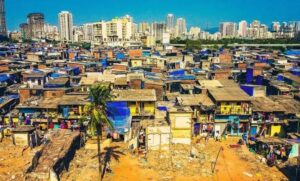
MASSIVE SCALE OF EXPOSURE
- Global Trend: Over 2.3 billion people face flood exposure annually, with 445 million living in previously flooded areas, as per the 2024 Moody’s report.
- Indian Numbers: In India alone, 600 million people are exposed to either coastal or inland flooding, primarily in urban slum clusters and slum areas. Understanding what are slums and what is slum is crucial to grasp the magnitude of this issue, including the challenges faced by slum people.
- Ganga Delta: The Ganga River delta has the highest concentration of floodplain settlements due to low-lying terrain and high population density, making it a hotspot for slum formation.
- South Asia Focus: Apart from India, countries like Bangladesh, Pakistan, and Indonesia show high exposure levels, marking a South Asian hotspot for urban flooding and climate impacts on slum-dwellers. For instance, in Dhaka, Bangladesh’s capital, a significant portion of slum-dwellers reside in flood-prone areas.
- Lack of Data: There exists a critical data gap in mapping vulnerable communities, particularly in the Global South, hindering effective disaster response and slum upgrading efforts. Household surveys could potentially bridge this gap and provide valuable insights into the living conditions of slum-dwellers.
WHY SLUMS FORM IN FLOODPLAINS
- Cheaper Land: Floodplains offer low-cost land, making them attractive for migrant workers and slum-dwellers, especially in urban fringes, contributing to the growth of slums.
- Employment Access: Many slum people settle near urban centers to access jobs, even if it means risking natural disasters like floods, highlighting the link between urban poverty and climate vulnerability. Construction workers often form a significant portion of these slum communities.
- Neglected Zones: Builders avoid flood-prone areas for high-end development, leaving these zones open to unregulated habitation and slum settlements.
- Lack of Housing: Inadequate affordable housing policies push marginalized populations into vulnerable geographies, exacerbating the slum crisis and affecting housing quality.
- Systemic Inequity: Social and financial constraints, like lack of insurance and low education, further increase flood vulnerability for slum-dwellers.
STRUCTURAL AND POLICY FAILURES
- No Targeted Policy: Flood risk management strategies often ignore informal settlements, focusing on population-level solutions instead of addressing the specific needs of slum communities.
- Inadequate Infrastructure: Poor drainage systems, unplanned urbanisation, and failing civic services make flood-prone areas more dangerous for slum-dwellers. The lack of basic infrastructure exacerbates these issues.
- Weak Governance: Disaster response is often top-down, lacking community engagement or localized planning in slum clusters. This approach fails to consider the coping mechanisms developed by slum-dwellers.
- Urban Disparities: In cities like Bengaluru, informal settlements are more flood-vulnerable due to being excluded from gated infrastructure development, highlighting urban inequality.
- Data Deficiency: There is insufficient granular data to understand and manage flood risk at the community level, especially in informal areas and slums. This gap could be addressed through comprehensive household surveys.
DISPROPORTIONATE IMPACT ON SLUMS
- High Likelihood: Slum-dwellers are 32% more likely to reside in floodplains due to economic desperation and lack of alternatives, showcasing the intersection of urban poverty and climate risks.
- Recurring Losses: Flooding causes frequent displacement, job loss, and service disruption in informal settlements, affecting the livelihood assets of slum people. The issue of compensation for these losses often remains unaddressed.
- No Insurance: Unlike the West, the Global South lacks subsidized flood insurance, increasing economic vulnerability post-disaster for slum-dwellers.
- Health Hazards: Poor sanitation and inadequate storm water drainage in flood-hit slums escalate waterborne diseases, vector outbreaks, and long-term malnutrition, highlighting environmental health concerns in slum areas.
- Cumulative Risks: Climate-related disasters often combine with urban heat islands, air pollution, and inadequate healthcare, worsening outcomes for slum communities. This includes the increasing threat of pluvial floods in urban areas.
SOCIO-ECONOMIC FACTORS AT PLAY
- Low Education: Lower literacy and awareness among slum-dwellers hinders risk preparedness and early action during flooding, emphasizing the need for skill development.
- Migration Drivers: Rural-urban migration, driven by poverty and unemployment, increases population density in urban floodplains, contributing to slum formation. Many migrants, including construction workers, seek employment opportunities in cities.
- Social Marginalization: Caste, gender, and minority status play a role in exclusion from safer, planned urban areas, exacerbating social vulnerability in slums. Addressing gender equality is crucial in this context.
- Skewed Urbanisation: India’s rapid urban growth is largely unplanned, with over 40% of slum-dwellers in urban or peri-urban areas, highlighting the challenges of rapid urbanization.
- Resource Inequity: Flood resilience depends on access to services, which are disproportionately distributed across income groups, affecting the adaptive capacity of slum-dwellers.
CLIMATE JUSTICE AND SDGS
- 2030 Deadline: The UN Sustainable Development Goals (SDGs) demand immediate focus on inclusive cities and climate action, particularly for slum areas.
- Poverty Link: SDG 1 (No Poverty) and SDG 11 (Sustainable Cities) are threatened by the increased flood risk to the poor, especially slum-dwellers.
- Human-Centric Approach: Solutions should prioritize people over location, focusing on community engagement and livelihood protection in slum communities. This includes supporting slum dwellers associations.
- Dual Benefits: Investments in flood resilience (e.g., waste management, water and sanitation) can also address unemployment and health issues in slums.
- Urban Planning: Proactive policies on affordable housing, land use regulation, and slum rehabilitation are vital to meet SDGs and address urban inequality. This requires a robust legal framework to support slum-dwellers’ rights.
ROLE OF TECHNOLOGY AND DATA
- Satellite Analysis: The study used machine learning and satellite images to identify 67,568 clusters of slums in flood-prone areas, showcasing the potential of technology in mapping slum settlements.
- Proof of Concept: Demonstrates how AI tools can bridge data gaps in urban vulnerability mapping, particularly for slum areas.
- Predictive Modelling: The next step is using AI for slum expansion forecasts, migration analysis, and climate risk prediction to inform city planning.
- Localized Mapping: High-resolution flood risk maps tied with socioeconomic indicators can guide targeted policy interventions for slum-dwellers.
- Open Data: Open-source platforms can allow citizen engagement, ensuring community ownership of risk solutions in slum communities.
POLICY RECOMMENDATIONS AHEAD
- Community Involvement: Include slum-dwellers in decision-making, from planning to execution of resilience measures, promoting community participation. Support the formation and empowerment of slum dwellers associations.
- Micro-Level Plans: Develop ward-level flood action plans, ensuring localised adaptation for informal settlements and slum areas.
- Skill Training: Promote community training in waste management, sanitation, and drainage maintenance to build local capacity among slum people.
- Public Housing: Scale up affordable housing away from flood zones through PPP models and urban land reforms to address slum formation. Implement zoning regulations and building codes to ensure safe construction practices and improve housing quality.
- Integrated Response: Align urban development with disaster risk reduction, climate mitigation, and social equity goals to enhance resilience against extreme weather events in slums.
- Secure Tenure: Implement policies to provide slum-dwellers with secure tenure and land rights, reducing vulnerability to forced evictions and improving long-term stability.
- Social Protection: Develop comprehensive social protection schemes for slum-dwellers to enhance their resilience against floods and other climate-related disasters.
- Monitoring and Evaluation: Implement robust monitoring and evaluation systems to assess the effectiveness of interventions and policies aimed at improving the lives of slum-dwellers.
CONCLUSION
India’s dominance in slum clusters within flood-prone areas reveals the intersection of poverty, planning failures, and climate vulnerability. The urgency is compounded by the approaching 2030 SDG deadline and the reality of intensifying climate-related disasters. A just, inclusive, and data-driven urban policy is crucial to safeguard the lives and dignity of millions of slum-dwellers at risk. Addressing the challenges of urban flooding, rapid urbanization, and climate impacts on the urban poor requires a comprehensive approach that includes slum upgrading, improved municipal services, and enhanced disaster preparedness. By focusing on these areas, cities can work towards greater resilience against extreme weather events and social equity for their most vulnerable populations.
The lessons learned from India’s experience with slum-dwellers in flood-prone areas can inform global strategies for urban resilience and climate adaptation. By prioritizing the needs of slum people, strengthening social networks, and investing in basic infrastructure, cities can build more inclusive and resilient communities capable of withstanding the challenges posed by climate change and rapid urbanization.
MAINS PRACTICE QUESTION
India hosts the largest number of slum-dwellers in flood-prone areas globally. Critically examine the causes and implications of this phenomenon, and suggest sustainable strategies to address the challenge, considering the need for climate change resilience and urban poverty alleviation.

