 India's No.1 PU & Degree With Integrated IAS & IPS(UPSC/PSC) Training College.


India’s Nuclear Stance & Non-Proliferation Treaty
The Nuclear Non-Proliferation Treaty and India’s Nuclear Stance
The Nuclear Non-Proliferation Treaty (NPT), signed in 1968 and entered into force in 1970, stands as a landmark international agreement. Its primary objectives are preventing nuclear proliferation, promoting peaceful uses of nuclear energy, and advancing the goal of nuclear disarmament. With over 190 signatories, the NPT has become the most widely accepted arms control agreement globally.
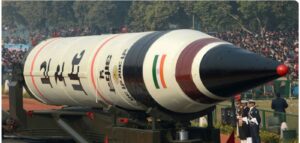
The Three Pillars of the NPT
The NPT is built upon three fundamental pillars:
- Non-proliferation: Nuclear Weapon States (NWS) pledge not to transfer nuclear weapons or technology, while Non-Nuclear Weapon States (NNWS) agree not to pursue nuclear weapons.
- Disarmament: All parties commit to eventual nuclear disarmament, including efforts towards a Fissile Material Cut-off Treaty (FMCT). The FMCT aims to prohibit the production of fissile material for nuclear weapons or other nuclear explosive devices.
- Peaceful use of nuclear energy: The treaty supports cooperation in nuclear technology for peaceful purposes under IAEA safeguards. This includes advancements in the nuclear fuel cycle, such as uranium enrichment and plutonium production.
The NPT legally recognizes only five NWS — the United States, Russia, the United Kingdom, France, and China — all of whom had tested nuclear weapons before January 1, 1967. This arbitrary cut-off date forms the basis of India’s principled opposition to the NPT and has significantly influenced the development of India’s nuclear program, shaping the landscape of India’s nuclear policy.
India’s Stand on the NPT
India has consistently refused to sign the NPT since its inception. The core of India’s argument lies in the inherent inequality embedded in the treaty. While it creates binding obligations for non-nuclear states, it allows the five declared NWS to retain their arsenals indefinitely, without a credible roadmap for disarmament. This stance has led to India’s exclusion from the Nuclear Suppliers Group (NSG), a multinational body that aims to reduce nuclear proliferation by controlling the export and transfer of materials that can be used to develop nuclear weapons.
Key Positions in India’s Nuclear Policy
India maintains several key positions regarding its nuclear stance:
- Moral and Strategic Autonomy: India believes the NPT discriminates between nuclear “haves” and “have-nots.” It seeks global nuclear disarmament rather than perpetuating nuclear apartheid. This position is reflected in India’s nuclear doctrine, which emphasizes minimum credible deterrence and a no-first-use policy.
- Security Concerns: With nuclear-armed neighbors like China and Pakistan, India cannot afford to limit its nuclear options unilaterally. This has led to the development of India’s nuclear deterrence capabilities, while also raising concerns about a potential nuclear arms race in the region.
- Peaceful Nuclear Program: India emphasizes its commitment to the peaceful use of nuclear energy. The Indian nuclear program includes research into the thorium fuel cycle, which has the potential to provide a sustainable and proliferation-resistant source of nuclear power.
- Nuclear Cooperation: Despite not being a signatory to the NPT, India has engaged in nuclear cooperation agreements with several countries. These agreements often include provisions for nuclear liability and safeguards to ensure the peaceful use of nuclear technology.
- Fissile Material Control: While India supports the principle behind the FMCT, it has reservations about how such a treaty might be implemented. India argues that any FMCT should be non-discriminatory and verifiable, addressing both current and future production of fissile material.
- Nuclear Security and Regulation: India has established a robust nuclear regulatory authority to oversee its nuclear facilities and ensure nuclear security. It has also participated in international efforts to enhance nuclear security, including attending Nuclear Security Summits.
- Testing Moratorium: Since its nuclear tests in 1998, India has maintained a voluntary nuclear testing moratorium. This demonstrates India’s commitment to responsible nuclear behavior while maintaining its strategic autonomy.
Conclusion: Balancing National Interests and Global Responsibility
In conclusion, India’s stance on the NPT and its approach to nuclear issues reflect a complex balance between national security interests, commitment to global disarmament, and the pursuit of peaceful nuclear energy. While India remains outside the NPT framework, it continues to engage with the international community on nuclear issues, advocating for a more equitable global nuclear order.
The India nuclear policy continues to evolve, balancing strategic autonomy with responsible nuclear behavior and international cooperation. As global nuclear dynamics shift, India’s role in shaping the future of nuclear non-proliferation and disarmament remains significant, underscoring the need for ongoing dialogue and engagement on these critical issues.




