 India's No.1 PU & Degree With Integrated IAS & IPS(UPSC/PSC) Training College.


India’s Hypersonic Cruise Missile: Strategic Leap
India’s New Hypersonic Cruise Missile: A Strategic Breakthrough
India has made a significant leap in defense technology with the successful development of a new hypersonic cruise missile. It is expected to surpass the capabilities of existing air-launched cruise missiles. This includes the supersonic cruise missile BrahMos, in terms of speed, range, and lethality.
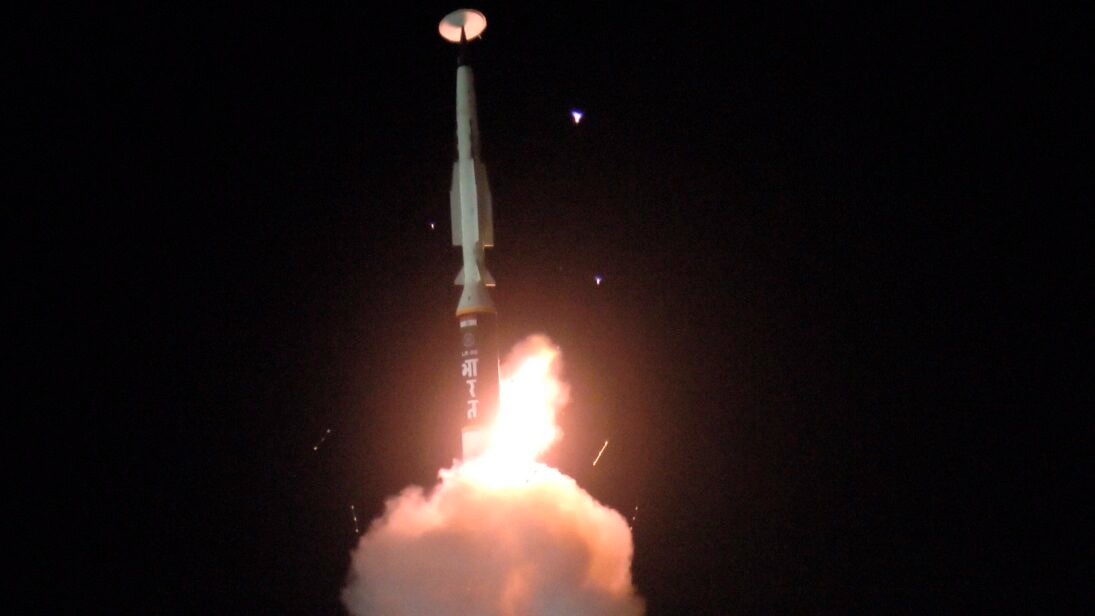
Key Highlights
- Speed: Capable of flying at speeds up to Mach 8 (~9,800 km/h), outpacing traditional ballistic missile platforms.
- Range: Estimated range of 1,500 kilometers, nearly three times that of BrahMos.
- Propulsion: Powered by an air-breathing scramjet engine, making it a true hypersonic air-breathing weapon that uses atmospheric oxygen for combustion, resulting in a lighter and faster system.
- Warhead: Can carry conventional or nuclear warheads weighing up to 2,000 kg, suitable for targeting strategic military bunkers.
- Launch Platforms: Designed for land, air, and sea deployment, ensuring strategic versatility and tactical flexibility. It can be configured as an air-launched cruise missile for fighter jets.
- Stealth Capabilities: Features an altitude-hugging flight profile, performs mid-course corrections, and has an unpredictable flight trajectory, making it nearly impossible to intercept by enemy missile defence systems.
Strategic Significance
With this advancement in indigenous missile development, India joins a select group of nations—the US, Russia, and China—with indigenous hypersonic missile capabilities. The missile enhances India’s credible minimum deterrence posture, particularly in the Indo-Pacific region, by significantly reducing enemy response time for strategic targets and time-sensitive targets.
Its advanced features, including the ability to perform satellite-based corrections during flight, and manoeuvrability could potentially overcome sophisticated missile defence systems. This could alter the balance of power in the region. The missile’s mission-specific configurations allow for adaptability to various strategic scenarios.
Development Background
The hypersonic cruise missile is part of India’s classified Project Vishnu, a flagship missile system within India’s hypersonic weapon program. It has received technological inputs from DRDO’s earlier Hypersonic Technology Demonstrator Vehicle (HSTDV) program. These include advancements in oxidation-resistant materials crucial for hypersonic flight.
The first successful flight test was reportedly conducted in late 2024 from Dr. APJ Abdul Kalam Island, Odisha. This marked a crucial milestone in technology demonstrations conducted for this project.
Other associated projects that contribute to India’s defence manufacturing ecosystem include:
- BrahMos-II: An Indo-Russian hypersonic missile project under development.
- LRAShM (Long-Range Anti-Ship Missile): India’s future hypersonic anti-ship weapon system.
Global Context
Hypersonic missiles are considered next-generation strategic weapons. This is due to their ability to travel faster than Mach 5 and evade radar systems with their unpredictable glide paths. The global race for hypersonic supremacy includes various projects such as the HACM development in the United States and the boost-glide ARRW (Air-Launched Rapid Response Weapon) system.
India’s entry into this arena strengthens its role as a rising defense power and a key regional balancer in South Asia and the Indo-Pacific. This could potentially lead to heightened regional tensions.
Why it Matters for Competitive Exams
Understanding India’s technological and strategic advancements is crucial for aspirants of UPSC, CDS, CAPF, and other exams. Questions may be asked on:
- Hypersonic vs supersonic technology
- Strategic programs by DRDO
- India’s defense collaborations
- Global arms race and missile treaties
Stay updated on Project Vishnu, air-breathing scramjet engines, and hypersonic warfare, as they are likely to appear in Science & Tech, Current Affairs, and Defense sections. Familiarize yourself with related concepts such as mid-course corrections, oxidation-resistant materials, and the strategic implications of hypersonic cruise missiles in modern warfare.

