 India's No.1 PU & Degree With Integrated IAS & IPS(UPSC/PSC) Training College.


El Niño Triggers Emergency Responses Worldwide
EL NIÑO TRIGGERS EMERGENCY RESPONSES ACROSS NATIONS
WHY IN THE NEWS ?
- Emergency Declaration: Bolivia’s President Rodrigo Paz has declared a national emergency to address the growing impacts of the El Niño climate phenomenon.
- Affected Communities: Drought has already affected 63 communities, while livestock farmers face shortages of animal feed.
- Regional Preparedness: Myanmar’s Yangon region has established over 600 heat relief shelters to protect people from extreme temperatures amid forecasts of a strong El Niño event.
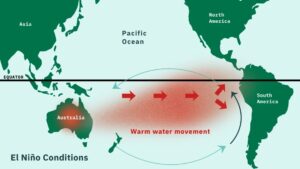
EL NIÑO AND ITS GLOBAL IMPACTS:
- Bolivia’s Response: President Rodrigo Paz declared a national emergency to facilitate the mobilisation of financial and human resources for disaster management.
- Institutional Coordination: The emergency status will improve coordination among government agencies and strengthen efforts to obtain international assistance.
- Drought Conditions: According to the President, 63 communities across Bolivia have already experienced drought-related impacts.
- Livestock Crisis: The livestock sector is facing significant shortages of animal feed, threatening animal health, rural livelihoods and agricultural productivity.
- Myanmar’s Preparedness: Yangon has established more than 600 heat relief shelters, with a combined capacity exceeding 1,50,000 people.
- Regional Concern: Myanmar’s preventive measures reflect concerns over extreme temperatures associated with a potentially strong El Niño event.
- Global Implications: El Niño can disrupt rainfall patterns, intensify heatwaves and increase the vulnerability of agriculture, water resources and vulnerable populations.
EL NIÑO: ENVIRONMENTAL AND SOCIO-ECONOMIC SIGNIFICANCE
- Agricultural Impact: Altered rainfall patterns can cause droughts in some regions and excessive rainfall in others, affecting crop production.
- Water Security: Reduced precipitation can deplete reservoirs, groundwater levels and freshwater availability.
- Livestock Vulnerability: Drought reduces pasture availability and animal feed supplies, adversely affecting livestock-dependent communities.
- Public Health: Extreme temperatures increase the risk of heat-related illnesses, particularly among children, older persons and outdoor workers.
- Economic Consequences: Agricultural losses, food-price volatility and damage to livelihoods can create wider economic pressures.
- Disaster Management: Emergency declarations, early-warning systems, relief shelters and international cooperation are essential for reducing climate-related risks.
ABOUT EL NIÑO–SOUTHERN OSCILLATION (ENSO):● Definition: El Niño is the periodic warming of sea surface temperatures in the central and eastern equatorial Pacific Ocean. ● ENSO: El Niño, La Niña and the neutral phase together constitute the El Niño–Southern Oscillation (ENSO) phenomenon. ● Southern Oscillation: It refers to changes in atmospheric pressure patterns between the western and eastern tropical Pacific. ● La Niña: It is characterised by unusually cool sea surface temperatures in the central and eastern equatorial Pacific. ● Indian Monsoon: El Niño is generally associated with a tendency towards weaker Indian summer monsoon rainfall, although the relationship is not uniform every year. ● Global Effects: ENSO influences temperature, precipitation, droughts, floods and tropical cyclone activity across different regions. |

