 India's No.1 PU & Degree With Integrated IAS & IPS(UPSC/PSC) Training College.


Deodar Forests Crisis 2026
Deodar Forests Under Threat
Syllabus
GS 3: Environment
Why in the News?
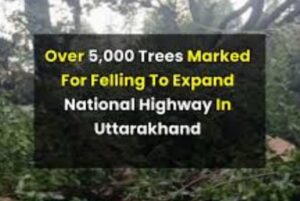
Recently government approval for tree felling in Uttarakhand revived debates on environmental governance, National Mission for Sustaining Himalayan Ecosystem, disaster resilience, and conflicts between development priorities and ecological security concerns. The lack of proper environmental clearances and adherence to the Forest Conservation Act has raised serious questions about the project’s legality and sustainability.
Introduction
India’s Himalayan region is witnessing repeated climate disasters that expose serious flaws in development planning. Extreme weather, unsafe infrastructure, and ecological neglect are combining dangerously. These events raise urgent questions about sustainability, governance, and whether current development models respect science, environment, and long-term national security interests. The absence of proper environmental clearances and the violation of environmental jurisprudence principles have further complicated the situation.
Climate Disasters: A New Normal in the Himalayas
- The year 2025 experienced nearly 331 days of climate impacts, showing how extreme weather has become continuous rather than occasional.
- More than 4,000 people lost their lives due to climate-related disasters, revealing a severe human cost often overlooked in policy debates.
- Himalayan States such as Himachal Pradesh and Uttarakhand suffered the highest casualties because of their fragile terrain and climate sensitivity.
- Towns including Dharali, Harsil, Uttarkashi, Chamoli, Kullu, Mandi, and Kishtwar faced repeated destruction from sudden natural disasters.
- Cloudbursts, landslides, avalanches, and flash floods destroyed homes, livelihoods, infrastructure, and local economies within minutes.
Infrastructure Expansion in Disaster-Prone Zones
Risky Decisions in Sensitive Areas
- Despite recent disasters**, authorities approved a major infrastructure project** in areas already devastated by avalanches and flash floods, without proper environmental clearances.
- On November 12, Uttarakhand Forest Department permitted forest diversion for road widening under the Char Dham project, raising concerns about compliance with the Forest Conservation Act.
- The project involves cutting nearly 7,000 Devdar trees and damaging numerous native plant species.
- Around 43 hectares of forest land were diverted, with nearly 10 hectares allocated for dumping construction debris.
- The project follows the DL-PS standard, requiring a twelve-metre paved road in highly unstable terrain, potentially violating Coastal Regulation Zone norms in sensitive areas.
Geological and Glacial Fragility of the Region
Ignoring Known Scientific Warnings
- The project area lies north of the Main Central Thrust, classified as extremely vulnerable to geological disturbances.
- Experts have long advised against large infrastructure projects in this critical Himalayan zone, emphasizing the need for proper environmental impact assessments as per the EIA notification.
- Hanging glaciers surround the region, increasing risks of sudden ice collapses and debris flows.
- The Gangotri glacier, among the fastest retreating globally, feeds unstable moraine-covered glaciers downstream.
- A glacier avalanche from this system directly contributed to the Dharali disaster, confirming scientific warnings and highlighting the importance of the precautionary principle in environmental governance.
Ecological Value of Devdar Forests
Nature’s Shield Against Disasters
- Devdar forests play a vital role in stabilising slopes through their deep and widespread root systems.
- These trees reduce landslide risks and act as natural barriers against avalanches and debris flows.
- Downstream communities depend on these forests for protection from sudden floodwaters and sediment movement.
- Devdar forests also protect the water quality of the Ganga river system.
- They fall within the Bhagirathi Eco-Sensitive Zone, created to safeguard the river’s last unpolluted stretch, emphasizing the need for strict environmental clearances for any development activities.
Devdar Trees and River Ecology
Invisible but Critical Functions
- Devdar trees contain natural antimicrobial compounds found in their wood, bark, resin, and essential oils.
- Leaf litter from these forests enters streams, shaping healthy microbial ecosystems in mountain waters.
- Harmful bacteria are suppressed, while beneficial organisms thrive naturally without chemical intervention.
- These forests help regulate water temperature in snowmelt-fed streams.
- Cooler waters maintain dissolved oxygen levels required for fish and aquatic biodiversity.
Consequences of Deforestation
Permanent Ecological Damage
- Removing Devdar forests increases air and water temperatures across fragile mountain ecosystems.
- Reduced oxygen levels in rivers weaken aquatic life and disrupt natural purification processes.
- Bacteriophage activity declines, altering the river’s biological balance permanently.
- Such ecological shifts cannot be reversed through artificial restoration measures.
- The Supreme Court earlier discouraged cutting these ancient trees due to irreversible environmental consequences, setting a precedent in environmental jurisprudence.
False Promise of Tree Translocation
A Scientifically Unsound Proposal
- Authorities proposed “translocating” centuries-old Devdar trees as a mitigation strategy, raising questions about adherence to the polluter pays principle.
- Uprooting mature Devdar trees effectively kills them, making translocation ecologically meaningless.
- These trees perform site-specific functions developed over hundreds of years.
- No alternative terrain can replicate their ecological role or geological anchoring capacity.
- Preserving them is an environmental necessity, not an administrative convenience, as emphasized by environmental jurisprudence.
Char Dham Project: Engineering Without Ecology
A Catalogue of Errors
- The project bypassed comprehensive environmental impact assessment through artificial project fragmentation, potentially violating the EIA notification.
- Authorities adopted incorrect road width standards contradicting even internal policy guidelines.
- Vertical hill cutting destabilised slopes already prone to collapse.
- Excavated debris was dumped indiscriminately into rivers and natural drainage channels.
- These actions directly violated basic Himalayan construction principles and environmental clearance norms.
Visible Consequences on the Ground
Infrastructure Becoming a Liability
- Over 800 active landslide zones have emerged along the nearly 700-kilometre widened road network.
- Several strategic border routes now face repeated closures due to slope failures.
- Locals sarcastically call the “all-weather road” an “all-paidal road” because vehicles often cannot pass.
- Economic losses mount as tourism, transport, and livelihoods remain frequently disrupted.
- Public trust erodes when infrastructure fails during emergencies, highlighting the need for stricter environmental clearances and adherence to the Forest Conservation Act.
Ignoring the National Himalayan Policy Framework
Contradictions in Governance
- The National Mission for Sustaining the Himalayan Ecosystem was approved under climate action planning in 2014.
- Its objectives include glacier monitoring, biodiversity protection, and disaster risk reduction.
- Current infrastructure practices directly contradict these mission goals and often lack proper environmental clearances.
- The government has not explained why flagship environmental commitments are being violated.
- Development without policy coherence undermines long-term national interests and environmental jurisprudence.
Climate Change as a Risk Multiplier
Accelerating Natural Hazards
- Scientific studies show high-altitude Himalayan regions warming 50 percent faster than global averages.
- Snowless winters and increased forest fires now define the regional climate pattern.
- Climate change intensifies rainfall variability and accelerates glacier melting.
- This creates a dangerous phase of excess water and catastrophic flash floods.
- Eventually, glacier retreat leads to long-term water scarcity and drought, emphasizing the need for the precautionary principle in development planning.
Human Actions Worsening Natural Risks
Unsafe Land Use Patterns
- Cutting unstable slopes for wide highways removes natural soil anchors.
- Large tunnels are drilled without adequate geological surveys or cumulative impact studies, often bypassing proper environmental clearances.
- Hydropower projects disrupt river flows and destabilise valley geology.
- National Green Tribunal has repeatedly flagged these practices as unsafe, contributing to environmental jurisprudence.
- Deforestation accelerates erosion, landslides, and downstream flooding risks, highlighting the importance of the Forest Conservation Act.
Governance Failures and Tourism Pressure
Systemic Weaknesses
- Unregulated tourism places enormous pressure on fragile Himalayan ecosystems, often violating Coastal Regulation Zone norms.
- Vehicular traffic exceeds carrying capacity in sensitive mountain zones.
- Solid waste management systems remain largely non-functional in tourist areas.
- Planning prioritises short-term economic gains over disaster resilience and environmental clearances.
- Science-based sustainable development remains inadequately implemented, ignoring the precautionary principle.
Himalayas: India’s Foundation
Beyond Geography
- The Himalayas shape India’s climate, rivers, agriculture, and ecological balance.
- They support cultural traditions and spiritual beliefs deeply rooted in Indian civilisation.
- Repeated disasters reaffirm that India’s survival depends on Himalayan stability.
- Ignoring scientific warnings threatens national security and economic stability.
- Sustainable development is the only viable path forward, requiring strict adherence to environmental clearances, the Forest Conservation Act, and principles of environmental jurisprudence.
Conclusion
Himalayan disasters reveal that unsafe development, not nature alone, drives destruction. Protecting forests, respecting geology, and prioritising resilience are essential. Without science-based planning, infrastructure becomes a liability, endangering lives, ecology, and India’s long-term security. Proper environmental clearances, adherence to the Forest Conservation Act, and respect for environmental jurisprudence principles are crucial for sustainable development in this sensitive region.
Source:The Hindu
Mains Practice Question
Examine the contradictions between current infrastructure projects in the Himalayas and India’s climate and environmental policy commitments, focusing on the role of environmental clearances and the Forest Conservation Act in sustainable development.

