 India's No.1 PU & Degree With Integrated IAS & IPS(UPSC/PSC) Training College.


Dark Oxygen in the Deep Sea: Discovery That Redefines How Oxygen Is Produced
Dark Oxygen in the Deep Sea: Discovery That Redefines How Oxygen Is Produced
Scientists have discovered a phenomenon known as “dark oxygen” nearly 13,000 feet below the surface of the Pacific Ocean, overturning the long-held belief that oxygen can only be produced through sunlight-driven photosynthesis. At such depths, polymetallic nodules rich in manganese, nickel, cobalt, and iron act as natural electrochemical cells, generating small electrical currents that split seawater into hydrogen and oxygen.
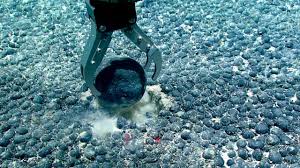
This process allows oxygen production in complete darkness and helps explain how deep-sea organisms survive in extreme, lightless environments. The discovery has significant implications for understanding the global oxygen cycle and raises concerns over deep-sea mining, as disturbing these nodules could damage fragile ecosystems. Additionally, the finding expands possibilities in astrobiology, suggesting that life may exist on other planets or icy moons where sunlight is absent but water and minerals are available.
Related Question:
Q. With reference to the recently discovered phenomenon of “dark oxygen” in the deep oceans, consider the following statements:
Dark oxygen refers to oxygen production occurring without sunlight or photosynthesis.
It is generated through electrochemical reactions involving polymetallic nodules on the ocean floor.
The discovery suggests that deep-sea mining may have ecological implications for oxygen-dependent organisms.
Dark oxygen production has so far been observed only in freshwater lakes.
Which of the statements given above are correct?
(a) 1 and 2 only
(b) 1, 2 and 3 only
(c) 2, 3 and 4 only
(d) 1, 2, 3 and 4




