 India's No.1 PU & Degree With Integrated IAS & IPS(UPSC/PSC) Training College.


Saving India’s Wetlands: UPSC 2026 Guide
Saving India’s Wetlands
Syllabus
GS 3: Environment
Why in the News?
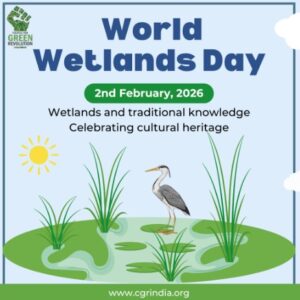
Recently, World Wetlands Day 2026 highlighted traditional knowledge, drawing attention to India’s rapid wetland loss, weak implementation of conservation laws, and the urgent need for community-led, science-based wetland restoration. This comes at a time when environmental clearances and impact assessments are under scrutiny for their role in protecting critical ecosystems.
Introduction
- Wetlands have supported Indian communities for centuries by providing water, food, livelihoods, and cultural identity.
- World Wetlands Day 2026 highlights traditional knowledge, reminding us that ecological wisdom and sustainable practices must guide conservation efforts in today’s climate-stressed and development-driven India.
- The importance of wetlands intersects with broader environmental concerns, including the need for robust environmental clearance processes and impact assessments.
World Wetlands Day 2026: Significance for India
Theme and Global Context
- World Wetlands Day 2026 was observed on February 2 under the theme “Wetlands and traditional knowledge: Celebrating cultural heritage”.
- The theme recognises indigenous practices that preserved wetlands while supporting livelihoods, cultural traditions, and ecological balance over generations.
- India’s long civilisational relationship with wetlands makes this theme particularly relevant and meaningful, especially in the context of evolving environmental jurisprudence.
Traditional Wetland Practices Across India
Tamil Nadu: Tank-Based Water Systems
- Tamil Nadu’s wetlands include human-made tanks called kulams forming cascading irrigation networks supporting agriculture and groundwater recharge.
- These interconnected tanks distribute monsoon water efficiently and reduce flood risks while sustaining paddy cultivation.
Kerala: Kenis of Wayanad
- In Wayanad, shallow wells called kenis were constructed over 200 years ago for drinking water and rituals.
- Kenis also support festivals, community gatherings, and drought resilience through decentralised water access.
Andhra Pradesh: Srikakulam Wetlands
- Wetlands in Srikakulam sustain traditional fishing communities using low-impact, season-sensitive harvesting practices.
- These practices balance livelihoods with biodiversity conservation and long-term wetland productivity.
Wetlands as Ecology and Economy
- Across India, wetlands function as habitats, water sources, cultural spaces, and economic foundations for rural and urban communities.
Why Wetlands Are Under Severe Threat
Wetlands at the Development Intersection
- Wetlands are highly vulnerable because they lie at the intersection of land development, water use, and infrastructure expansion.
- Nearly 40% of India’s wetlands have disappeared in the last three decades.
- Around 50% of remaining wetlands show visible signs of ecological degradation.
- The lack of proper environmental clearances and impact assessments has contributed to this rapid loss.
Policy Frameworks Governing Wetlands
Wetlands Rules, 2017
- The Wetlands Conservation and Management Rules, 2017 provide legal mechanisms for identification, notification, and protection of wetlands.
- These rules restrict damaging activities but suffer from weak enforcement and delayed implementation.
National Plan for Conservation of Aquatic Ecosystems
- Updated NPCA guidelines promote structured planning, monitoring, and outcome-based wetland management approaches.
- NPCA supports restoration, livelihood integration, and scientific monitoring across wetland categories.
Coastal Regulation Zone Framework
- The CRZ framework aims to protect coastal wetlands, mangroves, lagoons, and estuaries from unregulated development pressures.
Ramsar Convention Commitments
- India has designated 98 Ramsar sites, representing global responsibility for wise use and conservation.
- Ramsar status demands clear boundaries, management plans, and community involvement.
Forest Conservation Act and Environmental Impact Assessment
- The Forest Conservation Act plays a crucial role in protecting wetlands within forested areas.
- Environmental Impact Assessment (EIA) processes are essential for evaluating potential impacts on wetlands from development projects.
Implementation Gaps and Ground-Level Challenges
Fragmented Governance
- Wetland policies exist, but coordination across departments remains weak and inconsistent.
- Mapping, notification, protection, restoration, and monitoring rarely function as an integrated system.
- The issue of ex-post facto or retrospective environmental clearances further complicates governance.
Encroachment and Land Conversion
- Nearly 40% of natural wetlands were lost to infrastructure, real estate, roads, and industrial expansion.
- Catchments are altered, and outdated land records fail to reflect present ground realities.
Hydrological Disruptions
- Dams, embankments, channelisation, sand mining, and groundwater extraction disrupt wetland water flows.
- Riparian wetlands and floodplains are wrongly treated as vacant land rather than active river space.
Urban Wetland Stress
- Urban wetlands are burdened with flood control, sewage reception, and stormwater management without legal buffers.
- Expecting wetlands to self-clean sewage leads to ecological collapse.
Pollution and Climate Pressures
Eutrophication and Waste Dumping
- Untreated sewage, industrial effluents, agricultural runoff, and solid waste cause eutrophication and biodiversity loss.
- Polluted wetlands lose flood buffering and water purification capacities.
- The polluter pays principle and precautionary principle are often overlooked in wetland management.
Coastal Wetlands Under Dual Threat
- Sea-level rise, cyclones, and shoreline changes threaten mangroves and lagoons.
- Coastal wetlands face development pressure landward and rising seas seaward.
Institutional and Capacity Constraints
Weak State Wetland Authorities
- State wetland authorities often lack adequate staff, funding, and technical expertise.
- Shortages exist in hydrology, ecology, GIS, legal enforcement, and community engagement skills.
Consequences of Capacity Gaps
- Weak management plans result in poor enforcement, continued degradation, and missed restoration opportunities.
Need for Pragmatic and Contextual Solutions
Shift in Conservation Approach
- Wetland conservation must shift from isolated projects to long-term programmes.
- Beautification should be replaced with ecological functionality and hydrological integrity.
Actionable Policy Recommendations
Notification and Boundary Protection
- Wetland notification must include clear demarcation, public maps, grievance redress, and community ground-truthing mechanisms.
Wastewater Treatment Before Wetlands
- Wetlands cannot replace sewage treatment plants and must receive only treated inflows.
- Constructed wetlands should complement, not substitute, primary wastewater treatment.
Catchment and Connectivity Protection
- Restore feeder channels, prevent road blockages, regulate extraction, and stop waste dumping in wetland catchments.
Disaster Risk Reduction Role
- Mangroves, floodplains, and wetlands should be treated as nature-based disaster risk infrastructure.
- CRZ enforcement must balance ecological protection with livelihood-sensitive coastal planning.
Capacity Building and Institutions
- Launch a national capacity mission for wetland managers with accredited technical and governance training.
- NPCA funding should link performance indicators with ecological outcomes and livelihood benefits.
Role of Technology and Traditional Knowledge
Modern Monitoring Tools
- Satellite imagery, drones, and time-series analytics improve wetland mapping, monitoring, and encroachment detection.
Traditional Knowledge as Evidence
- Indigenous practices provide tested models for sustainable use, restoration, and compliance.
- World Wetlands Day 2026 emphasises integrating tradition with scientific management.
Aligning Science, Policy, and People
- Governments must notify, fund, enforce, and coordinate wetland governance across scales.
- Cities must stop treating wetlands as wastelands or dumping zones.
- Industries must prevent pollution at source.
- Educational institutions must train skilled wetland managers.
- Citizens must defend local wetlands as shared heritage.
Conclusion
India’s wetlands are living systems sustaining water security, livelihoods, and climate resilience. Aligning science, policy, and traditional wisdom can restore wetlands as functional ecosystems, ensuring ecological stability and social wellbeing for future generations. This approach must be underpinned by robust environmental clearance processes, impact assessments, and a commitment to environmental democracy as outlined in recent environmental jurisprudence like the Vanashakti judgment.
Source:The Hindu
Mains Practice Question
Analyse the governance and implementation challenges affecting wetland conservation in India, considering the role of environmental clearances and impact assessments in protecting these critical ecosystems.

