 India's No.1 PU & Degree With Integrated IAS & IPS(UPSC/PSC) Training College.



Daily Current Affairs Digest | 9th June 2026
Daily Current Affairs Digest | 9th June 2026
1. President Confers Gallantry Awards
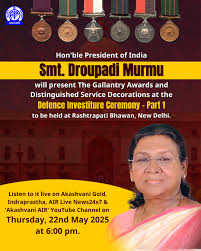 President Droupadi Murmu conferred major gallantry awards at Rashtrapati Bhavan, honouring personnel from the Armed Forces, Central Armed Police Forces and State/UT Police. The awards included Kirti Chakras, Vir Chakras and Shaurya Chakras for exceptional courage, sacrifice and service to the nation.
This development is important for topics related to national security, internal security, defence forces and values in public service. It also highlights the role of bravery, discipline and sacrifice in maintaining India’s security architecture.
2. BHAVYA Portal Launched for 100 Industrial Parks
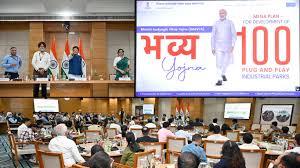 The BHAVYA Portal was launched to support the development of 100 investment-ready industrial parks under Bharat Audyogik Vikas Yojana. The scheme has an outlay of ₹33,660 crore and aims to create world-class industrial parks with plug-and-play infrastructure, multimodal connectivity, reliable utilities, digital governance and worker-support facilities.
This is important for India’s manufacturing push, Make in India, employment generation and logistics efficiency. If implemented well, the initiative can reduce delays in setting up industries and attract both domestic and foreign investment.
3. Bonn Climate Conference SB64 Begins
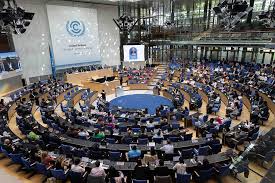 The Bonn Climate Conference SB64 has brought global attention to adaptation finance, climate justice, health risks, water stress and disaster preparedness. Climate and health groups have urged developed countries to increase grant-based adaptation finance to help vulnerable countries face climate impacts.
For India, this is highly relevant because the country faces heatwaves, floods, cyclones, glacier melt, urban water stress and agricultural vulnerability. The issue connects directly with climate justice, Common but Differentiated Responsibilities and climate-resilient development.
4. PMSMA Marks 10 Years of Maternal Health Governance
 The Pradhan Mantri Surakshit Matritva Abhiyan has completed ten years, highlighting India’s efforts to improve antenatal care and high-risk pregnancy tracking. The scheme provides assured antenatal care on the 9th day of every month and focuses especially on women in the second and third trimesters of pregnancy.
This development is important for health governance, women’s welfare, SDG-3 and human development. It shows how fixed-day public health service delivery can improve predictability, accountability and access for pregnant women, especially in rural and marginalised areas.
5. Great Nicobar Dual-use Airport Gains Strategic Focus
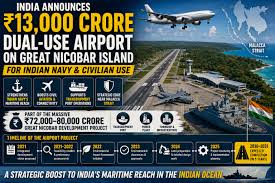 The proposed dual-use airport at Great Nicobar has gained attention because of its strategic location near the Malacca Strait. The project is expected to improve civilian connectivity as well as military readiness, maritime surveillance and logistical support for India’s presence in the eastern Indian Ocean.
However, the project also raises ecological and tribal-rights concerns. Great Nicobar is an environmentally sensitive island with rich biodiversity and indigenous communities such as the Shompen and Nicobarese. Therefore, development must be balanced with environmental safeguards, disaster resilience and tribal protection.
6. India’s Defence Spending and Arms Import Dependence
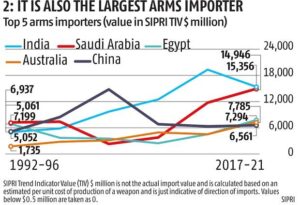 Recent defence data placed India among the world’s major military spenders and arms importers. This reflects India’s complex security environment, including border tensions, cross-border terrorism, maritime competition and emerging threats such as drones, cyber warfare and space-based surveillance.
At the same time, heavy arms import dependence creates supply-chain vulnerability and high lifecycle costs. India’s policy response through Atmanirbhar Bharat, defence corridors, positive indigenisation lists, start-ups and defence exports is crucial for achieving strategic autonomy.




