 India's No.1 PU & Degree With Integrated IAS & IPS(UPSC/PSC) Training College.


Daily Current Affairs Digest | 16th June 2026
Daily Current Affairs Digest | 16th June 2026
1. Slovakia Confers Highest State Honour on Prime Minister Narendra Modi
Prime Minister Narendra Modi was conferred with Slovakia’s highest national honour, the Order of the White Double Cross, First Class, during his visit to Bratislava.
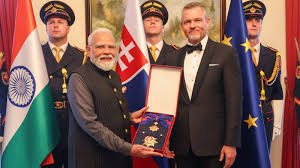 The honour recognises Prime Minister Modi’s contribution to strengthening India–Slovakia friendship, diplomatic cooperation, mutual trust and people-to-people ties. The award also reflects Slovakia’s recognition of India’s growing global role.
Importance:
This development highlights India’s expanding diplomatic influence in Europe and the strengthening of bilateral ties with Central European countries.
2. UNSC Urges Taliban to Reverse Restrictions on Women
The United Nations Security Council unanimously adopted a resolution urging Afghanistan’s Taliban rulers to reverse their crackdown on women and girls.
 The UNSC also extended the mandate of the United Nations Assistance Mission in Afghanistan until 17 June 2027. The resolution supports humanitarian assistance, diplomatic engagement and inclusive governance in Afghanistan.
Importance:
This issue is significant for international relations, human rights, women’s rights and the role of the United Nations in conflict-affected regions.
3. India’s WPI Inflation Rises to 9.68% in May 2026
India’s Wholesale Price Index inflation rose to 9.68% in May 2026 under the revised WPI series with the new 2022–23 base year.
 The rise was mainly driven by higher prices of fuel, crude oil, metals, chemicals and food items. Ongoing West Asia tensions have also contributed to inflationary pressure through energy and commodity prices.
Importance:
WPI inflation is important for understanding wholesale price trends, production costs and future retail inflationary pressure.
4. India and Slovakia Support UNSC Reform
India and Slovakia issued a joint statement in Bratislava supporting reforms in multilateral institutions, including expansion of the United Nations Security Council.
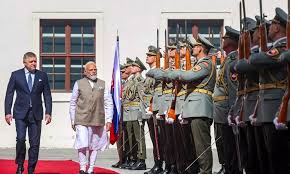 Slovakia backed India’s claim for permanent membership in a reformed UNSC. Both countries also agreed to deepen cooperation in defence, trade, technology and global governance.
Importance:
This strengthens India’s long-standing demand for permanent UNSC membership and shows growing European support for India’s role in global decision-making.
5. INS Agray Strengthens India’s Coastal Anti-Submarine Capability
INS Agray, an indigenously built Anti-Submarine Warfare Shallow Water Craft, has strengthened the Indian Navy’s coastal defence capability.
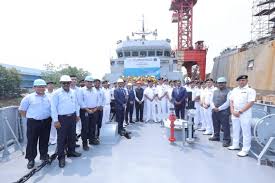 The vessel was built by Garden Reach Shipbuilders & Engineers, Kolkata. It is part of the Arnala-class ASW shallow-water craft programme designed to detect, track and neutralise submarine threats in coastal waters.
Importance:
INS Agray supports India’s Aatmanirbhar Bharat goal in defence shipbuilding and enhances maritime security in shallow coastal zones.
6. DRDO Successfully Tests Long Range Land Attack Cruise Missile
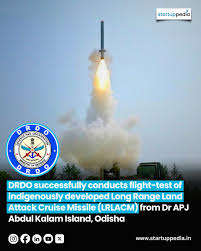 The Defence Research and Development Organisation successfully flight-tested the indigenous Long Range Land Attack Cruise Missile from Dr. APJ Abdul Kalam Island off the Odisha coast on 15 June 2026.
According to the Ministry of Defence, all test objectives were successfully achieved. The missile is expected to strengthen India’s long-range precision-strike capability.
Importance:
This is a major step in India’s indigenous missile development and improves tri-service strategic strike capability.
7. India Targets 155 GW Wind Energy Capacity by 2035
India has set a target of achieving 155 GW of installed wind energy capacity by 2035. The country also has an interim target of 100 GW by 2030.
 India’s installed wind capacity crossed 56.1 GW in June 2026. The government is focusing on domestic manufacturing, supply-chain development and renewable energy expansion.
Importance:
Wind energy is crucial for India’s clean energy transition, climate commitments and the target of expanding non-fossil fuel power capacity.
8. ISRO and DAE Developing Longer-Lasting Lunar Lander
The Indian Space Research Organisation and the Department of Atomic Energy are working together to develop advanced technology for a new lunar lander.
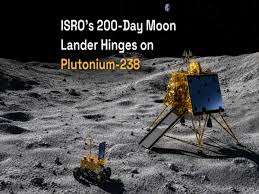 The aim is to extend lunar surface operations from Chandrayaan-3’s nearly 14-day mission life to around 100–200 days. The technology will help future landers survive the Moon’s freezing night conditions through advanced heating systems.
Importance:
This development will help India conduct longer scientific missions on the Moon and support future long-duration lunar exploration.




