 India's No.1 PU & Degree With Integrated IAS & IPS(UPSC/PSC) Training College.


Centre Plans MSP Review to Boost Pulses Output
Centre Plans MSP Review to Boost Pulses Output
Why in the News ?
To reduce pulse imports and achieve self-sufficiency, the Centre is planning a review of the MSP formula for key pulses like tur and urad. The move is part of a larger Aatmanirbharta Mission targeting pulse production in ten years.
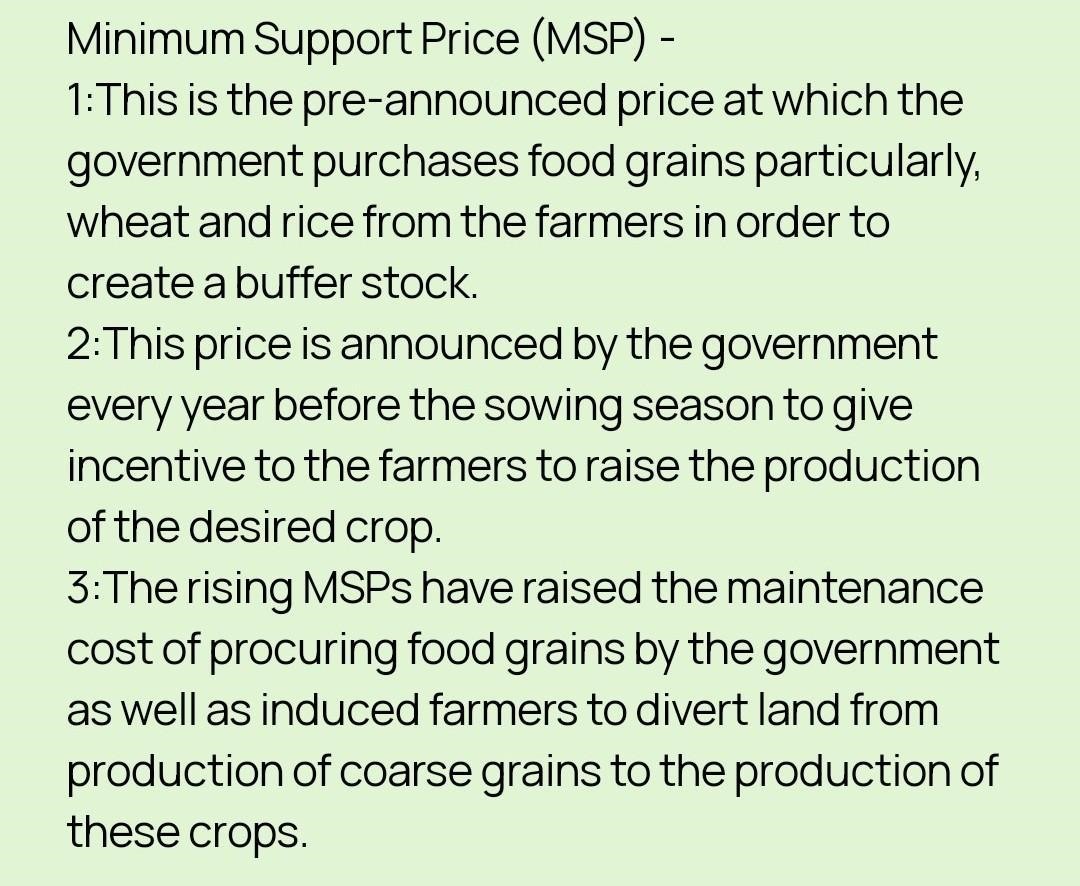
Need for MSP Reform in Pulses Sector:
- The government is considering a review of the Minimum Support Price (MSP) formula for key pulses—tur, urad, chana, and masur.
- Current cost-based pricing fails to incentivize farmers amid rising imports and low production.
- The floor prices are often close to or lower than input costs, discouraging cultivation.
- Tur MSP is ₹8,000/quintal for 2025-26, while moong fetches ₹8,868, despite lower demand and shorter crop cycles.
Mission Aatmanirbharta and Domestic Shortfalls
- Under the Aatmanirbharta Mission, the goal is to make India self-sufficient in pulses within a decade.
- Pulse imports surged from 6 mt in FY23 to 6.7 mt in FY25, a nine-year high.
- Tur production fell from 4.3 mt (FY21) to 3.5 mt (FY25); yields also dropped to 823 kg/ha.
- Moong, grown in three seasons, saw better trends: production rose to 8 mt and yield to 685 kg/ha.
Policy Plans and Strategic Interventions
- The Centre may introduce region-specific procurement and improved seed distribution to boost productivity.
- A stakeholder meeting is scheduled this month to finalize strategies.
- States like Maharashtra, Karnataka, and MP consume more tur; Rajasthan and southern states consume more moong.
- Enhancing crop diversification, aligning MSPs with demand, and reducing supply chain inefficiencies are key goals.
Measures Taken by Government to Increase Pulse Production :● National Food Security Mission (NFSM-Pulses): Aims to boost pulse production via area expansion and productivity enhancement across all districts. ● ICAR Research: Conducts basic and applied research with State Agricultural Universities to develop location-specific high-yielding pulse varieties. ● PM-AASHA Scheme: Includes Price Support Scheme (PSS), Price Deficiency Payment Scheme (PDPS), and Private Procurement Stockist Scheme (PPSS) to ensure MSP for pulses. ● ISOPOM: Launched in 14 major pulse-producing states for integrated pulse development. ● Rashtriya Krishi Vikas Yojna (RKVY): Supports states in implementing pulse development programmes under a flexible funding model. |

