 India's No.1 PU & Degree With Integrated IAS & IPS(UPSC/PSC) Training College.


China’s Rare Earth Curbs Challenge India’s Readiness
China’s Rare Earth Curbs Challenge India’s Readiness
Why in the News?
China’s export restrictions on rare earth minerals have disrupted India’s automobile sector, exposing its dependence on Chinese imports. The move, in retaliation to US tariffs, highlights the urgent need for India to develop its domestic rare earth ecosystem and address critical mineral supply chain vulnerabilities in the India automobile sector.
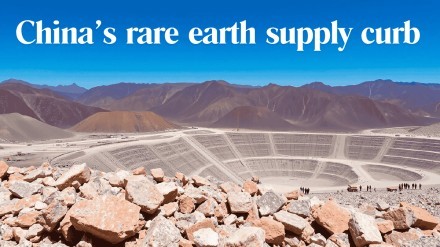
About India’s Dependence and China’s Dominance:
- In April, China restricted exports of seven rare earth elements (REEs), disrupting global supply chains and impacting rare earth exports worldwide.
- India, heavily reliant on China for rare earth minerals and other critical minerals in India, faced stricter curbs than other countries.
- China rare earth dominance is evident as it mines 67% and refines 90% of global REEs (IEA, 2024), demonstrating China’s control over the global market.
- REEs are vital for electric vehicles, fighter jets, smartphones, MRI scanners, and rare earth magnets, showcasing the wide range of rare earth applications across industries.
- Though India holds the third-largest reserves of minerals of India (6.9 million tonnes), it produces only a fraction and remains import-dependent, highlighting the need to develop mineral mines in India.
Government Action and Gaps in Capacity
- India launched the National Critical Mineral Mission in January with ₹16,300 crore funding for seven years, addressing the need for a comprehensive critical mineral policy and potentially benefiting rare earth elements UPSC aspirants.
- REEs are among the 30 critical minerals prioritized under the mission, as part of the critical minerals list developed by the government.
- In March 2024, the sector was opened to private investment, with planned fiscal incentives for local production of strategic minerals, including cobalt and lithium. This move aims to boost domestic production of critical minerals like lithium and reduce dependence on imports.
- However, a 2020 Exim Bank report highlighted India’s limited refining capacity and weak R&D investment in rare earth processing, emphasizing the need for patents in critical mineral value chain.
- Suggested steps: joint mining ventures, overseas acquisitions, and technology development to reduce import dependency. The government is also considering partnerships with IREL (India Rare Earths Limited) and the Geological Survey of India to boost domestic exploration projects and production.
Rising Demand and Strategic Diversification
- Global demand for REEs is expected to double from 9 kilotonnes (2021) to 178 kilotonnes by 2030 (IEA).
- By 2050, clean energy technologies will drive over 32% of REE demand, up from 20% today.
- Australia is poised to emerge as a key supplier, while India and Central Asia eye critical mineral investment partnerships to diversify the mineral value chain.
- With China’s supply chain weaponization risk, India must urgently diversify sources and scale domestic capabilities in critical minerals.
To address these challenges, India is focusing on developing its critical minerals sector through various initiatives:
- Establishing a Centre of Excellence on Critical Minerals to promote research and development.
- Exploring foreign mineral assets and creating a strategic mineral stockpile.
- Implementing fast-track regulatory approval processes for critical mineral blocks and Exploration Licences.
- Investing in skill development programs for the mineral processing industry.
- Encouraging the exploration of secondary sources and polymetallic nodules.
- Partnering with organizations like KABIL (Khanij Bidesh India Limited) to secure mineral assets abroad.
The government is also reviewing the MMDR Act to facilitate easier exploration and mining of critical minerals, including rare earth elements. These efforts aim to reduce India’s import dependency and strengthen its position in the global critical minerals supply chain. Additionally, the development of processing parks for critical minerals is being considered to enhance domestic capabilities.
IREL (India Rare Earths Limited) plays a crucial role in these initiatives, working closely with the government to develop India’s rare earth industry and support the National Critical Mineral Mission. The company is actively involved in exploration, mining, and processing of rare earth elements and other strategic minerals.

