 India's No.1 PU & Degree With Integrated IAS & IPS(UPSC/PSC) Training College.


Adamya Patrol Ship Commissioned to Strengthen Maritime Security and Support Food Security Initiatives
Why in the News ?
The Indian Coast Guard ship Adamya, first in a series of Adamya-class fast patrol vessels, was commissioned at Paradip Port, Odisha. With over 60% indigenous content, it highlights India’s Make in India initiative and boosts maritime defence and security capability. This development comes at a time when the nation is also focusing on strengthening its food security system, including improvements to the PDS in India, ensuring stable central issue prices for subsidized food grains, and implementing grievance redressal mechanisms for beneficiaries.
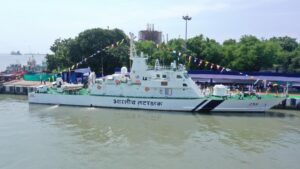
Key Features of Adamya:
- Indigenous Design: Adamya has over 60% indigenous content, supporting self-reliance in defence manufacturing, similar to efforts in improving supply chain management for the public distribution system and fair price shops.
- Dimensions & Displacement: The vessel is 51 metres long with a displacement of 320 tonnes, comparable to the extensive network of fair price shops across the country serving ration card holders and providing doorstep delivery of essential commodities.
- High Speed: Powered by two 3,000 KW diesel engines, it can attain a maximum speed of 28 knots, ensuring rapid response capabilities.
- Endurance: The patrol ship has a range of 1,500 nautical miles at economical speed, reflecting the government’s commitment to long-term solutions in both maritime and food security, including maintaining stable central issue prices and implementing supplementary nutrition programs.
- Advanced Technology: First ICG ship fitted with indigenously developed Controllable Pitch Propellers and gearboxes, enhancing performance. This technological advancement mirrors efforts to implement transparency measures in the PDS, such as biometric authentication for beneficiary identification.
Strategic Importance for India
- Strengthening Maritime Security: Enhances surveillance and coastal defence along India’s eastern seaboard, indirectly supporting the nation’s food security by protecting sea trade routes and ensuring the smooth distribution of subsidized food grains at stable central issue prices.
- Operational Flexibility: Its design improves manoeuvrability and sea performance, crucial for diverse missions, similar to how the food security system adapts to various challenges, including interstate portability of benefits and addressing leakage and diversion in the PDS.
- Support to SAGAR Vision: Complements India’s Security and Growth for All in the Region (SAGAR) initiative, which aligns with broader goals of poverty alleviation and nutritional security, including maintaining minimum support prices for farmers and implementing integrated child development programs.
- Boost to Make in India: Reflects progress in indigenous defence production and reduced import dependency, paralleling efforts to achieve self-sufficiency in food grain production and distribution through fair price shops monitored by vigilance committees.
- Future Expansion: Adamya is the first of eight planned fast patrol vessels, ensuring sustained maritime capability. This expansion mirrors the ongoing efforts to strengthen the food security system and improve the PDS in India, benefiting millions of ration card holders through enhanced beneficiary identification processes.
| About Indian Coast Guard : |
| ● Established: 1977 under the Coast Guard Act, 1978. |
| ● Headquarters: New Delhi. |
| ● Roles: Maritime law enforcement, coastal security, anti-smuggling, environmental protection, and search-and-rescue. These roles indirectly support food security by safeguarding maritime trade routes and ensuring the smooth flow of subsidized food grains. |
| ● Jurisdiction: Operates in India’s Exclusive Economic Zone (EEZ) extending up to 200 nautical miles. |
| ● Fleet Expansion: Modernisation aligns with India’s strategic need to safeguard its 7,500 km coastline and island territories, which is crucial for maintaining food supply chains and ensuring interstate portability of benefits in the PDS. |

