India's No.1 PU & Degree With Integrated IAS & IPS(UPSC/PSC) Training College.


Cultivating Constitutional Morality in India
ON CULTIVATING CONSTITUTIONAL MORALITY
Syllabus:
GS-3:
- Indian Constitution
- Constitutional amendments
Why in the News?
Constitution Day: India observes Constitution Day on November 26, commemorating the adoption of the Constitution by the Constituent Assembly in 1949.The occasion renews attention to constitutional morality, which requires the State and citizens to uphold justice, liberty, equality and fraternity beyond narrow political or social interests.
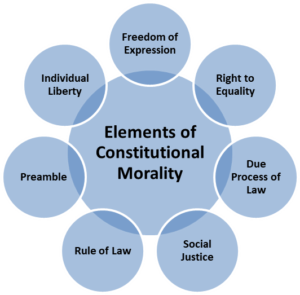
CONSTITUTIONAL MORALITY AND THE INDIAN CONSTITUTION● Preamble: The Preamble establishes justice, liberty, equality and fraternity as foundational constitutional ideals, providing the philosophical basis for constitutional morality. ● Fundamental Rights: Articles 14, 15, 19 and 21 protect equality, prohibit discrimination, guarantee freedoms and safeguard life and personal liberty. ● Fundamental Duties: Article 51A requires citizens to respect constitutional ideals, promote harmony, protect public property and develop scientific temper. ● Basic Structure Doctrine: The Kesavananda Bharati judgment (1973) established that Parliament cannot alter the Constitution’s basic structure, preserving essential principles such as democracy and judicial review. ● Constitutional Interpretation: The Supreme Court has used constitutional morality to protect individual dignity and liberty in cases such as Puttaswamy, Navtej Singh Johar and the Sabarimala case, demonstrating its importance in a plural society. |
CONSTITUENT ASSEMBLY AND THE MAKING OF THE CONSTITUTION
- Historical Background: The Cabinet Mission Plan, 1946 provided the framework for establishing the Constituent Assembly, which was entrusted with drafting India’s Constitution.
- Assembly Composition: Initially, the Assembly consisted of 299 members after Partition, including representatives from British Indian provinces and princely states.
- First Meeting: The Constituent Assembly held its first meeting on December 9, 1946, beginning the process of framing an independent constitutional framework.
- Constitutional Adoption: After nearly three years of deliberations, the Constitution was adopted on November 26, 1949, a date now observed as Constitution Day.
- Republican Transition: Most constitutional provisions came into force on January 26, 1950, commemorating the 1930 declaration of Purna Swaraj and marking India’s transition into a republic.
CONSTITUTIONALISM: LIMITING THE POWERS OF THE STATE
- Basic Distinction: A Constitution is a legal document establishing the structure of government, whereas constitutionalism ensures that governmental authority remains limited by constitutional principles.
- Rule of Law: Constitutionalism requires that every individual and institution, including the government, remains subject to the rule of law rather than arbitrary authority.
- Institutional Balance: The principles of separation of powers and checks and balances prevent excessive concentration of authority in any single organ of government.
- Rights Protection: Part III of the Constitution guarantees Fundamental Rights and restricts the State from making laws that violate constitutionally protected freedoms.
- Judicial Review: The judiciary can examine legislative and executive actions and invalidate those that violate constitutional provisions, thereby protecting the supremacy of the Constitution.
CONSTITUTIONAL MORALITY: MEANING AND JUDICIAL INTERPRETATION
- Core Philosophy: Constitutional morality requires adherence to the constitutional ideals of justice, liberty, equality and fraternity, even when they conflict with prevailing social practices.
- Beyond Majoritarianism: A constitutional democracy cannot allow the preferences of an electoral majority to override the fundamental rights and dignity of individuals or minorities.
- Ambedkar’s Perspective: B.R. Ambedkar argued that constitutional morality is not a natural sentiment but must be cultivated through education, institutions and democratic practices.
- Basic Structure: In Kesavananda Bharati v. State of Kerala (1973), the Supreme Court established the Basic Structure Doctrine, protecting the Constitution’s essential features from destructive amendments.
- Judicial Recognition: Judgments such as Puttaswamy (2017), Navtej Singh Johar (2018) and the Sabarimala judgment (2018) invoked constitutional values while examining individual liberty and equality.
DR. AMBEDKAR’S WARNINGS AND THE CHALLENGES TO INDIAN DEMOCRACY
- Personality Cults: Ambedkar warned against hero-worship in politics, arguing that excessive devotion to political leaders could weaken independent thinking and create conditions for dictatorship.
- Social Inequality: He highlighted the contradiction between political equality and social-economic inequality, warning that persistent disparities could threaten the stability of democratic institutions.
- Constitutional Methods: Ambedkar emphasised the importance of constitutional methods in public life, cautioning against political violence and unconstitutional means of achieving political objectives.
- Democratic Foundation: His observation that democracy was merely a top-dressing on an essentially undemocratic soil reflected concerns about entrenched caste hierarchies and social inequalities.
- Democratic Responsibility: His warnings remain relevant because democratic survival depends not merely on constitutional provisions but also on the conduct and values of political leaders and citizens.
CONTEMPORARY CHALLENGES TO CONSTITUTIONAL MORALITY
- Majoritarian Politics: Treating electoral victories as unrestricted mandates can weaken institutional checks and balances and undermine the rights of individuals and vulnerable communities.
- Institutional Neutrality: Politicisation of constitutional institutions can erode public confidence, weaken their independence and compromise their ability to perform impartial constitutional functions.
- Administrative Expediency: Prioritising political convenience over fairness, transparency and accountability weakens the constitutional culture necessary for responsible democratic governance.
- Social Orthodoxy: Caste discrimination, religious intolerance and linguistic divisions continue to challenge the constitutional principles of equality and fraternity.
- Weak Public Duty: Excessive emphasis on individual or sectional interests, combined with limited civic participation, undermines collective responsibility towards constitutional democracy.
STRENGTHENING CONSTITUTIONAL MORALITY: THE WAY FORWARD
- Civic Education: Constitutional values should become an integral part of school and university education, enabling citizens to understand their rights, duties and democratic responsibilities.
- Institutional Independence: Constitutional and statutory institutions must function with impartiality, transparency and accountability, free from undue political interference.
- Social Transformation: Combating caste discrimination, gender inequality and communal prejudice requires sustained social reform alongside the effective enforcement of constitutional protections.
- Democratic Participation: Citizens, civil society organisations and local institutions should promote dialogue, peaceful dissent and participation in democratic decision-making.
- Constitutional Conduct: Political representatives and public officials must respect constitutional procedures, institutional boundaries and individual liberties, demonstrating morality through everyday governance.
CONCLUSION
Constitutional morality cannot survive through legal provisions alone; it must become a habit of democratic life. Independent institutions, responsible political leadership, social equality and informed citizenship are essential to its cultivation. India’s constitutional democracy will remain resilient only when constitutional values guide both the exercise of state power and everyday social behaviour.
SOURCE: The Hindu
MAINS PRACTICE QUESTION
“Constitutional morality is not a natural sentiment but needs to be cultivated.” In the light of Dr. B.R. Ambedkar’s observations, examine the significance of constitutional morality in strengthening Indian democracy and addressing contemporary challenges. (250 words)