 India's No.1 PU & Degree With Integrated IAS & IPS(UPSC/PSC) Training College.


Supreme Court Upholds Voters’ Right to Prosecute
SUPREME COURT UPHOLDS VOTERS’ RIGHT TO PROSECUTE CANDIDATES
WHY IN THE NEWS ?
- Judicial Ruling: The Supreme Court ruled that private citizens can file criminal complaints against election candidates for submitting false information or concealing details in nomination affidavits.
- Key Provision: The judgment interprets Section 125A of the Representation of the People Act, 1951, which penalises specified disclosure-related offences.
- Democratic Significance: The ruling strengthens voter participation, electoral transparency and accountability by enabling citizens to challenge dishonesty in election nominations.
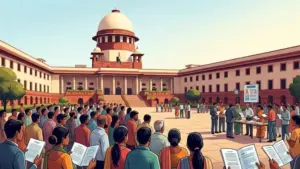
SUPREME COURT JUDGMENT AND LEGAL INTERPRETATION:
- Bench Composition: A Bench comprising Justices Dipankar Datta and Sheel Nagu held that ordinary citizens are not barred from filing complaints against candidates for false or concealed information.
- Affidavit Disclosure: Candidates must submit personal affidavits disclosing relevant details, including assets, educational qualifications and criminal antecedents, enabling voters to make informed choices.
- Legal Provision: Section 125A of the Representation of the People Act, 1951, provides for imprisonment up to six months, a fine, or both for specified failures or false statements concerning required disclosures.
- CrPC Interpretation: The Court held that Section 195 of the Code of Criminal Procedure did not prevent courts from taking cognisance of alleged Section 125A offences on complaints filed by private individuals.
- Citizen Empowerment: The judgment clarified that the law does not reserve the right to lodge such complaints exclusively for public servants or designated authorities.
ELECTORAL TRANSPARENCY AND DEMOCRATIC ACCOUNTABILITY
- Informed Voting: Access to reliable candidate information allows voters to assess contestants’ financial interests, qualifications and criminal backgrounds before casting their votes.
- Public Participation: Allowing private complaints encourages vigilant citizens to help identify and challenge misleading electoral disclosures.
- Electoral Integrity: The ruling reinforces the objective of maintaining the purity of elections by discouraging concealment and misrepresentation in nomination affidavits.
- Accountability Mechanism: Citizen-led complaints can supplement institutional oversight, although allegations must be examined through the established legal process.
- Implementation Concerns: Effective enforcement requires accessible complaint procedures, timely judicial scrutiny and safeguards against frivolous or politically motivated litigation.
ABOUT ELECTION LAW AND CONSTITUTIONAL DEMOCRACY:● Article 324: The Constitution vests the Election Commission of India with the superintendence, direction and control of elections to Parliament, State Legislatures, and the offices of President and Vice-President. ● Representation of the People Act, 1951: This legislation regulates important aspects of elections, including candidate qualifications, corrupt practices and specified electoral offences. ● Voter’s Right to Know: In Union of India v. Association for Democratic Reforms (2002), the Supreme Court recognised voters’ right to information about candidates as part of freedom of expression under Article 19(1)(a). ● Electoral Affidavits: Candidate disclosures promote informed electoral choices and help voters scrutinise contestants’ backgrounds. ● Democratic Accountability: Free and fair elections depend on transparency, public participation, rule of law and effective mechanisms to address electoral misconduct. |

