 India's No.1 PU & Degree With Integrated IAS & IPS(UPSC/PSC) Training College.


SC Expands Wetland Demarcation to Water Bodies
SUPREME COURT EXPANDS WETLAND DEMARCATION TO ALL WATER BODIES
WHY IN THE NEWS ?
- Judicial Directive: On October 12, 2026, the Supreme Court expanded the scope of wetland identification and demarcation to cover all water bodies across India.
- State Accountability: States and Union Territories must submit affidavits within four weeks detailing physical verification and demarcation.
- Constitutional Significance: The Court linked water-body preservation with the Right to Life under Article 21, emphasising access to drinking water.
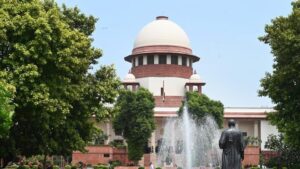
SUPREME COURT’S DIRECTIONS AND KEY DEVELOPMENTS:
- Expanded Scope: The Supreme Court directed that identification and demarcation efforts extend to all water bodies, recognising their importance as sources of drinking water.
- Earlier Order: In December 2024, the Court instructed states and Union Territories to complete ground-truthing and physical demarcation of wetlands identified in the 2021 Space Applications Centre (SAC) Atlas within three months.
- Legal Obligation: The earlier directive was based on statutory responsibilities under the Wetlands (Conservation and Management) Rules, 2017.
- Implementation Gaps: Petitioners, including environmentalist and birder Anand Arya, informed the Court that several states and UTs had failed to complete the required demarcation.
- Fresh Compliance: The Court sought affidavits within four weeks detailing the status of ground-truthing and the identification of boundaries of wetlands and other water bodies.
ENVIRONMENTAL AND GOVERNANCE SIGNIFICANCE
- Water Security: Protecting wetlands and other water bodies is essential for safeguarding drinking-water sources and ensuring long-term water availability.
- Constitutional Protection: The Court observed that protecting precious water bodies falls within the scope of Article 21, which guarantees the right to life.
- Ecological Balance: Wetlands support biodiversity, regulate floods, recharge groundwater and maintain ecosystem stability.
- Administrative Challenges: Some states claimed that wetlands listed in the SAC Atlas could not be located on the ground or did not qualify for protection under the 2017 Rules.
- Judicial Oversight: The Court stressed that it could not remain a passive spectator while valuable water bodies remained unprotected, reinforcing accountability in environmental governance.
ABOUT WETLANDS AND ENVIRONMENTAL GOVERNANCE:● Definition: Wetlands are ecosystems where water covers or saturates the soil permanently or seasonally, supporting specialised plants, animals and ecological processes. ● Ramsar Convention: The Ramsar Convention on Wetlands, adopted in 1971 in Ramsar, Iran, provides an international framework for wetland conservation and wise use. ● Indian Legislation: The Wetlands (Conservation and Management) Rules, 2017, notified under the Environment (Protection) Act, 1986, establish a framework for wetland conservation and management. ● Ecological Functions: Wetlands help in groundwater recharge, flood mitigation, water purification, carbon storage and biodiversity conservation. ● Constitutional Duties: Article 21 protects life and personal liberty, while Article 48A directs the State to protect the environment and Article 51A(g) establishes citizens’ duty to protect the natural environment. |

