 India's No.1 PU & Degree With Integrated IAS & IPS(UPSC/PSC) Training College.


THIS ISN’T THE UN WE NEED | UN Reform Explained
THIS ISN’T THE UN WE NEED
Why in the News?
- On the occasion of the UN’s 81st anniversary, former Indian envoy to the UN, Syed Akbaruddin, examined the organisation’s declining effectiveness and the role of member states in its shortcomings.
- Despite ongoing wars, disregard by powerful countries and delays in institutional reforms, public opinion surveys indicate that people have not entirely lost faith in the UN.
- The article questions whether public support for the UN’s continued existence is sufficient, arguing that its effectiveness and the need for meaningful reforms must also be assessed.
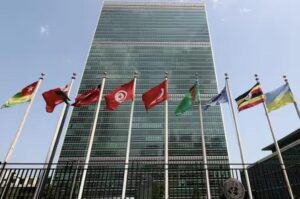
Public Opinion on the UN: Survey Findings
Gallup Survey (2025):
- Across 137 countries and territories, median approval of the UN’s performance stood at 50%, compared with 26% disapproval.
- Approval exceeded disapproval by at least 10 percentage points in 92 countries and territories.
- The findings suggest that global public opinion has not entirely lost faith in the UN.
Declining Confidence in Certain Countries:
- The Pew Research Center survey (February–May 2026) recorded a decline in favourable opinion in 10 countries compared with its previous surveys.
- In Russia, Gallup recorded only 15% approval and 73% disapproval of the UN’s performance.
- This indicates that widespread support does not guarantee the continued legitimacy or credibility of the organisation.
India’s Perception of the UN:
- According to Gallup, 36% of Indians approved of the UN’s performance, with approval exceeding disapproval by at least 10 percentage points.
- Pew found that 40% of Indians viewed the UN favourably, while 18% viewed it unfavourably.
- The surveys measure different aspects: Gallup assesses performance, whereas Pew measures favourable or unfavourable perceptions. Both indicate a more positive than negative opinion in India.
Public Indifference and Limited Awareness:
- Around four in ten Indians surveyed by Pew expressed no opinion, approximately matching the proportion with a favourable view.
- This group cannot automatically be classified as either supporters or critics of the UN; their views may reflect limited awareness, perceived irrelevance or mixed perceptions.
Factors Shaping India’s Perception:
- Indian attitudes may be influenced by disagreements with certain UN bodies over what India considers selective or intrusive interventions.
- Such disagreements do not necessarily imply rejection of the UN as an institution; they may instead reflect dissatisfaction with specific decisions, practices or institutional shortcomings.
Regional differences in public opinion about UN
India–Pakistan: Similar Approval, Different Levels of Dissatisfaction
- Favourable opinion: Pew Research records favourable UN ratings of 40% in India and 38% in Pakistan.
- Unfavourable opinion: While 18% of Indians view the UN unfavourably, the figure rises to 48% in Pakistan.
- Key inference: The difference lies less in levels of support and more in the extent of dissatisfaction.
- Policy implication: Approval ratings alone may conceal significant differences in public perceptions of the UN.
Regional Differences in Perceptions of the UN
- Strongest support: Gallup records the highest support for the UN in Southeast Asia and sub-Saharan Africa.
- Lowest support: West Asia and North Africa display substantially more negative perceptions.
- Key challenge: Countries in the Global South do not necessarily share a common view of the UN’s effectiveness or relevance.
- Policy implication: India’s reform agenda must account for diverse regional expectations rather than assume a unified Global South position.
Dissatisfaction Does Not Necessarily Mean Rejection
- Different sources of discontent: People may express similar dissatisfaction with the UN for different reasons, such as disagreement with its decisions or its inability to enforce them.
- Illustration: Gallup records low approval in both Israel and Palestinian populations surveyed in the West Bank and East Jerusalem, but the underlying reasons may differ.
- Key inference: Negative ratings do not necessarily indicate a desire to abolish or weaken the organisation.
- Possible responses: Some may favour granting the UN greater authority, while others may prefer weakening or replacing it.
- Limitation: Survey findings alone cannot establish which reforms the dissatisfied populations actually prefer.
India’s Pursuit of a Greater Role in the UN
- Permanent membership: India seeks permanent membership of the UN Security Council.
- Elected membership: India is also seeking an elected seat for the 2028–29 term.
- Underlying rationale: Challenging the existing distribution of power within the UN is consistent with the objective of making the organisation more effective.
- Key inference: Institutional reform should focus not merely on India’s representation but also on improving the UN’s overall functioning.
Broadening India’s UN Reform Agenda
- Beyond permanent membership: India’s reform proposals must address the concerns of other countries, rather than focus exclusively on its own claim to a permanent Security Council seat.
- Inclusive decision-making: Countries affected by Security Council decisions should have a greater role in shaping them.
- Representation of peacekeepers: Countries contributing troops to UN peacekeeping missions should have a meaningful say in decisions concerning their deployment and operational responsibilities.
- Reforming power structures: Changes must address whose judgements influence decisions and whose concerns receive consideration.
Domestic Public Engagement and Accountability
- Communicating the UN’s relevance: India should explain the UN’s practical contributions to citizens, such as its role in vaccination programmes, rather than relying solely on speeches about multilateralism.
- Acknowledging institutional failures: The UN must honestly explain its inability to prevent wars and the obstacles that constrain its functioning.
- Clarifying India’s reform agenda: Public engagement should communicate what prevents effective action and how India proposes to address these shortcomings.
- Public support and accountability: Continued public support must not shield the UN from scrutiny or exempt it from explaining its failures.
Member States’ Responsibility for UN Ineffectiveness
- Financial obligations: Member states must fulfil their financial commitments to enable the UN to carry out its functions.
- Troop contributions: Countries must provide the personnel required for UN peacekeeping operations.
- Collective decision-making: Security Council members must work towards agreement on collective action.
- Responsibility for institutional failures: Governments that withhold resources or obstruct action share responsibility for the UN’s ineffectiveness.
- Special responsibility of powerful states: Countries with the power to block Security Council decisions bear particular responsibility for the consequences of inaction.
Conclusion: Existence Alone Is Not Enough
- Public opinion favours continued engagement: Survey findings challenge the assumption that people worldwide have abandoned the UN.
- Need for sustained reform: India has grounds to continue pursuing institutional reform while explaining its intended outcomes.
- Beyond symbolic support: Accepting the need for the UN does not mean accepting its existing shortcomings.
- The objective should be to build a UN that is more representative, accountable and capable of delivering effective multilateral action.
Way Forward
- Democratise UN Governance: Reform the UN Security Council to reflect contemporary geopolitical realities, including equitable representation of developing countries and the Global South.
- Strengthen Institutional Accountability: Establish transparent mechanisms to assess the UN’s performance, address implementation failures and ensure accountability for unmet mandates.
- Reform Decision-Making: Revisit the use of veto powers and promote greater transparency, consultation and accountability in Security Council decisions.
- Ensure Adequate Resources: Encourage timely financial contributions by member states and strengthen resource mobilisation to enable the UN to fulfil its mandates effectively.
- Bridge the Global South Divide: Build consensus among developing countries by acknowledging their diverse regional priorities rather than assuming a uniform position on UN reform.
- Enhance Public Engagement: Communicate the UN’s tangible contributions in areas such as healthcare, humanitarian assistance, peacekeeping and sustainable development, while acknowledging its limitations.
- Strengthen India’s Reform Diplomacy: Move beyond the demand for permanent membership and advocate a comprehensive reform agenda encompassing representation, peacekeeping, equitable decision-making and effective implementation.
- Rebuild Trust Through Results: Prioritise measurable improvements in conflict prevention, humanitarian response and implementation of Security Council resolutions to restore public confidence in multilateral institutions.
- The objective should not merely be to preserve the UN’s existence, but to transform it into a more representative, accountable and effective institution capable of responding to contemporary global challenges.
Source: https://timesofindia.indiatimes.com/this-isnt-the-un-we-need/articleshow/135149010.cms
Mains question
“The United Nations faces a crisis of effectiveness rather than legitimacy, with member states sharing responsibility for its shortcomings. Critically examine the need for comprehensive UN reforms and India’s role.”

