India's No.1 PU & Degree With Integrated IAS & IPS(UPSC/PSC) Training College.


The “G Minus Two” Strategy Explained
For the Indo-Pacific: Understanding the “G Minus Two” Strategy
Syllabus:
- GS – 2 – Regional development, Indo Pacific
Focus :
The article focuses on India’s emerging “G Minus Two” strategy in the Indo-Pacific, which seeks to strengthen cooperation with major Asian powers such as Japan, South Korea, Indonesia, Australia, and New Zealand. It emphasizes expanding strategic, economic, technological, and defence partnerships beyond the U.S.-China framework, thereby enhancing regional stability, economic resilience, and India’s strategic autonomy in a rapidly changing Asian order.
Introduction
- The Indo-Pacific region is experiencing significant geopolitical changes due to the rise of China and shifts in United States foreign policy.
- India has adopted a new strategic approach known as the “G Minus Two” strategy to respond to these developments.
- The strategy aims to strengthen cooperation among major Asian countries instead of allowing the regional order to be shaped only by US and China.
- Through stronger partnerships with countries such as Japan, South Korea, Indonesia, Australia, and New Zealand, India hopes to play a greater role in shaping the future of the Indo-Pacific.
Meaning and Concept of “G Minus Two”
- The term G2 refers to a hypothetical global order dominated by the United States and China.
- In a G2 system, these two major powers would exercise considerable influence over global and regional affairs.
- Many Asian countries are uncomfortable with this idea because it reduces the role and influence of other important nations.
- A G2 arrangement could limit the strategic autonomy of middle powers such as India, Japan, and Australia.
- Such a framework may result in regional decisions being influenced primarily by the interests of Washington and Beijing.
Emergence of “G Minus Two”
- The concept of “G Minus Two” emerged as an alternative to the idea of a G2-dominated world.
- It emphasizes stronger cooperation among Asian countries beyond the United States and China.
- The strategy seeks to expand economic, technological, diplomatic, and defence cooperation among regional powers through multilateral engagement.
- It recognizes that although the United States and China remain important, the future of Asia should not be determined exclusively by them.
Reasons Behind India’s Adoption of the Strategy
- Changing U.S.-China Relations
- India’s adoption of the G Minus Two strategy is partly influenced by the changing relationship between the United States and China.
- American policies toward China often vary depending on the administration in power.
- Strategic competition and cooperation continue to exist simultaneously between Washington and Beijing.
- These uncertainties encourage countries such as India to diversify their strategic partnerships and pursue strategic alignment with like-minded nations.
- China’s Growing Influence
- China’s rapid economic and military rise has significantly altered the balance of power in Asia.
- China has expanded its military capabilities and increased its naval presence across the Indo-Pacific region.
- The country has also strengthened its influence through large-scale investments and infrastructure projects.
- Need for Strategic Flexibility
- The Indo-Pacific region has become increasingly complex and competitive.
- Countries require multiple diplomatic and economic options to navigate regional challenges.
- Stronger partnerships among regional powers can provide greater flexibility in foreign policy decisions.
India’s Indo-Pacific Vision
- Importance of the Indo-Pacific
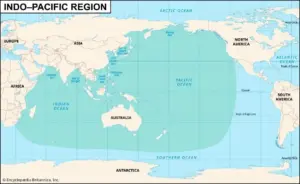
- The Indo-Pacific is one of the most strategically important regions in the world.
- It contains major maritime trade routes that connect Asia, Africa, and Europe.
- A large share of global economic activity takes place in this region.
- The region is home to critical energy corridors and strategic maritime chokepoints.
- For India, the Indo-Pacific is closely linked to economic growth, security, and regional influence.
- India’s Approach
- India’s Indo-Pacific strategy is based on the principles of openness, inclusiveness, and cooperation.
- India supports a rules-based international order that respects sovereignty and territorial integrity while upholding ASEAN centrality in regional affairs.
- The country advocates freedom of navigation and peaceful resolution of disputes.
- India believes that regional cooperation should remain inclusive rather than exclusive, working through platforms like the Quad partnership.
- The G Minus Two strategy complements these broader objectives through enhanced diplomatic engagement.
Economic Dimension of the Strategy
- Importance of Economic Cooperation
- Economic cooperation forms a central pillar of the G Minus Two strategy.
- Strong economic partnerships enhance strategic influence and resilience through regional economic integration.
- The strategy promotes trade expansion, investment flows, and technological collaboration.
- Infrastructure development and industrial cooperation are also key priorities.
- Greater economic integration reduces vulnerabilities and promotes sustainable growth.
- Supply Chain Resilience
- Recent global disruptions have highlighted the need for diversified supply chains.
- Countries are seeking alternatives to excessive dependence on single suppliers.
- India aims to become a major manufacturing and supply chain hub.
- Cooperation among regional partners can improve access to critical materials and technologies.
- Stronger supply chains contribute to economic security and stability.
- Response to Tariff Wars
- Trade disputes and protectionist measures have encouraged countries to deepen regional cooperation.
- Greater cooperation can reduce exposure to external economic shocks.
- Expanded market access can support industrial growth and competitiveness.
- Regional economic partnerships strengthen resilience against global uncertainties.
- Economic collaboration therefore remains a major objective of the strategy.
- Security and Defence Cooperation
- Maritime security is a major focus of Indo-Pacific strategy cooperation.
- Countries seek to protect vital sea lanes and trade routes through a cooperative security framework.
- Regional security cooperation includes maritime surveillance and domain awareness.
- Countries are working together in research, innovation, and joint production through defense cooperation agreements.
- The regional security architecture also strengthens mutual trust among participating countries.
- The objective is to preserve stability rather than create confrontation.
Challenges to the Strategy
- Diverse National Interests
- Participating countries often have different political, economic, and security priorities.
- Their approaches toward China and the United States may vary significantly.
- These differences can complicate regional cooperation.
- Effective diplomatic engagement is required to manage divergent interests.
- Economic Dependence on China
- Many countries continue to rely heavily on China for trade and investment.
- This economic interdependence may limit the extent of strategic cooperation in certain areas.
- Balancing economic interests and security concerns remains a challenge.
- Countries must carefully manage their relations with Beijing.
- Resource Constraints
- Building strong regional partnerships requires substantial resources.
- Financial investment and institutional capacity are essential.
- Long-term political commitment is necessary for success.
- Without adequate resources, implementation may remain limited.
Importance of India’s Internal Reforms
- Economic Reforms
- The success of the Indo-Pacific strategy ultimately depends on India’s domestic strength.
- India must continue improving the ease of doing business.
- Expanding manufacturing capacity remains a major priority.
- Infrastructure development is essential for sustained growth.
- Innovation and investment promotion will enhance competitiveness.
- Defence Modernisation
- India must continue modernizing its armed forces.
- Indigenous defence production should be expanded.
- Greater investment in defence technology is necessary.
- A stronger defence industry will enhance India’s strategic partnerships.
- Human Capital Development
- Investment in education and skill development is essential.
- Research and innovation capabilities must be strengthened.
- Technological expertise will improve India’s global competitiveness.
- Human capital development will support long-term economic growth.
Conclusion
- The G Minus Two strategy represents a significant evolution in India’s Indo-Pacific strategy.
- It seeks to strengthen cooperation among major Asian powers beyond the framework of U.S.-China rivalry through a comprehensive regional engagement strategy.
- The strategy is neither anti-American nor anti-Chinese in nature.
- The success of the Indo-Pacific strategy will ultimately depend on India’s economic reforms, defence modernization, and technological advancement.
- A stronger and more competitive India will be better positioned to play a leading role in shaping the future of the Indo-Pacific region.
Mains UPSC Question GS 2
The emerging Indo-Pacific order is increasingly being shaped by the strategic choices of middle powers. Examine the significance of India’s “G Minus Two” strategy in this context. (15 Marks, 250 Words)